Skip to main content
Microbiology
My Course
Learn
Exam Prep
AI Tutor
Study Guides
Textbook Solutions
Flashcards
Explore
Try the app
My Course
Learn
Exam Prep
AI Tutor
Study Guides
Textbook Solutions
Flashcards
Explore
Try the app
Back
Microbiology Pathogens and Biofilms
You can tap to flip the card.
What is a true pathogen?
You can tap to flip the card.
👆
What is a true pathogen?
A microbe that can cause disease in healthy people.
Track progress
Control buttons has been changed to "navigation" mode.
1/13
Recommended videos
04:13
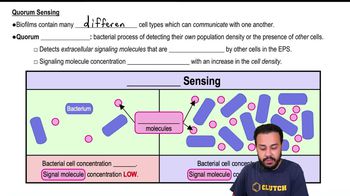
Quorum Sensing
3313
views
54
rank
04:32
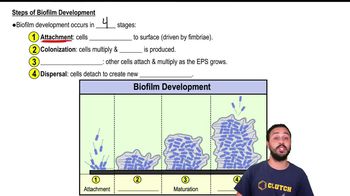
Steps of Biofilm Development
3905
views
77
rank
03:14
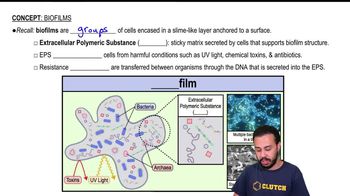
Biofilms
4932
views
108
rank
Terms in this set (13)
Hide definitions
What is a true pathogen?
A microbe that can cause disease in healthy people.
What is an opportunistic pathogen?
A microbe that causes disease when given an opportunity.
Can healthy people have opportunistic pathogens?
Yes, healthy people can carry opportunistic pathogens without disease.
What is dysbiosis?
An unhealthy imbalance in the microbiome.
Can dysbiosis cause disease?
Yes, dysbiosis can lead to disease.
Can host factors affect disease?
Yes, host factors can influence disease development.
Can a microbe cause disease by being in the wrong location?
Yes, microbes can cause disease if they are in an abnormal site.
What does planktonic mean?
Free-floating microbes not attached to a surface.
What is a biofilm?
Microbes attached to a surface forming a community.
Why do bacteria form biofilms?
For protection and enhanced survival.
Why are biofilms medically important?
They are difficult to eliminate and contribute to persistent infections.
Which is harder to eradicate: biofilm or planktonic bacteria?
Biofilm bacteria are harder to eradicate than planktonic bacteria.
Which form causes more infectious diseases?
Biofilms cause more infectious diseases than planktonic forms.
 BackBack
 04:13