 Back
Microbiology: Prokaryotic vs Eukaryotic Genomes
You can tap to flip the card.
Control buttons has been changed to "navigation" mode.
1/7
 02:04

Terms in this set (7)
Prokaryotic genomes are generally simpler with fewer chromosomes, while eukaryotic genomes are more complex and can include multiple chromosomes.
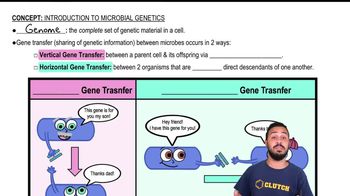
A genome can include chromosomes and other genetic elements like plasmids.
In prokaryotes, chromosomes are usually located in the nucleoid region of the cytoplasm, not enclosed by a membrane.
Prokaryotic DNA is organized in a circular chromosome and may include plasmids.
In eukaryotes, chromosomes are enclosed within a membrane-bound nucleus.
Eukaryotic DNA is organized into linear chromosomes wrapped around histone proteins.
Genome complexity affects gene regulation, replication, and cellular functions, influencing microbial behavior and adaptability.