 Back
BackA Brief History and Foundations of Microbiology
Study Guide - Smart Notes
 Tailored notes based on your materials, expanded with key definitions, examples, and context.
The Birth and Development of Microbiology
Antoni van Leeuwenhoek and the Discovery of Microbes
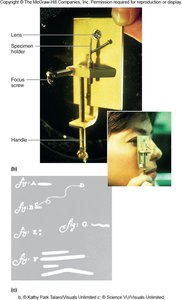
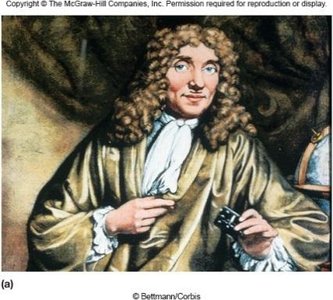
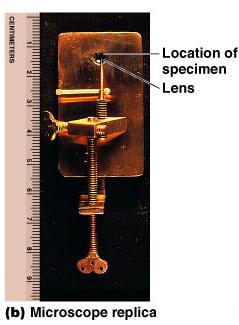
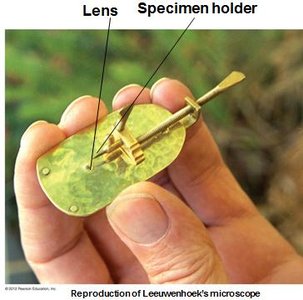
The science of microbiology began in the late 1600s with the pioneering observations of Antoni van Leeuwenhoek. Using handcrafted microscopes, Leeuwenhoek was the first to describe living microorganisms, which he observed in various samples such as teeth scrapings and rainwater. His work laid the foundation for the field by revealing the existence of a previously unseen world of 'animalcules,' later termed microorganisms or microbes.
Key Points:
Microscope Innovation: Leeuwenhoek's simple, single-lens microscopes could magnify specimens up to 300 times, allowing him to see bacteria and protozoa for the first time.
Observation of Microbes: He meticulously documented the shapes and movements of these tiny organisms, which he called 'animalcules.'
Historical Impact: His discoveries challenged existing beliefs about the natural world and spurred further scientific inquiry.
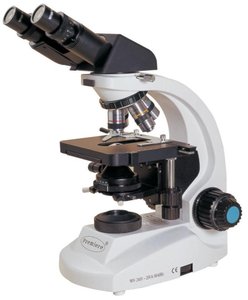
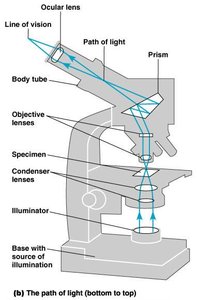
Modern Comparison: Today, compound microscopes with multiple lenses provide much higher magnification and resolution, enabling detailed study of microbial structure and function.
Spontaneous Generation vs. Biogenesis
The Debate Over the Origin of Life
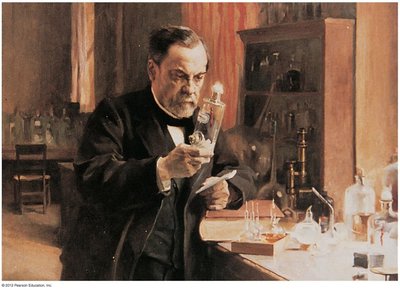
In the 17th to 19th centuries, scientists debated whether life could arise spontaneously from nonliving matter (spontaneous generation) or only from preexisting life (biogenesis). Key experiments by Redi, Spallanzani, Pasteur, and Tyndall provided evidence against spontaneous generation, culminating in Pasteur's famous swan-neck flask experiments.
Spontaneous Generation: The hypothesis that living organisms arise from nonliving matter.
Biogenesis: The hypothesis that living organisms arise only from preexisting life.
Pasteur's Experiments: Demonstrated that sterilized broth in swan-necked flasks remained free of microbial growth unless exposed to contaminants from the air, supporting biogenesis.
Example: When the swan-necked flask was kept upright, no microbial growth occurred. When tilted, allowing broth to contact dust, microbial growth ensued.
The Golden Age of Microbiology
Major Discoveries and the Germ Theory of Disease
The late 19th century, known as the Golden Age of Microbiology, saw rapid advances in the understanding of microbes and their role in disease. Scientists such as Louis Pasteur, John Tyndall, Ferdinand Cohn, and Robert Koch made foundational discoveries, including the identification of endospores and the establishment of the germ theory of disease.
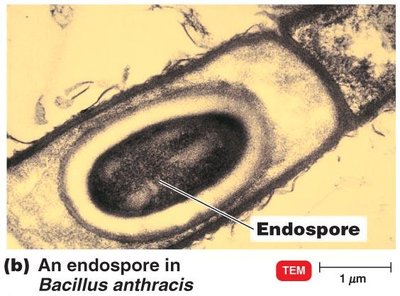
Endospores: Discovered by Cohn, these are heat-resistant forms of bacteria that explain why some broths remained contaminated after boiling.
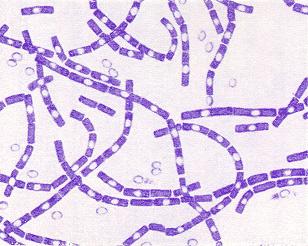
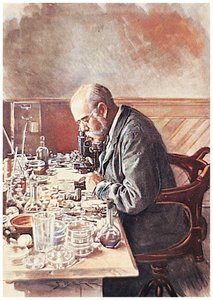
Germ Theory: Proposed that specific diseases are caused by specific microbes. Robert Koch provided experimental proof by linking Bacillus anthracis to anthrax.
Koch's Postulates: A set of criteria to establish a causative relationship between a microbe and a disease.
Koch's Postulates:
The suspected pathogen must be present in every case of the disease and absent from healthy hosts.
The pathogen must be isolated and grown in pure culture.
The cultured pathogen must cause the disease when introduced into a healthy host.
The same pathogen must be re-isolated from the experimentally infected host.
Advances in Microbial Techniques
Pure Culture and Staining Methods
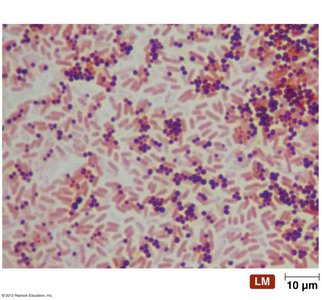
Microbiologists developed methods to isolate pure cultures of microbes and to differentiate them using staining techniques. Hans Christian Gram's staining method, developed in 1884, distinguishes bacteria based on cell wall properties.
Pure Culture: A laboratory culture containing a single species of microorganism.
Gram Stain: A differential stain that classifies bacteria as Gram-positive (purple) or Gram-negative (pink) based on cell wall structure.
Controlling Microbial Growth and Disease Prevention
Semmelweis, Lister, Nightingale, Snow, Jenner, and Ehrlich
Efforts to control infectious diseases led to the development of antiseptic techniques, vaccination, and the beginnings of epidemiology. Key figures include:
Semmelweis: Introduced handwashing in healthcare, drastically reducing puerperal fever.
Lister: Developed antiseptic surgery using phenol.
Nightingale: Advanced nursing and hospital sanitation.
Snow: Investigated cholera outbreaks, founding epidemiology.
Jenner: Developed the first vaccine (against smallpox) using cowpox material.
Ehrlich: Searched for 'magic bullet' chemotherapeutic agents, leading to the first treatment for syphilis.
The Significance of Microbes in Life and Disease
Beneficial and Harmful Roles of Microorganisms
Microbes are essential for many processes that sustain life, including nitrogen fixation, oxygen production, decomposition, and symbiotic relationships. They are also used in research, food production, bioremediation, and the synthesis of valuable products. However, some microbes are pathogens that cause infectious diseases.
Normal Microbiota: Microbes that inhabit the human body, contributing to defense, digestion, and vitamin synthesis.
Pathogens: Microbes that cause disease, such as Yersinia pestis (plague), influenza virus, and SARS-CoV-2 (COVID-19).
Emerging Infectious Diseases (EID): Diseases that have become more common or newly recognized in recent decades (e.g., Ebola, SARS, HIV/AIDS).
Re-emerging Diseases: Diseases that were previously under control but are increasing in incidence (e.g., tuberculosis, malaria).
Classification and Diversity of Microorganisms
Major Groups of Microbes
Microorganisms are classified into several major groups based on cellular structure, metabolism, and genetics:
Bacteria (Prokaryotes): Single-celled, lack a membrane-bound nucleus, reproduce by binary fission, and have cell walls containing peptidoglycan.
Fungi (Eukaryotes): Unicellular (yeasts) or multicellular (molds, mushrooms), have chitin cell walls, reproduce sexually or asexually, and are important decomposers.
Protozoa (Eukaryotes): Unicellular, lack rigid cell walls, motile by cilia, flagella, or pseudopodia, and can be free-living or parasitic.
Parasitic Helminths: Multicellular worms with microscopic eggs or larvae, some of which are pathogenic to humans.
Viruses: Acellular, obligate intracellular parasites composed of DNA or RNA within a protein coat; infect all forms of life.
Viroids: Infectious agents made of single-stranded RNA (primarily plant pathogens).
Prions: Infectious proteins that cause neurodegenerative diseases.
Examples of Microbes
Bacteria: Escherichia coli, Staphylococcus aureus, Vibrio cholerae
Fungi: Candida albicans (yeast), Penicillium chrysogenum (mold, source of penicillin)
Protozoa: Giardia lamblia, Paramecium, Trypanosoma
Helminths: Schistosoma (fluke), Taenia (tapeworm), Ancylostoma (roundworm)
Taxonomy and Nomenclature
Binomial Nomenclature and Taxonomic Hierarchy
Microorganisms are named using the binomial system established by Linnaeus, which assigns each organism a genus and species name (e.g., Escherichia coli). Taxonomy organizes organisms into hierarchical categories: domain, phylum, class, order, family, genus, and species. For prokaryotes, a species is defined as a group of closely related strains.
Binomial Nomenclature: Genus (capitalized) + species (lowercase), both italicized or underlined.
Taxonomic Hierarchy: Domain > Phylum > Class > Order > Family > Genus > Species
Three Domains of Life: Bacteria, Archaea, and Eukarya, based on rRNA gene sequences.
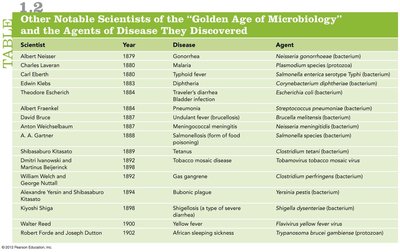
Summary Table: Notable Scientists and Their Discoveries
Scientist | Year | Disease | Agent |
|---|---|---|---|
Albert Neisser | 1879 | Gonorrhea | Neisseria gonorrhoeae (bacterium) |
Charles Laveran | 1880 | Malaria | Plasmodium species (protozoan) |
Carl Eberth | 1880 | Typhoid fever | Salmonella enterica serotype Typhi (bacterium) |
Edwin Klebs | 1883 | Diphtheria | Corynebacterium diphtheriae (bacterium) |
Theodore Escherich | 1885 | Traveler's diarrhea | Escherichia coli (bacterium) |
Albert Fraenkel | 1884 | Pneumococcal pneumonia | Streptococcus pneumoniae (bacterium) |
Albert Weisser | 1886 | Bacterial food infections | Salmonella species (bacterium) |
A. A. Gartner | 1888 | Salmonellosis (form of food poisoning) | Salmonella species (bacterium) |
Shibasaburo Kitasato | 1889 | Tetanus | Clostridium tetani (bacterium) |
Emile Roux and Alexandre Yersin | 1894 | Diphtheria | Corynebacterium diphtheriae (bacterium) |
Kiyoshi Shiga | 1898 | Bacillary dysentery | Shigella dysenteriae (bacterium) |
Paul Ehrlich | 1905 | Syphilis | Treponema pallidum (bacterium) |
Robert Forde and Joseph Dutton | 1902 | African sleeping sickness | Trypanosoma brucei gambiense (protozoan) |
Additional info: This summary integrates foundational concepts from the history, techniques, and taxonomy of microbiology, as well as the significance of microbes in health and disease, as covered in introductory college-level microbiology courses.
