 Back
BackA Brief History of Life and Microbiology: Foundations and Key Discoveries
Study Guide - Smart Notes
 Tailored notes based on your materials, expanded with key definitions, examples, and context.
History of Life on Earth
Origin and Timeline of Life
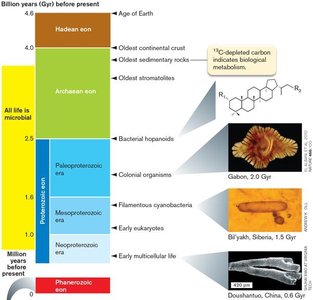
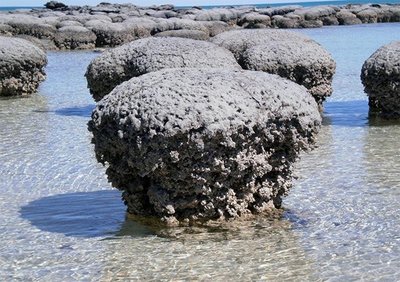
The history of life on Earth spans billions of years, with microbial life dominating most of this timeline. Recent evidence suggests that life began as early as 4.2 billion years ago (bya), earlier than previously thought. The earliest known fossils are stromatolites, which are layered structures formed by cyanobacteria.
Stromatolites: Calcareous mounds built by lime-secreting cyanobacteria, representing some of the oldest evidence of life.
Microbial Dominance: For most of Earth's history, all life forms were microbial.
Major Events: The timeline of life includes the appearance of bacterial hopanoids, colonial organisms, filamentous cyanobacteria, early eukaryotes, and early multicellular life.
The Great Oxidation Event
The Great Oxidation Event (GOE) occurred between 2.4 and 2.1 bya, marking a significant increase in atmospheric oxygen due to photosynthetic activity by cyanobacteria and other microbes.
Oxygen Production: Cyanobacteria released oxygen as a byproduct of photosynthesis.
Biological Impact: Oxygen was toxic to many anaerobic organisms, causing mass extinctions, but also enabled the evolution of aerobic life forms.
A Brief History of Microbiology
Early Observations and Cell Theory
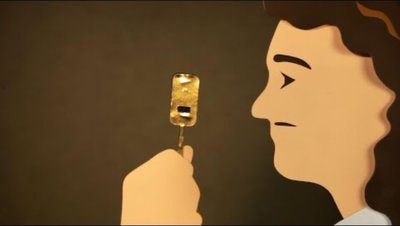
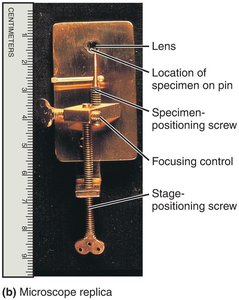
The foundation of microbiology began with the invention and use of microscopes. Robert Hooke (1665) observed that living things are composed of "cells," marking the beginning of cell theory. Anton van Leeuwenhoek (1673–1723) was the first to observe and document microbes, which he called "animalcules." His detailed drawings provided the first visual evidence of bacteria and protozoa.
Cell Theory: All living things are composed of cells.
Microscopy: Leeuwenhoek's simple microscopes enabled the discovery of the microbial world.
Spontaneous Generation vs. Biogenesis
For centuries, scientists debated whether life could arise spontaneously from nonliving matter (spontaneous generation) or only from preexisting life (biogenesis).
Spontaneous Generation: The hypothesis that life arises from nonliving matter, requiring a "vital force."
Biogenesis: The hypothesis that living cells arise only from preexisting living cells.
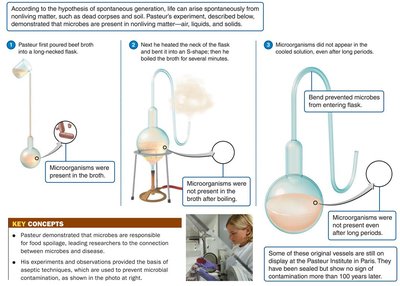
Key Experiments: Rudolf Virchow (1858) supported biogenesis, and Louis Pasteur (1861) provided experimental evidence by showing that microorganisms are present in the air and do not arise spontaneously.
The First Golden Age of Microbiology
This era was marked by the development of techniques to control microbial growth and the establishment of the germ theory of disease.
Pasteurization: Louis Pasteur demonstrated that spoilage bacteria could be killed by heat without evaporating alcohol, leading to the process of pasteurization.
Germ Theory of Disease: The idea that microorganisms cause disease. Key contributors include Agostino Bassi (fungal disease in silkworms), Pasteur (protozoan disease in silkworms), and Joseph Lister (antiseptic surgery).
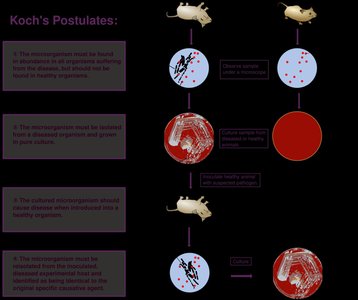
Koch's Postulates: Robert Koch established a set of criteria to link specific microbes to specific diseases, crucial for understanding infectious diseases.
Problems with Koch's Postulates
Not all pathogens can be grown in pure culture.
It is not always ethical to infect organisms (especially humans) for study.
Not all diseases are caused by pathogens.
Vaccination and Immunity
Edward Jenner (1796) pioneered vaccination by inoculating a person with cowpox virus, conferring immunity to smallpox. The term "vaccination" is derived from the Latin word vacca (cow).
Immunity: Protection against disease provided by vaccination or previous infection.
The Second Golden Age: Chemotherapy and Antibiotics
The focus shifted to treating microbial diseases using chemicals (chemotherapy). Chemotherapeutic agents include synthetic drugs and antibiotics.
Paul Ehrlich: Developed the first synthetic drug (salvarsan) for syphilis.
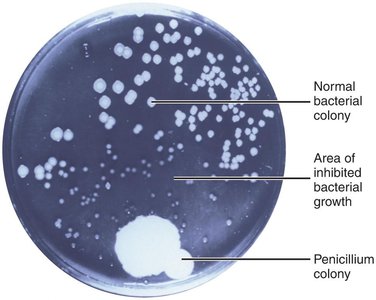
Alexander Fleming: Discovered penicillin, the first antibiotic, produced by the fungus Penicillium.
Antibiotics: Chemicals produced by microbes that inhibit or kill other microbes.
Problems with Antimicrobial Chemicals
Some drugs are toxic to humans, especially antivirals.
Microbial resistance to drugs is a growing problem (e.g., vancomycin-resistant Staphylococcus aureus).
The Miller-Urey Experiment: Origins of Life
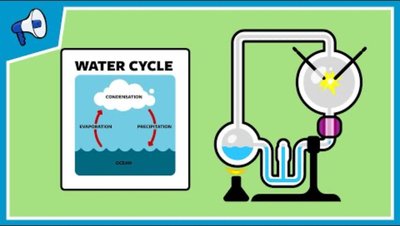
In 1953, the Miller-Urey experiment simulated early Earth conditions to test whether organic molecules necessary for life could form spontaneously. The experiment demonstrated that amino acids and other precursors to life could be synthesized from simple chemicals under prebiotic conditions.
Key Components: Water, methane, hydrogen, ammonia, heat, and electrical sparks to mimic lightning.
Significance: Provided experimental support for chemical evolution as a precursor to biological evolution.
The Third Golden Age: Genomics and Biotechnology
Modern microbiology is characterized by advances in genomics and recombinant DNA technology.
Genomics: The study of an organism's complete set of genes, enabling new methods for discovering, detecting, and classifying microorganisms.
Recombinant DNA: DNA made from two different sources, allowing for the production of human proteins in microbes and the study of microbiomes in various environments.
