 Back
BackA Brief History of Microbiology: Foundations, Classification, and Key Discoveries
Study Guide - Smart Notes
 Tailored notes based on your materials, expanded with key definitions, examples, and context.
A Brief History of Microbiology
Introduction to Microbiology
Microbiology is the study of organisms too small to be seen with the naked eye, including bacteria, archaea, fungi, protozoa, algae, and viruses. The field has evolved through centuries of observation, experimentation, and technological advances, shaping our understanding of life and disease.
Discovery and Early Observations
Antoni van Leeuwenhoek and the First Microorganisms
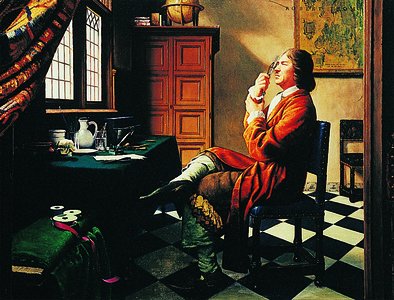
Antoni van Leeuwenhoek (1632–1723): First person to observe and describe microorganisms using handcrafted microscopes.
His observations laid the foundation for the field of microbiology.
Development of Microbial Classification
Carolus Linnaeus (1707–1778): Developed the first taxonomic system for classifying living organisms.
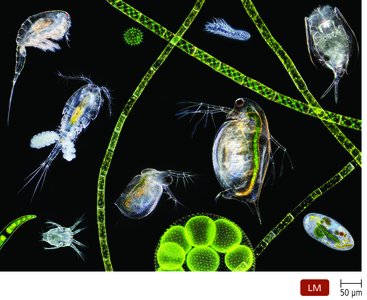
Van Leeuwenhoek’s organisms were grouped into six categories: Bacteria, Archaea, Fungi, Protozoa, Algae, and Small multicellular animals.
Modern Classification Systems
Today, life is classified into three domains: Bacteria, Archaea, and Eukarya (which includes fungi, protozoa, plants, and animals).
Classification of Microbes
Bacteria and Archaea: Prokaryotes
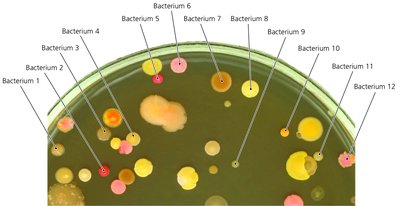
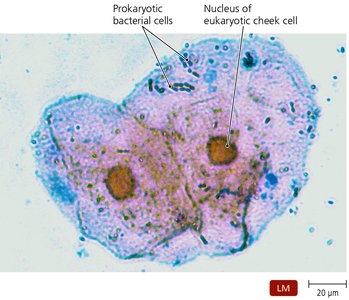
Prokaryotes: Unicellular organisms lacking a true nucleus.
Reproduce asexually.
Bacteria have cell walls composed of peptidoglycan; archaea have distinct cell wall chemistry.
Typically smaller than eukaryotic cells and found in moist environments.
Most bacteria are beneficial; some are pathogenic.
Fungi: Eukaryotic Microbes
Fungi: Eukaryotic organisms that obtain food from other organisms and have cell walls.
Microscopic fungi include:
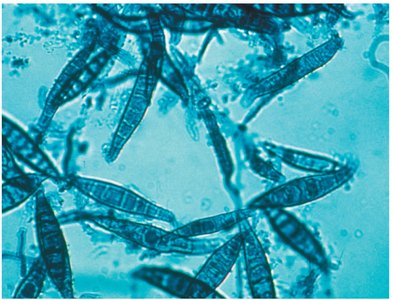
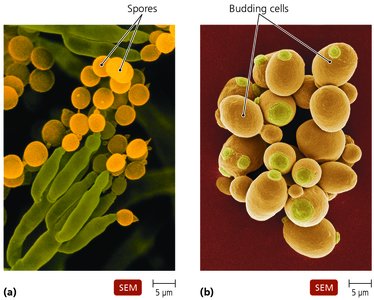
Molds: Multicellular, grow as long filaments (hyphae), reproduce by sexual and asexual spores.
Yeasts: Unicellular, reproduce asexually by budding; some produce sexual spores.
Protozoa: Animal-like Eukaryotes
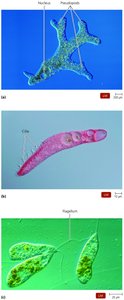
Protozoa: Single-celled eukaryotes, similar to animals in nutritional needs and cellular structure (lack cell walls).
Most live freely in water; reproduce asexually (mostly) and sexually.
Capable of locomotion via pseudopods, cilia, or flagella.
Viruses: Acellular Infectious Agents
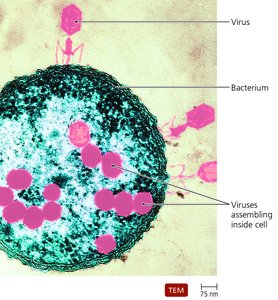
Viruses: Neither prokaryotic nor eukaryotic; acellular and non-living.
Composed of a DNA or RNA core surrounded by a protein coat.
Can only replicate inside a host cell; inert outside the host.
Observed using electron microscopy.
Key Questions in Microbiology’s History
Spontaneous Generation Debate
Spontaneous Generation: The theory that living organisms can arise from non-living matter.
Key Figures:
Aristotle: Proposed spontaneous generation.
Francesco Redi: Disproved spontaneous generation for animals.
John Needham: Supported spontaneous generation for microbes.
Lazzaro Spallanzani: Disproved Needham’s findings.
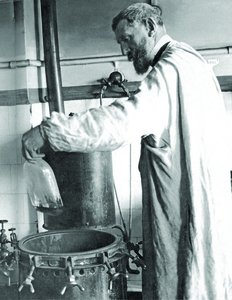
Louis Pasteur: Definitively disproved spontaneous generation with swan-necked flask experiments.
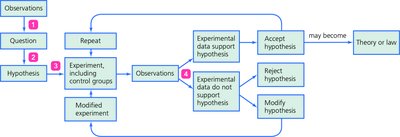
The Scientific Method
The debate over spontaneous generation led to the development of the scientific method, a systematic approach to experimentation and hypothesis testing.
Germ Theory of Disease
Germ Theory: Diseases are caused by microorganisms.
Key Contributors:
Girolamo Fracastoro: Proposed 'germs of contagion.'
Louis Pasteur: Demonstrated microbes cause disease.
Robert Koch: Developed Koch’s postulates to link specific pathogens to specific diseases.
Fanny Hesse: Introduced agar as a culture medium.
Hans Christian Gram: Developed the Gram staining technique.
Koch’s Postulates
The suspected agent must be found in every case of the disease and absent from healthy hosts.
The agent must be isolated and grown outside the host.
When the agent is introduced into a healthy, susceptible host, the host must develop the disease.
The same agent must be found in the diseased experimental host.
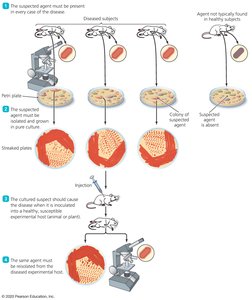
Exceptions: Some pathogens cannot be cultured, diseases may have multiple causes, and ethical considerations may limit experimentation.
Notable Scientists and Disease Agents
Many scientists contributed to the identification of disease agents. The following table summarizes key discoveries:
Scientist | Year | Disease | Agent |
|---|---|---|---|
Edwin Klebs | 1883 | Diphtheria | Corynebacterium diphtheriae (bacterium) |
Theodor Escherich | 1884 | Traveler’s diarrhea; bladder infection | Escherichia coli (bacterium) |
Albert Fraenkel | 1884 | Pneumonia | Streptococcus pneumoniae (bacterium) |
David Bruce | 1887 | Undulant fever (brucellosis) | Brucella melitensis (bacterium) |
Anton Weichselbaum | 1887 | Meningococcal meningitis | Neisseria meningitidis (bacterium) |
A. A. Gartner | 1888 | Salmonellosis | Salmonella species (bacterium) |
Shibasaburo Kitasato | 1889 | Tetanus | Clostridium tetani (bacterium) |
Dmitri Ivanovsky & Martinus Beijerinck | 1892/1898 | Tobacco mosaic disease | Tobamovirus (virus) |
William Welch & George Nuttall | 1892 | Gas gangrene | Clostridium perfringens (bacterium) |
Alexandre Yersin & Shibasaburo Kitasato | 1894 | Bubonic plague | Yersinia pestis (bacterium) |
Kiyoshi Shiga | 1898 | Shigellosis | Shigella dysenteriae (bacterium) |
Walter Reed | 1900 | Yellow fever | Flavivirus (virus) |
Robert Forde & Joseph Dutton | 1902 | African sleeping sickness | Trypanosoma brucei gambiense (protozoan) |
Prevention and Modern Advances
Prevention of Infectious Disease
Edward Jenner: Developed the smallpox vaccine, founding immunology.
John Snow: Founded epidemiology.
Ignaz Semmelweis: Implemented handwashing to prevent disease.
Joseph Lister: Founded antiseptic surgery.
Florence Nightingale: Founder of modern nursing.
The Modern Age of Microbiology
Alexander Fleming: Discovered penicillin (antibiotics).
Gerhard Domagk: Discovered sulfa drugs.
Avery, MacLeod, and McCarty: Demonstrated that genes are contained in DNA.
Beadle and Tatum: Linked gene activity to protein function.
Advances in molecular biology and microbial identification have revolutionized the field.
Summary Table: Microbial Groups and Key Features
Group | Cell Type | Cell Wall | Reproduction | Nutrition |
|---|---|---|---|---|
Bacteria | Prokaryotic | Peptidoglycan | Asexual | Varied |
Archaea | Prokaryotic | No peptidoglycan | Asexual | Varied |
Fungi | Eukaryotic | Chitin | Sexual/Asexual | Heterotrophic |
Protozoa | Eukaryotic | None | Sexual/Asexual | Heterotrophic |
Algae | Eukaryotic | Varied | Sexual/Asexual | Photosynthetic |
Viruses | Acellular | None | Host-dependent | Host-dependent |
Additional info: This guide covers foundational concepts from "A Brief History of Microbiology," including the classification of microbes, the development of the germ theory, and the scientific method. It is suitable for introductory college-level microbiology courses.
