 Back
BackA Brief History of Microbiology: Foundations, Discoveries, and Modern Applications
Study Guide - Smart Notes
 Tailored notes based on your materials, expanded with key definitions, examples, and context.
A Brief History of Microbiology
Introduction to Microbiology
Microbiology is the study of organisms too small to be seen with the naked eye, including bacteria, archaea, fungi, protozoa, algae, viruses, and some multicellular parasites. The field has evolved through centuries of observation, experimentation, and technological advances, shaping our understanding of life, disease, and the environment.
The Early Years of Microbiology
Antoni van Leeuwenhoek and the Discovery of Microorganisms
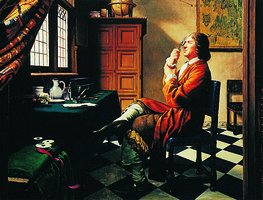
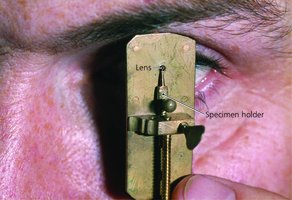
Antoni van Leeuwenhoek (1632–1723) is credited as the first person to observe and describe microorganisms, which he called "animalcules." Using simple microscopes he crafted himself, Leeuwenhoek examined water, dental scrapings, and other substances, revealing a previously unseen world of tiny life forms. His discoveries laid the foundation for the field of microbiology.
Classification of Microbes
Carolus Linnaeus developed a taxonomic system for naming and grouping organisms. Leeuwenhoek’s microorganisms are now classified into six major groups:
Bacteria
Archaea
Fungi
Protozoa
Algae
Small multicellular animals
Bacteria and Archaea
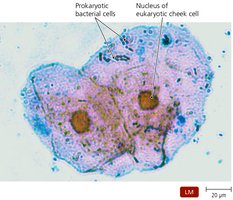
Unicellular and lack nuclei (prokaryotic)
Much smaller than eukaryotes
Found in diverse environments, including extreme conditions
Reproduce asexually
Bacterial cell walls contain peptidoglycan; archaeal cell walls do not
Fungi
Eukaryotic (have membrane-bound nucleus)
Obtain food from other organisms
Possess cell walls
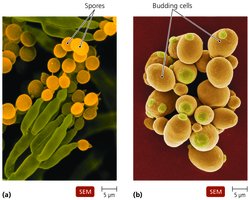
Include molds (multicellular, filamentous, reproduce by spores) and yeasts (unicellular, reproduce by budding or spores)
Protozoa
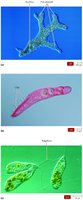
Single-celled eukaryotes
Similar to animals in nutrient needs and cellular structure
Live freely in water or as parasites in hosts
Reproduce asexually (mostly) and sexually
Motility via pseudopods, cilia, or flagella
Algae
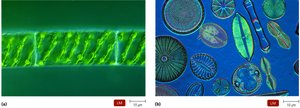
Unicellular or multicellular
Photosynthetic
Simple reproductive structures
Categorized by pigmentation and cell wall composition
Other Microorganisms
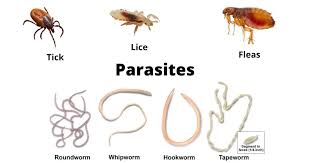
Parasites: Multicellular organisms such as worms (helminths) and arthropods that cause disease
Viruses: Acellular entities composed of genetic material (DNA or RNA) surrounded by a protein coat; require host cells to reproduce
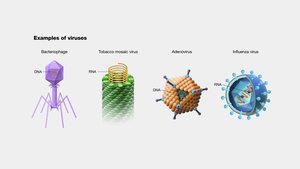
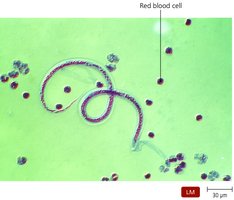
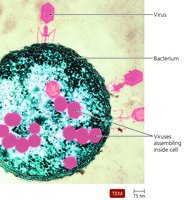
The Golden Age of Microbiology
Major Questions and Experiments
During the late 19th and early 20th centuries, microbiologists addressed four fundamental questions:
Is spontaneous generation of microbial life possible?
What causes fermentation?
What causes disease?
How can we prevent infection and disease?
Spontaneous Generation Debate
Aristotle proposed that living things could arise from nonliving matter (spontaneous generation).
Redi’s experiments with meat and flies challenged this idea, showing that maggots only appeared when flies could access the meat.
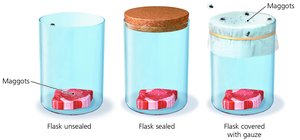
Needham’s experiments with boiled broths seemed to support spontaneous generation, but Spallanzani’s improved methods showed that sealed, boiled broths did not produce life, suggesting contamination was the cause.
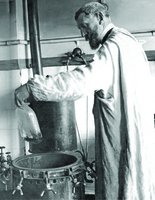
Pasteur’s swan-necked flask experiments definitively disproved spontaneous generation by preventing airborne microbes from contaminating sterile broth.
The Scientific Method
The debate over spontaneous generation contributed to the development of the scientific method, which involves:
Observation
Question
Hypothesis
Experimentation
Analysis and conclusion

Fermentation and Pasteurization
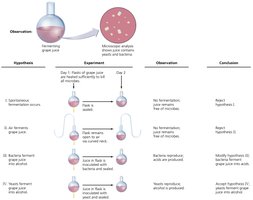
Pasteur demonstrated that fermentation is caused by living microorganisms, not by air or spontaneous processes.
He developed pasteurization, a process of heating liquids to kill most bacteria, which is still used in food safety today.
Buchner showed that enzymes, not whole cells, can drive fermentation, founding the field of biochemistry.
The Germ Theory of Disease
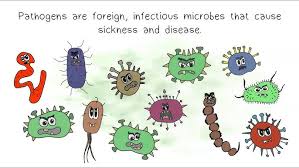
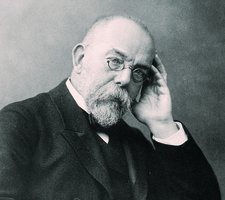
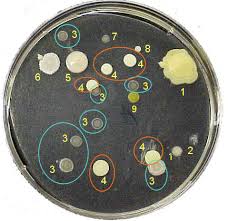
Pasteur proposed that specific diseases are caused by specific microorganisms (pathogens). Robert Koch provided experimental evidence for this theory by identifying the bacterium that causes anthrax and developing laboratory techniques for isolating and studying microbes.
Koch’s Postulates
Koch established a series of criteria (postulates) to prove that a specific microbe causes a specific disease:
The suspected agent must be found in every case of the disease and absent from healthy hosts.
The agent must be isolated and grown outside the host.
When introduced to a healthy host, the agent must cause the disease.
The same agent must be re-isolated from the diseased experimental host.
Gram Staining
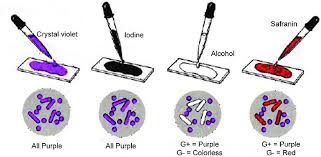
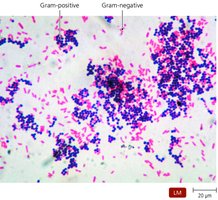
Gram’s stain is a differential staining technique that distinguishes bacteria based on cell wall structure:
Gram-positive bacteria: Retain crystal violet stain and appear purple
Gram-negative bacteria: Do not retain crystal violet, take up safranin, and appear pink/red
Prevention of Infection and Disease
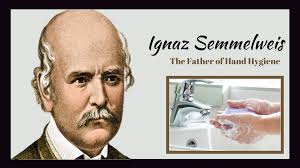
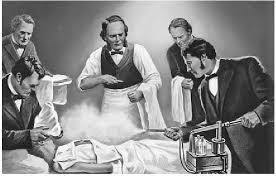
Semmelweis: Advocated handwashing to prevent puerperal fever
Lister: Developed antiseptic surgical techniques
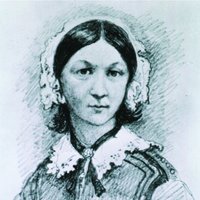
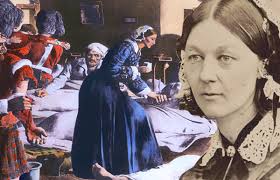
Nightingale: Improved nursing and hospital sanitation
Emergence of Microbiology Disciplines
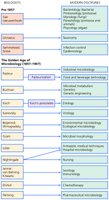
The pioneering work of early microbiologists led to the development of many scientific disciplines and applications, including immunology, chemotherapy, environmental microbiology, and industrial microbiology.
The Modern Age of Microbiology
Biochemistry and Metabolism
Modern microbiology investigates the chemical reactions of life (biochemistry), including metabolism, enzyme function, and the biochemical basis of diseases. Applications include drug design, diagnosis, and treatment of metabolic disorders.
Microbial Genetics and Molecular Biology
Microbial genetics explores how genes control cell function and inheritance.
Molecular biology explains cellular processes at the molecular level, including gene expression and regulation.
Recombinant DNA technology allows manipulation of genes for practical applications, such as producing human proteins in bacteria.
Gene therapy aims to treat diseases by inserting or repairing genes in humans.
Environmental and Applied Microbiology
Bioremediation uses microbes to detoxify polluted environments.
Microbes play essential roles in recycling elements (carbon, nitrogen, sulfur) and in causing or preventing disease.
Defending Against Disease
Serology: Study of blood serum and immune responses
Immunology: Study of the body’s defenses against pathogens
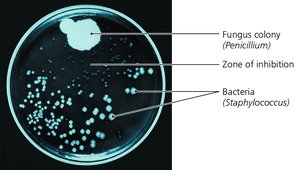
Chemotherapy: Use of chemicals (e.g., antibiotics like penicillin) to treat infectious diseases
Conclusion
Microbiology continues to evolve, driven by new questions and technological advances. The field’s foundations in observation, experimentation, and interdisciplinary research ensure its ongoing importance in science, medicine, and industry.
