 Back
BackA Brief History of Microbiology: Foundations, Classification, and Key Discoveries
Study Guide - Smart Notes
 Tailored notes based on your materials, expanded with key definitions, examples, and context.
Chapter 1: A Brief History of Microbiology
The Early Years of Microbiology
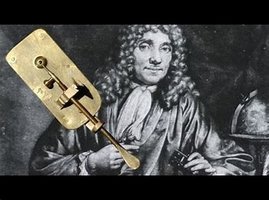
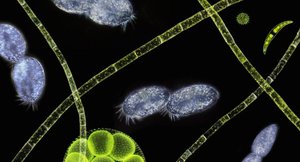
Microbiology began with the invention of the microscope, which allowed scientists to observe organisms too small to be seen with the naked eye. The field was pioneered by Antoni van Leeuwenhoek, who constructed simple microscopes and discovered a variety of microorganisms in water, which he called "animalcules." These discoveries laid the foundation for the study of microorganisms.
Microscope invention: Enabled the visualization of bacteria, fungi, algae, and protozoa.
Antoni van Leeuwenhoek: First to observe and document microorganisms.
"Animalcules": Early term for microorganisms.
Classification of Microbes
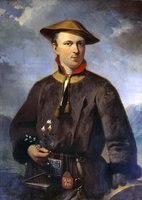
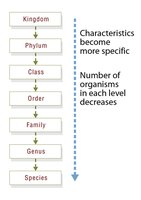
Microorganisms are classified based on their characteristics and evolutionary relationships. Carolus Linnaeus developed the system of taxonomy, which organizes living things into hierarchical categories. The binomial nomenclature system assigns each organism a two-part scientific name: genus and species.
Taxonomy: The science of classifying organisms.
Binomial nomenclature: Genus (capitalized) and species (lowercase), both italicized or underlined (e.g., Streptococcus pyogenes).
Woese-Fox Classification: Three domains—Bacteria, Archaea, and Eukarya.
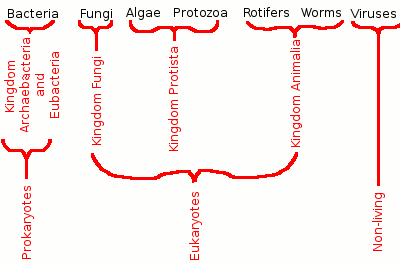
Major Groups of Microorganisms
Microbiology studies a diverse range of organisms, including fungi, protozoa, algae, bacteria, archaea, parasitic worms, and viruses. Each group has unique structural and functional characteristics.
Fungi: Eukaryotic, heterotrophic, possess cell walls; includes molds and yeasts.
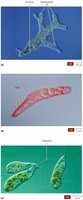
Protozoa: Eukaryotic, heterotrophic, unicellular, most are motile.
Algae: Eukaryotic, autotrophic, can be unicellular or multicellular.
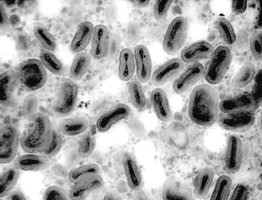
Bacteria and Archaea: Prokaryotic, unicellular; bacteria are found in diverse environments, archaea often inhabit extreme conditions.
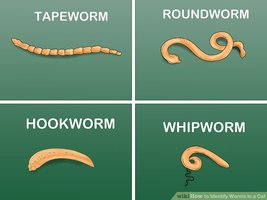
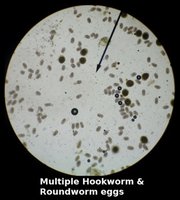
Parasitic worms: Multicellular, some stages are microscopic.
Viruses: Acellular, non-living, obligate intracellular parasites.
Microbial Size and Structure
Microorganisms vary greatly in size, from large protozoa to tiny viruses. Understanding their relative sizes is important for microscopy and laboratory techniques.
Protozoa: Up to 500 μm (e.g., Amoeba).
Bacteria: Typically 1–2 μm (e.g., E. coli).
Viruses: 0.03–0.3 μm (e.g., Polio virus).
Example: A typical virus is about 100 nm, much smaller than bacteria (~1 μm), which are smaller than plant or animal cells (~10–100 μm).
The Golden Age of Microbiology
During the late 1800s, scientists made significant advances in understanding the origins, classification, and control of microorganisms. Key questions included whether life could arise from non-living matter and what causes disease.
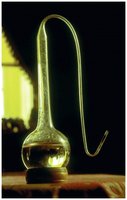
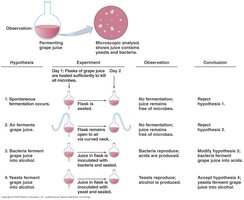
Spontaneous generation: The hypothesis that life arises from non-living matter, disproved by Louis Pasteur.
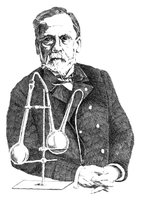
Louis Pasteur: Demonstrated that microorganisms do not spontaneously generate; developed pasteurization and the germ theory of disease.
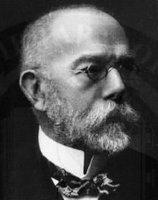
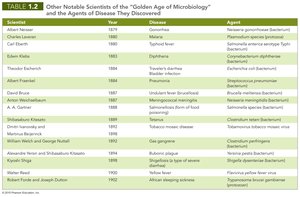
Robert Koch: Developed Koch's postulates for linking specific microbes to diseases; studied anthrax, tuberculosis, malaria, and cholera.
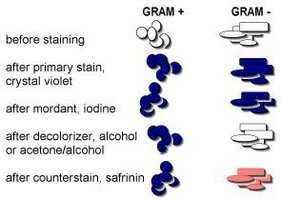
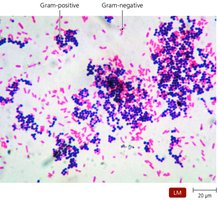
Christian Gram: Developed the Gram stain, a key technique for differentiating bacteria.
Koch's Postulates
Koch's postulates are a set of criteria used to establish a causal relationship between a microbe and a disease:
The specific causative agent must be found in every case of the disease.
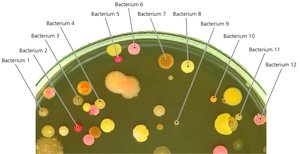
The disease organism must be isolated in pure culture.
Inoculation of a sample into a healthy, susceptible animal must produce the same disease.
The disease organism must be recovered from the inoculated animal.
Example: Koch used these postulates to identify Bacillus anthracis as the cause of anthrax.
Other Notable Scientists and Infection Prevention
Several scientists contributed to infection prevention and disease control:
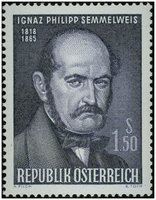
Ignaz Semmelweis: Advocated handwashing to prevent childbed fever.
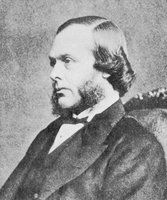
Joseph Lister: Introduced antiseptic techniques in surgery using carbolic acid.
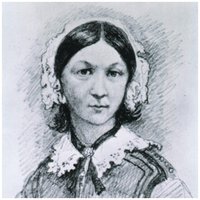
Florence Nightingale: Improved hospital hygiene and public health policy.
John Snow: Mapped cholera outbreaks, founding epidemiology.
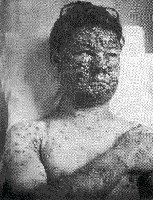
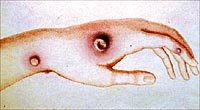
Edward Jenner: Developed the first vaccine (smallpox).
Louis Pasteur: Developed vaccines for cholera, anthrax, and rabies.
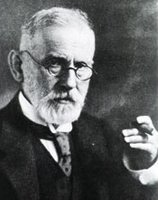
Paul Ehrlich: Developed differential staining and early chemotherapy.
Summary Table: Classification of Microbes
Group | Cell Type | Key Features |
|---|---|---|
Bacteria | Prokaryotic | Unicellular, diverse environments |
Archaea | Prokaryotic | Unicellular, extreme environments |
Fungi | Eukaryotic | Heterotrophic, cell walls, molds & yeasts |
Protozoa | Eukaryotic | Unicellular, motile, heterotrophic |
Algae | Eukaryotic | Autotrophic, unicellular/multicellular |
Parasitic Worms | Eukaryotic | Multicellular, microscopic eggs/stages |
Viruses | Acellular | Obligate intracellular parasites |
Additional info:
Pasteurization is a process of heating liquids to kill pathogenic microbes, developed by Louis Pasteur.
Gram staining differentiates bacteria based on cell wall structure: Gram-positive (thick peptidoglycan) and Gram-negative (thin peptidoglycan, outer membrane).
Industrial microbiology uses microbes for food, beverage, and pharmaceutical production.
