 Back
BackA Brief History of Microbiology: Foundations and Key Discoveries
Study Guide - Smart Notes
 Tailored notes based on your materials, expanded with key definitions, examples, and context.
Chapter 1: A Brief History of Microbiology
The Early Years of Microbiology
The field of microbiology began with the discovery and observation of microorganisms, which are organisms too small to be seen without a microscope. Early pioneers laid the foundation for the classification and study of these life forms.
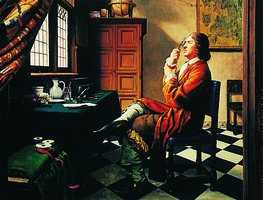
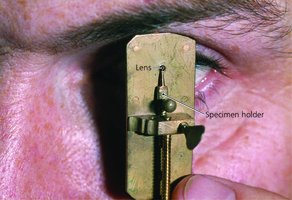
Antoni van Leeuwenhoek: Developed simple microscopes and was the first to observe and describe microorganisms, which he called "animalcules." His work marked the beginning of microbiology as a science.
Classification of Microorganisms
Microorganisms are classified into several groups based on their cellular structure, mode of nutrition, and other characteristics. Carolus Linnaeus developed a taxonomic system for naming and grouping organisms.
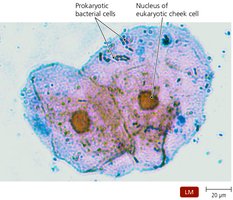
Bacteria and Archaea: Unicellular, lack nuclei, reproduce asexually, and are found in diverse environments. Bacterial cell walls contain peptidoglycan, while archaeal cell walls do not.
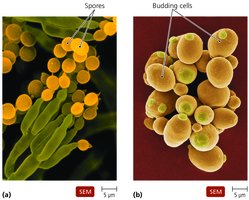
Fungi: Eukaryotic, obtain food from other organisms, and possess cell walls. Includes molds (multicellular, filamentous) and yeasts (unicellular, reproduce by budding).
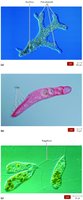
Protozoa: Single-celled eukaryotes, similar to animals in structure and nutrition, capable of locomotion via pseudopods, cilia, or flagella.
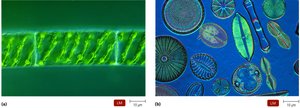
Algae: Unicellular or multicellular, photosynthetic, with simple reproductive structures. Classified by pigmentation and cell wall composition.
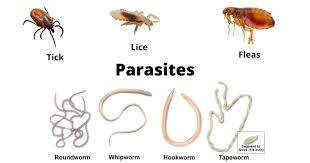
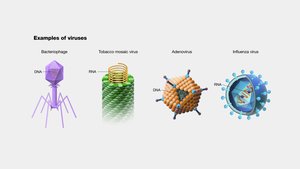
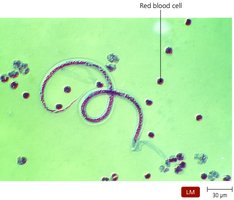
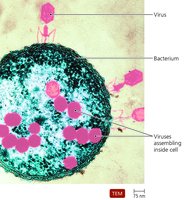
Other Important Groups: Parasites (multicellular organisms causing disease) and viruses (acellular infectious agents).
The Golden Age of Microbiology
Major Questions Addressed
During the Golden Age, scientists sought to answer four fundamental questions:
Is spontaneous generation of microbial life possible?
What causes fermentation?
What causes disease?
How can we prevent infection and disease?
Spontaneous Generation Debate
The concept of spontaneous generation proposed that living organisms could arise from nonliving matter. This idea was challenged through a series of experiments:
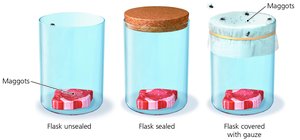
Redi’s Experiments: Showed that maggots do not develop in meat isolated from flies, casting doubt on spontaneous generation.
Needham’s Experiments: Supported spontaneous generation for microbes, but were later criticized for methodological flaws.
Spallanzani’s Experiments: Demonstrated that microbes do not arise spontaneously; critics argued that sealed vials excluded the 'life force.'
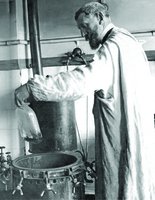
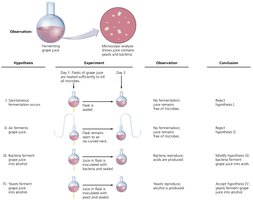
Pasteur’s Experiments: Used swan-necked flasks to show that microbes come from the air and do not spontaneously generate.
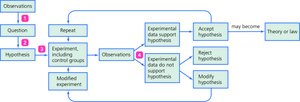
The Scientific Method
The debate over spontaneous generation contributed to the development of the scientific method, a systematic approach to scientific inquiry:
Observation leads to a question.
A hypothesis is formulated and tested through experiments.
Results are analyzed to accept, reject, or modify the hypothesis.
Fermentation and Industrial Microbiology
Understanding fermentation was crucial for the food and beverage industry. Key discoveries include:
Pasteur’s Experiments: Demonstrated that specific microbes cause fermentation, leading to the development of pasteurization (heating liquids to kill most bacteria).
Buchner’s Experiments: Showed that enzymes, not just living cells, can promote fermentation, founding the field of biochemistry.
The Germ Theory of Disease
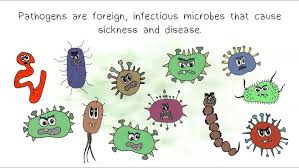
The germ theory proposed that specific diseases are caused by specific microorganisms (pathogens).
Pasteur: Developed the germ theory of disease.
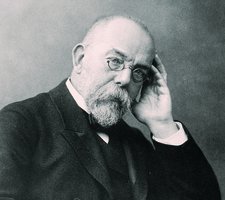
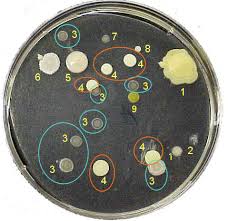
Koch’s Experiments: Identified causative agents of diseases such as anthrax and developed laboratory techniques for isolating and identifying bacteria.
Koch’s Postulates
Koch established a series of criteria to prove that a specific microbe causes a specific disease:
The suspected agent must be found in every case of the disease and absent from healthy hosts.
The agent must be isolated and grown outside the host.
When introduced to a healthy host, the agent must cause the disease.
The same agent must be found in the diseased experimental host.
Gram Staining
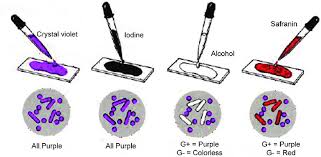
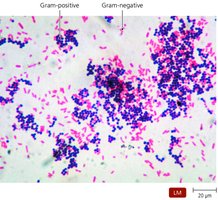
Gram staining is a differential staining technique that distinguishes between Gram-positive and Gram-negative bacteria, aiding in identification and classification.
Prevention of Infection and Disease
Several pioneers contributed to infection control and prevention:
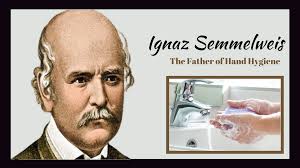
Semmelweis: Advocated handwashing to prevent disease transmission.
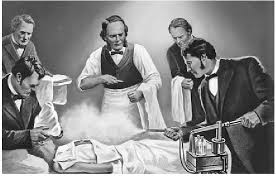
Lister: Developed antiseptic surgical techniques.
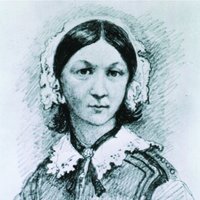
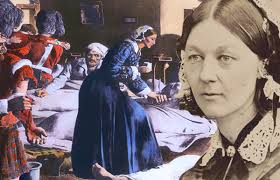
Nightingale: Improved nursing practices and hospital sanitation.
Emergence of Microbiology Disciplines
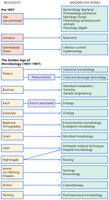
The foundational work of early microbiologists led to the development of many scientific disciplines and applications, including immunology, chemotherapy, and industrial microbiology.
The Modern Age of Microbiology
Biochemistry and Metabolism
Modern microbiology explores the chemical reactions of life, including metabolism, enzyme function, and the biochemical basis of disease and therapy.
Applications include drug design, diagnosis, and treatment of metabolic diseases.
Microbial Genetics and Molecular Biology
Advances in genetics and molecular biology have revolutionized microbiology:
Discovery that genes are made of DNA.
Understanding gene function and regulation.
Development of recombinant DNA technology and gene therapy.
Environmental Microbiology
Microorganisms play essential roles in environmental processes such as bioremediation and nutrient cycling (carbon, nitrogen, sulfur).
Immunology and Chemotherapy
Microbiology has contributed to the understanding of the immune system and the development of antimicrobial drugs:
Serology: Study of blood serum and immune responses.
Immunology: Study of the body’s defenses against pathogens.
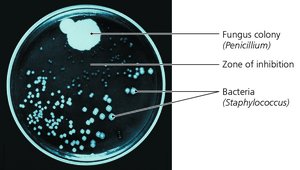
Chemotherapy: Discovery of antibiotics (e.g., penicillin) and sulfa drugs.
Future Directions
Microbiology continues to evolve, with ongoing research in genetics, disease prevention, and biotechnology. The field is driven by curiosity and the pursuit of answers to new scientific questions.
Additional info: This summary covers the foundational concepts, historical experiments, and major figures in microbiology, providing a comprehensive overview suitable for exam preparation and further study.
