 Back
BackAdaptive Immunity and Immunization: The Third Line of Host Defense
Study Guide - Smart Notes
 Tailored notes based on your materials, expanded with key definitions, examples, and context.
Adaptive Immunity: The Third Line of Defense
Overview and Key Characteristics
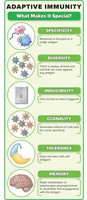
Adaptive immunity is a highly specialized defense mechanism acquired only after exposure to an immunizing event, such as infection or vaccination. It is mediated by B and T lymphocytes, which are prepared to react to specific antigens through a selective process. This system is distinguished from innate immunity by its specificity, diversity, inducibility, clonality, tolerance, and memory.
Specificity: Adaptive immunity targets specific antigens, ensuring that antibodies produced against one pathogen (e.g., chickenpox virus) will not affect another (e.g., measles virus).
Diversity: There is always at least one cell that can react against any antigen, providing broad protection.
Inducibility: The system is activated only when triggered by the presence of an antigen.
Clonality: Millions of cells with the same specificity are generated, amplifying the response.
Tolerance: The immune system does not react with self-antigens, preventing autoimmunity.
Memory: Rapid mobilization of lymphocytes preprogrammed to recall their first engagement with the antigen.
Stages of Immunologic Development and Interaction
Lymphocyte Development and Clonal Deletion
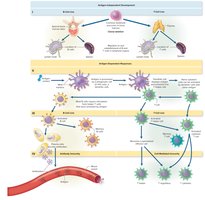
All lymphocytes originate from a common stem cell. B cells mature in the bone marrow, while T cells mature in the thymus. Both types migrate to lymphoid organs and recirculate through the body, constantly surveilling for antigens.
Clonal deletion: Self-reactive lymphocytes are eliminated during development to prevent autoimmunity.
Clonal selection: Lymphocytes with receptors specific to an encountered antigen are activated and proliferate.
Antigens, Immunogens, and Epitopes
Definitions and Properties
Antigens are molecules recognized by the immune system. If they provoke a response, they are called immunogens. An epitope is the specific part of an antigen that is recognized by immune cells.
Antigens: Usually proteins or polysaccharides found on cells and viruses.
Immunogens: Antigens that elicit an immune response.
Epitopes: The precise molecular region of an antigen recognized by lymphocyte receptors.
Major Histocompatibility Complex (MHC)
Structure and Function
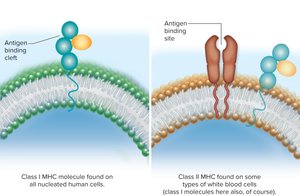
The MHC is a set of genes coding for cell surface markers essential for immune recognition. There are three classes:
Class I: Found on all nucleated cells; display self-characteristics and regulate immune reactions.
Class II: Found on macrophages, dendritic cells, and B cells; present antigens to T cells.
Class III: Encode proteins involved in the complement system.
Lymphocyte Receptors and Cell Surface Markers
B-Cell and T-Cell Receptors
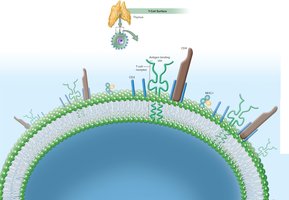
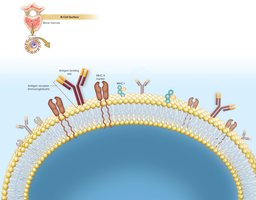
Lymphocyte receptors are specialized to bind antigens. B cells have immunoglobulin receptors, while T cells have receptors that recognize antigens presented with MHC molecules.
CD molecules: Cluster of differentiation markers, such as CD3, CD4, and CD8, are important for immune cell identification and function.
Immunologic Diversity and Antibody Variability
Genetic Mechanisms
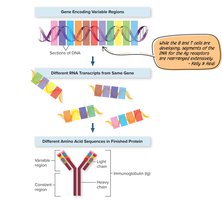
Diversity in antigen recognition is achieved by rearrangement of gene segments coding for antigen receptors. This results in a vast array of lymphocytes, each with unique specificity.
Estimated diversity: Each human can produce antibodies with up to 10 trillion different specificities.
Clonal Selection and Expansion
Activation and Proliferation
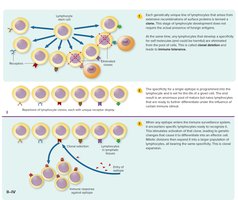
Upon antigen challenge, B and T cells proliferate and differentiate into effector and memory cells. Clonal selection ensures only lymphocytes with the correct specificity are activated.
Clonal deletion: Self-reactive clones are destroyed during development.
Clonal expansion: Activated clones multiply to mount an effective immune response.
Immunogenicity: Good vs. Poor Immunogens
Characteristics and Examples
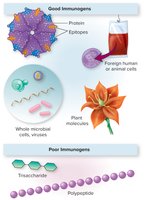
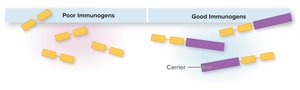
Immunogenicity depends on chemical composition, context, and size. Large, complex molecules are generally better immunogens than small, repetitive ones.
Good immunogens: Proteins, foreign cells, plant molecules, microbial cells, and viruses.
Poor immunogens: Simple polysaccharides and polypeptides.
Haptens
Definition and Mechanism
Haptens are small molecules that are not immunogenic by themselves but can become immunogenic when attached to a larger carrier molecule. The carrier enhances the spatial orientation and size, allowing the hapten to serve as an epitope.
Antigen Processing and Presentation
Role of Antigen-Presenting Cells (APCs)
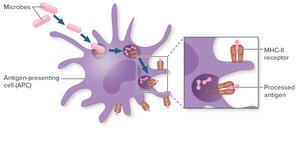
APCs such as macrophages, dendritic cells, and B cells process antigens and present them on their surface bound to MHC molecules, making them accessible to T lymphocytes.
T-Cell Activation and Subsets
CD4 and CD8 T Cells
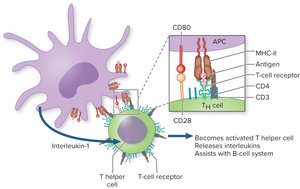
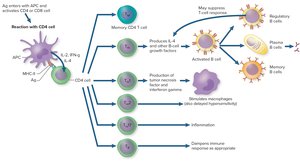
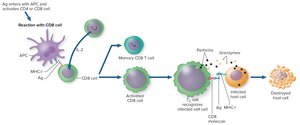
T cells are activated by APCs presenting antigens with MHC molecules. CD4 T helper cells differentiate into various subsets, each with distinct functions, while CD8 cytotoxic T cells destroy infected or abnormal cells.
Helper T cells (CD4): Regulate immune reactions, activate macrophages, and stimulate B cells.
Cytotoxic T cells (CD8): Destroy infected host cells, cancer cells, and foreign cells.
Regulatory T cells: Control immune responses and prevent autoimmunity.
B-Cell Activation and Antibody Production
Steps and Cell Types Produced
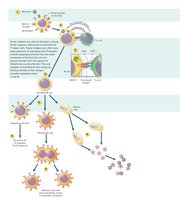
B cells, upon activation, differentiate into plasma cells (which secrete antibodies), memory B cells, and regulatory B cells. Antibodies bind to antigens, marking them for destruction or neutralization.
Antibody Structure and Functions
Immunoglobulin Molecule
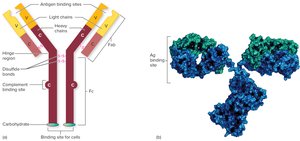
Antibodies are Y-shaped glycoproteins composed of two heavy and two light chains. The antigen-binding sites are located at the ends of the arms, while the Fc region interacts with cell receptors and complement proteins.
Fab region: Binds to antigens.
Fc region: Binds to cell receptors and mediates effector functions.
Antibody Functions
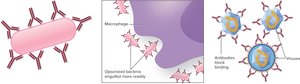
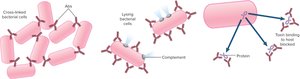
Opsonization: Antibodies coat microbes, enhancing phagocytosis.
Neutralization: Antibodies block pathogen binding sites.
Agglutination: Antibodies cross-link cells, immobilizing them.
Complement activation: Antibody-complement interaction lyses cells.
Antitoxin activity: Antibodies neutralize bacterial toxins.
Classes of Immunoglobulins
Isotypes and Their Roles
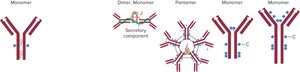
Immunoglobulins are classified into five main types, each with distinct functions:
Class | Structure | Main Function |
|---|---|---|
IgG | Monomer | Most prevalent; long-term immunity |
IgA | Monomer/Dimer | Secreted on mucous membranes; protects mucosal surfaces |
IgM | Pentamer | First antibody produced; strong agglutination |
IgD | Monomer | Receptor on B cells |
IgE | Monomer | Produced in response to allergies; binds to mast cells |
Primary and Secondary Immune Responses
Antibody Production Over Time
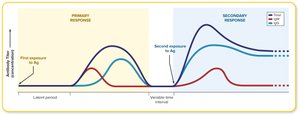
The primary response occurs upon first exposure to an antigen, with a latent period before antibody production. The secondary response is faster and stronger due to memory cells.
Types of Acquired Immunity
Natural and Artificial, Active and Passive
Acquired immunity can be classified based on how it is obtained:
Natural active: Immunity from infection.
Natural passive: Immunity from maternal antibodies (e.g., breastfeeding).
Artificial active: Immunity from vaccination.
Artificial passive: Immunity from antibody infusion (e.g., gamma globulin).




Types of Vaccines
Whole Organism and Antigenic Component Vaccines
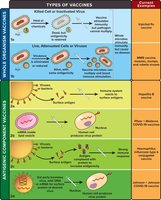
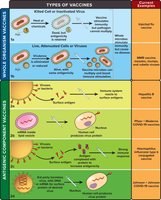
Vaccines are designed to stimulate the immune system and provide protection against pathogens. They are categorized as:
Whole organism vaccines: Contain live, attenuated or killed cells/viruses.
Antigenic component vaccines: Contain subunits, conjugated proteins, or genetic material (DNA/mRNA).
mRNA Vaccine Technology
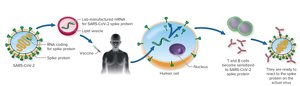
mRNA vaccines use lab-manufactured mRNA coding for a microbial protein (e.g., SARS-CoV-2 spike protein) enclosed in a lipid vesicle. Upon injection, human cells produce the protein, sensitizing T and B cells for rapid response upon exposure to the actual pathogen.
Vaccine Development, Approval, and Monitoring
Process and Safety
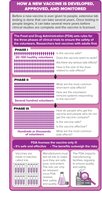
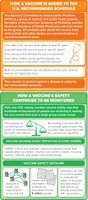
Vaccines undergo rigorous testing in laboratory and clinical trials before approval. The FDA and CDC monitor vaccine safety post-licensure, using systems such as VAERS and VSD to track adverse events and ensure ongoing safety.
Additional info: These notes expand on brief points from the original materials, providing definitions, examples, and academic context for self-contained study.
