 Back
Adaptive Immunity: Specific Defenses of the Host
Study Guide - Smart Notes
 Tailored notes based on your materials, expanded with key definitions, examples, and context.
Adaptive Immunity: Specific Defenses of the Host
Overview of Adaptive Immunity
Adaptive immunity is a highly specialized system of defense that targets specific pathogens. It is acquired through infection or vaccination and is characterized by a primary response (first encounter with a foreign substance) and a secondary response (subsequent encounters, which are faster and more effective due to immunological memory).
Primary response: Initial immune reaction to a new antigen.
Secondary response: Enhanced reaction upon re-exposure to the same antigen.
Memory: Adaptive immunity retains information about past pathogens for rapid response.
Dual Nature of the Adaptive Immune System
The adaptive immune system consists of two main branches: humoral immunity and cellular immunity.
Humoral immunity: Mediated by B cells and antibodies; combats extracellular pathogens.
Cellular immunity: Mediated by T cells; targets intracellular pathogens.
Humoral Immunity
Humoral immunity involves the production of antibodies by B cells. These antibodies recognize and bind to antigens, neutralizing them or marking them for destruction.
B cells: Lymphocytes that mature in the red bone marrow and produce antibodies.
Antibodies: Proteins that specifically bind to antigens.

Cellular Immunity
Cellular immunity is mediated by T lymphocytes, which recognize antigenic peptides processed by phagocytic cells. T cell receptors (TCRs) interact with antigens, leading to cytokine secretion and immune activation.
T cells: Lymphocytes that mature in the thymus and are involved in cell-mediated responses.
Cytokines: Chemical messengers that regulate immune responses.
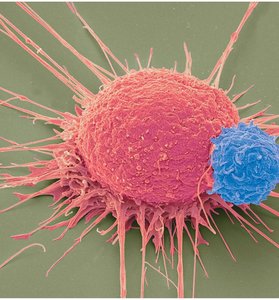
Cytokines: Chemical Messengers of Immune Cells
Cytokines are signaling molecules produced in response to stimuli, orchestrating the immune response.
Interleukins (ILs): Mediate communication between leukocytes.
Chemokines: Induce migration of immune cells.
Interferons (IFNs): Inhibit viral replication.
Tumor necrosis factor alpha (TNF-α): Promotes inflammation.
Hematopoietic cytokines: Regulate blood cell formation.
Cytokine storm: Excessive cytokine production, potentially harmful.
Cytokine | Source | Target Cell(s) | Effect |
|---|---|---|---|
IL-4 | Th2 | Th2 cells, B cells | Proliferate Th2 cells; Class switching to IgE |
IL-12 | Dendritic cells, macrophages, epithelial cells | Naive Th1, NK cells | Stimulates growth and function of Th1 cells; Stimulates IFNγ and TNFs |
IL-17 | Th17 | Neutrophils | Inflammation |
IL-22 | Th17 | Epithelial cells | Stimulates epithelial cells to make antimicrobial proteins |
Gamma interferon (IFNγ) | Th1 | CTL, macrophages | Promote phagocytosis; activate macrophages and humoral response |
Chemokines | Varies | Neutrophils | Chemotaxis |
TNFalpha (TNFα) | Macrophages, T cells, NK cells | Tumor cells | Inflammation |
GMCSF | Macrophages, T cells, NK cells | Myeloid stem cells | Increase macrophages and granulocytes |

Antigens and Antibodies
Antigens
Antigens are substances that provoke an immune response, typically by stimulating the production of antibodies.
Immunogens: Antigens that elicit an antibody response.
Epitope: The specific region of an antigen recognized by antibodies.
Hapten: Small molecules that are antigenic only when attached to a carrier.
PAMPs: Pathogen-associated molecular patterns recognized by host receptors.
Antibodies (Immunoglobulins)
Antibodies are Y-shaped globular proteins composed of two identical light chains and two identical heavy chains. The variable regions at the ends of the arms bind to epitopes, while the constant region determines the antibody class.
Valence: Number of antigen-binding sites (bivalent antibodies have two).
Classes: IgG, IgM, IgA, IgD, IgE.
Immunoglobulin Classes and Functions
IgG: Most abundant; crosses placenta; triggers complement; neutralizes toxins and viruses.
IgM: First response; pentamer; causes agglutination.
IgA: Found in mucous membranes and secretions; prevents microbial attachment.
IgD: Assists in immune response on B cells; function not well defined.
IgE: Triggers histamine release; defense against parasitic worms.
Humoral Immunity Response Process
T-dependent and T-independent Antigens
T-dependent antigens: Require T helper cells for B cell activation and antibody production. (If they are protien antigens, B cells that need help from t cells)
T-independent antigens: Directly activate B cells; provoke weak response, mainly IgM; no memory cells generated. (just b cells)
Clonal Selection
Clonal selection is the process by which activated B cells differentiate into plasma cells (antibody-producing) and memory cells.
Plasma cells: Produce antibodies.
Memory cells: Provide long-term immunity.
Antibody Diversity
Humans produce a vast array of antibodies due to random rearrangements of gene segments coding for antigen receptors, resulting in diverse amino acid sequences in the variable region.
Results of Antigen-Antibody Interaction
When antibodies bind to antigens, several protective mechanisms are triggered:
Agglutination: Clumping of antigens.
Opsonization: Enhancement of phagocytosis.
Antibody-dependent cell-mediated cytotoxicity: Destruction of target cells by immune cells.
Neutralization: Blocking of pathogen activity.
Activation of complement system: Cascade leading to pathogen destruction.
Cellular Immunity Response Process
Key Cells and Functions
M cells: Transfer antigens from the gut to lymphocytes and antigen-presenting cells.
T helper (TH) cells: Coordinate immune responses via cytokine signaling.
Cytotoxic T lymphocytes (CTLs): Destroy infected cells.
T regulatory (Treg) cells: Suppress immune responses to prevent autoimmunity (immune system attacks your own cells)
Natural killer (NK) cells: Destroy cells lacking MHC class I molecules.
Nonspecific Cells and Antigen-Presenting Cells (APCs)
Dendritic cells: Engulf and present antigens to T cells.
Macrophages: Activated by cytokines or antigen ingestion; present antigens to T cells.
Extracellular Killing
Natural killer cells: Kill virus-infected, tumor, and parasitic cells by forming pores and inducing lysis or apoptosis.
Antibody-dependent cell-mediated cytotoxicity (ADCC): Immune cells attach to antibodies coating large pathogens and secrete chemicals to lyse them.
Immunological Memory (Think of it as: first exposure creates memory, second exposure reveals it.)
Primary response: Slow, initial antibody production.
Secondary (anamnestic) response: Rapid, robust antibody production upon re-exposure.
Class switching: Shift from IgM to IgG, IgE, or IgA in secondary response.
Antibody titer: Measurement of antibody concentration in serum.
Types of Adaptive Immunity
Naturally acquired active immunity: Resulting from infection.
Naturally acquired passive immunity: Transplacental or via colostrum.
Artificially acquired active immunity: Vaccination.
Artificially acquired passive immunity: Injection of antibodies.
Summary Table: Immunoglobulin Classes
Class | Structure | Serum % | Location | Function |
|---|---|---|---|---|
IgG | Monomer | 80% | Blood, lymph, intestine | Crosses placenta, protects fetus, triggers complement, neutralizes toxins/viruses |
IgM | Pentamer | 6% | Blood vessels | First response, agglutination |
IgA | Monomer/dimer | 13% | Mucous membranes, secretions | Prevents microbial attachment |
IgD | Monomer | 0.02% | Blood, lymph, B cells | Assists immune response on B cells |
IgE | Monomer | 0.002% | Mast cells, basophils, blood | Histamine release, defense against parasites |
Key Points for Exam Preparation
Adaptive immunity is specific and has memory.
Humoral immunity involves B cells and antibodies; cellular immunity involves T cells.
Cytokines regulate immune responses.
Antigens provoke antibody production; antibodies have variable and constant regions.
Clonal selection produces plasma and memory cells.
Immunological memory ensures rapid response to previously encountered antigens.
Four types of adaptive immunity: naturally/acquired, active/passive.
