 Back
BackAnaerobic Cultivation Techniques and Oxygen Requirements of Microorganisms
Study Guide - Smart Notes
 Tailored notes based on your materials, expanded with key definitions, examples, and context.
Anaerobic Cultivation Techniques
Principle of Oxygen Requirements in Microbial Growth
Microorganisms exhibit diverse oxygen requirements, which influence their metabolic pathways and cultivation methods. Understanding these requirements is essential for isolating and studying different microbial species.
Strict Anaerobes: Cannot tolerate oxygen; oxygen is toxic. They rely on alternative electron acceptors for respiration. Clostridium sporogenes is a typical example.
Facultative Anaerobes: Can use oxygen for aerobic respiration when available, but switch to fermentation or anaerobic respiration in its absence. Examples include Escherichia coli and Bacillus cereus.
Strict Aerobes: Require oxygen for cellular respiration and cannot grow without it. Micrococcus luteus is a strict aerobe.
Microaerophilic Bacteria: Grow best at reduced oxygen concentrations (5-10%). Campylobacter jejuni is microaerophilic.
Aerotolerant Bacteria: Insensitive to oxygen; produce ATP by fermentation regardless of oxygen presence. Enterococcus faecalis is aerotolerant.
Experimental Methods for Cultivating Anaerobes
Specialized media and equipment are used to create environments with varying oxygen levels to study microbial growth.
Thioglycollate Broth: Contains sodium thioglycollate, which binds oxygen and creates a gradient from aerobic at the top to anaerobic at the bottom. The oxygen indicator Resazurin is used to visualize oxygen presence.
TSA Deep Stab: Tubes are inoculated by stabbing, allowing observation of growth patterns based on oxygen requirements.
Brewer’s Agar Plate: Divided and inoculated with different organisms, then placed in an anaerobic box with gas-generating chemicals (Gas Pak) to remove oxygen.
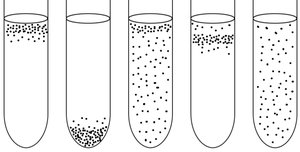
Microbial Growth Patterns in Thioglycollate Medium
The distribution of microbial growth in thioglycollate tubes reveals their oxygen requirements:
Aerobic: Growth at the top of the tube where oxygen is present.
Anaerobic: Growth at the bottom of the tube where oxygen is absent.
Facultative Anaerobe: Growth throughout the tube, but denser at the top.
Microaerophile: Growth just below the surface, where oxygen concentration is optimal.
Aerotolerant: Even growth throughout the tube.
Organisms Used in Anaerobic Cultivation Experiments
Representative organisms demonstrate different oxygen requirements:
Bacillus cereus: Large Gram-positive bacillus, aerobic/facultative anaerobe.
Escherichia coli: Gram-negative bacillus, facultative anaerobe.
Micrococcus luteus: Gram-positive diplococcus, strict aerobe, forms yellow pigment.
Clostridium sporogenes: Gram-positive bacillus, strict anaerobe.
Anaerobic Systems and Oxygen Indicators
Creating anaerobic conditions is essential for cultivating strict anaerobes. Brewer’s agar plates are sealed in anaerobic boxes with gas-generating chemicals to bind free oxygen. The oxygen indicator Resazurin changes color in the presence of oxygen, allowing visual confirmation of anaerobic conditions.
Summary Table: Oxygen Requirements and Growth Patterns
Type | Growth Pattern in Thioglycollate | Example Organism |
|---|---|---|
Strict Aerobe | Top of tube | Micrococcus luteus |
Strict Anaerobe | Bottom of tube | Clostridium sporogenes |
Facultative Anaerobe | Throughout, denser at top | Escherichia coli, Bacillus cereus |
Microaerophile | Just below surface | Campylobacter jejuni |
Aerotolerant | Even throughout | Enterococcus faecalis |
Additional info: The experiment demonstrates the importance of oxygen gradients and specialized media in studying microbial physiology and metabolism. Understanding these techniques is fundamental for environmental, clinical, and industrial microbiology.
