 Back
BackAntimicrobial Drugs: Mechanisms, Classes, and Clinical Considerations
Study Guide - Smart Notes
 Tailored notes based on your materials, expanded with key definitions, examples, and context.
Antimicrobial Drugs and Chemotherapy
Introduction to Chemotherapy and Antimicrobial Drugs
Chemotherapy refers to the use of chemicals to treat diseases, particularly infections caused by microorganisms. Antimicrobial drugs include antibiotics (produced by microbes) and synthetic agents that inhibit or kill pathogens. The discovery of penicillin by Alexander Fleming in 1928 marked a revolution in the treatment of bacterial infections, but the rise of antibiotic resistance is a growing concern in modern medicine.
Key Terminology in Antimicrobial Therapy
Definitions and Concepts
Selective toxicity: The ability of a drug to target pathogens without harming the host.
Antibiotic: A substance produced by a microbe that inhibits the growth of other microbes.
Antimicrobial drugs: Synthetic or natural substances that interfere with microbial growth.
Spectrum of activity: Narrow-spectrum drugs target specific groups, while broad-spectrum drugs affect a wide range of bacteria.
Superinfection: Overgrowth of resistant normal microbiota during antibiotic therapy.
Mechanisms of Antimicrobial Action
Major Targets in Microbial Cells
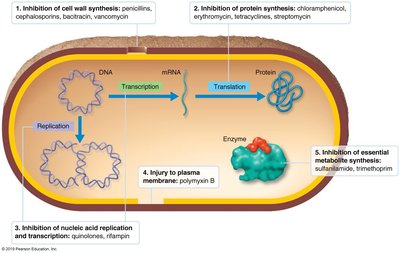
Antimicrobial drugs act by targeting essential structures or processes in microbes:
Inhibition of cell wall synthesis (e.g., penicillins, cephalosporins, vancomycin)
Inhibition of protein synthesis (e.g., chloramphenicol, tetracyclines, aminoglycosides, macrolides)
Inhibition of nucleic acid synthesis (e.g., rifamycins, quinolones)
Injury to plasma membrane (e.g., polymyxin B, daptomycin)
Inhibition of essential metabolite synthesis (e.g., sulfonamides, trimethoprim)
Classification of Antimicrobial Drugs
Inhibitors of Cell Wall Synthesis
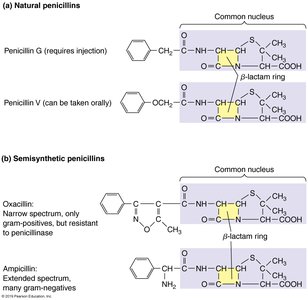
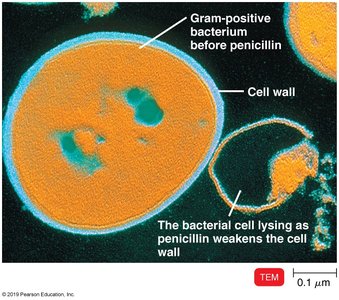
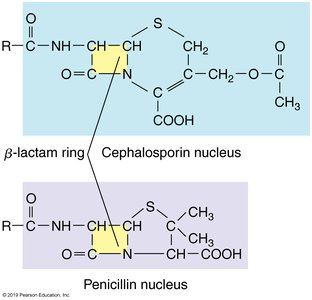
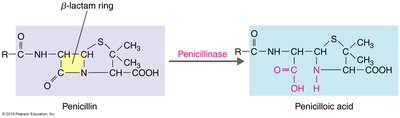
Penicillins: Contain a β-lactam ring; prevent cross-linking of peptidoglycan, mainly effective against Gram-positive bacteria.
Penicillinase-resistant penicillins: Methicillin, oxacillin.
Extended-spectrum penicillins: Ampicillin, amoxicillin (active against Gram-negative and Gram-positive bacteria).
Cephalosporins: Similar to penicillins but with a different β-lactam ring structure.
Polypeptide antibiotics: Bacitracin (topical, Gram-positive), vancomycin (last line against MRSA).
Antimycobacterial antibiotics: Isoniazid and ethambutol target mycolic acid synthesis in Mycobacterium.
Inhibitors of Protein Synthesis
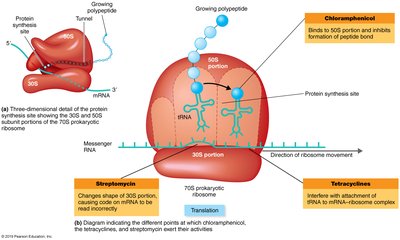
Chloramphenicol: Binds 50S ribosomal subunit, inhibits peptide bond formation; broad spectrum but can suppress bone marrow.
Aminoglycosides: Change shape of 30S subunit; can cause auditory damage (e.g., streptomycin, gentamicin).
Tetracyclines: Interfere with tRNA attachment; broad spectrum, effective against intracellular pathogens.
Macrolides: Macrocyclic lactone ring; narrow spectrum (e.g., erythromycin).
Glycylcyclines: Broad spectrum, bacteriostatic, useful against MRSA.
Inhibitors of Nucleic Acid Synthesis
Rifamycins: Inhibit mRNA synthesis; used for tuberculosis and leprosy.
Quinolones/Fluoroquinolones: Inhibit DNA gyrase (e.g., ciprofloxacin).
Inhibitors of Essential Metabolite Synthesis
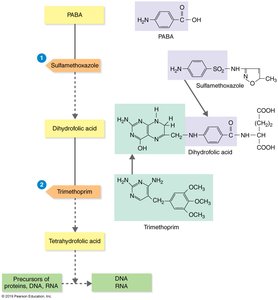
Sulfonamides: Inhibit folic acid synthesis by competing with PABA; often used in combination (e.g., TMP-SMZ).
Antifungal, Antiviral, Antiprotozoan, and Antihelminthic Drugs
Antifungal Agents
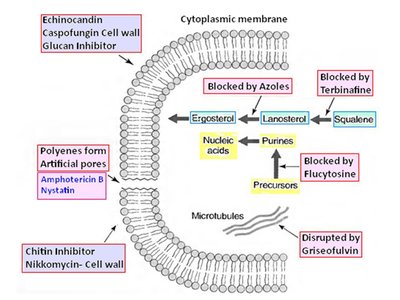
Target fungal sterols: Polyenes (amphotericin B), azoles (imidazoles, triazoles).
Target cell wall synthesis: Echinocandins inhibit β-glucan synthesis.
Target nucleic acid synthesis: Flucytosine (cytosine analog).
Target cytoskeleton: Griseofulvin inhibits microtubule formation.
Antiviral Agents
Inhibit entry/fusion: Block viral attachment or fusion with host cell.
Inhibit uncoating/genome integration: Target viral enzymes (e.g., reverse transcriptase inhibitors for HIV).
Nucleoside analogs: Inhibit viral nucleic acid synthesis (e.g., acyclovir for herpes).
Interferons: Produced by infected cells to inhibit viral spread.
Antiprotozoan and Antihelminthic Agents
Antiprotozoans: Quinine, chloroquine, artemisinin (malaria); metronidazole (anaerobic protozoa and bacteria).
Antihelminthics: Niclosamide (tapeworms), praziquantel (flukes), mebendazole/albendazole (intestinal helminths), ivermectin (roundworms, mites).
Determining Efficacy of Antimicrobial Drugs
Laboratory Methods
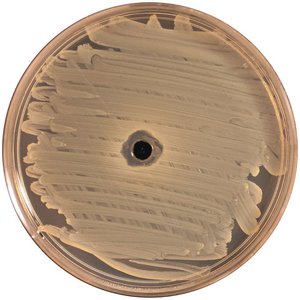
Disk-diffusion (Kirby-Bauer) test: Paper disks with antibiotics are placed on agar; zone of inhibition indicates sensitivity.
E test: Determines minimal inhibitory concentration (MIC).
Broth dilution test: Determines MIC and minimal bactericidal concentration (MBC).
Antimicrobial Resistance
Mechanisms and Spread
Resistance genes: Often spread via plasmids or transposons (horizontal gene transfer).
Mechanisms: Prevention of drug penetration, enzymatic destruction, alteration of target site, rapid efflux.
Superbugs: Bacteria resistant to multiple antibiotics.
Factors Contributing to Resistance
Misuse of antibiotics (e.g., incomplete regimens, use for viral infections, use in animal feed).
Clinical Considerations in Antimicrobial Therapy
Therapeutic Index and Drug Interactions
Therapeutic index: Ratio of a drug's toxic dose to its effective dose; higher index indicates greater safety.
Drug interactions: Some antibiotics can inactivate other drugs (e.g., contraceptives).
Organ toxicity: Some drugs can damage organs or pose risks to fetuses.
Drug Combinations
Synergism: Combined effect of two drugs is greater than either alone.
Antagonism: Combined effect is less than either drug alone.
Summary Table: Spectrum of Activity of Antimicrobial Drugs
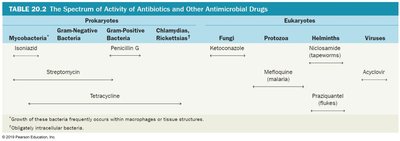
Mycobacteria | Gram-Negative Bacteria | Gram-Positive Bacteria | Chlamydias, Rickettsias | Fungi | Protozoa | Helminths | Viruses | |
|---|---|---|---|---|---|---|---|---|
Isoniazid | ✓ | |||||||
Streptomycin | ✓ | ✓ | ||||||
Tetracycline | ✓ | ✓ | ✓ | ✓ | ||||
Penicillin G | ✓ | |||||||
Ketoconazole | ✓ | |||||||
Mefloquine (malaria) | ✓ | |||||||
Niclosamide (tapeworms) | ✓ | |||||||
Praziquantel (flukes) | ✓ | |||||||
Acyclovir | ✓ |
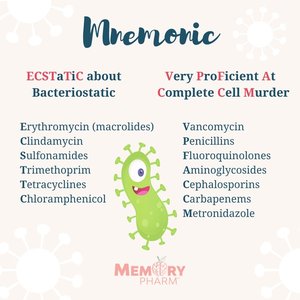
Mnemonic for Bacteriostatic vs. Bactericidal Drugs
Additional info:
Antibiotic resistance is a major public health concern, requiring prudent use of existing drugs and the development of new agents.
Laboratory testing is essential for guiding effective antimicrobial therapy and minimizing resistance development.
