 Back
Antimicrobial Drugs: Mechanisms, Classes, and Resistance
Study Guide - Smart Notes
 Tailored notes based on your materials, expanded with key definitions, examples, and context.
Antimicrobial Drugs
Definitions and Historical Context
Antimicrobial drugs are essential tools in microbiology for controlling microbial infections. Their development has revolutionized medicine, allowing for the treatment of bacterial, fungal, viral, protozoan, and helminthic diseases. The concept of selective toxicity is central, meaning drugs target microbes without harming the host.
Chemotherapy: Use of drugs to treat disease.
Antimicrobial drugs: Interfere with microbial growth within a host.
Antibiotic: Substance produced by a microbe that inhibits another microbe.
Selective toxicity: Kills harmful microbes without damaging the host.
Key discoveries: Salvarsan (1910, Ehrlich), Penicillin (1928, Fleming), Prontosil (1932, first sulfa drug), Clinical trials of penicillin (1940, Florey & Chain).
Spectrum of Activity
Antimicrobial drugs vary in their spectrum of activity, affecting different groups of microorganisms.
Narrow-spectrum antibiotics: Affect a limited range of microbes.
Broad-spectrum antibiotics: Affect a wide range of gram-positive and gram-negative bacteria.
Superinfection: Overgrowth of resistant normal microbiota, e.g., Candida albicans, Clostridioides difficile.
Microorganism | Antibiotic |
|---|---|
Gram-Positive Rods | Bacitracin, Polymyxin |
Actinomycetes | Amphotericin B, Chloramphenicol, Tetracycline, Erythromycin, Neomycin, Streptomycin, Gentamicin |
Fungi | Cephalothin, Griseofulvin, Penicillin |
Mechanisms of Action of Antimicrobial Drugs
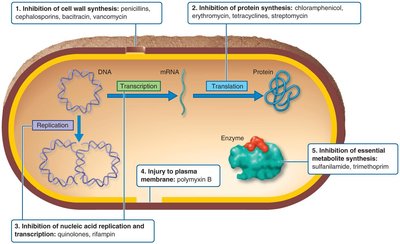
Major Modes of Action
Antimicrobial drugs act through several distinct mechanisms, each targeting a specific aspect of microbial physiology.
Bactericidal: Kill microbes directly.
Bacteriostatic: Prevent microbial growth.
Inhibition of Cell Wall Synthesis
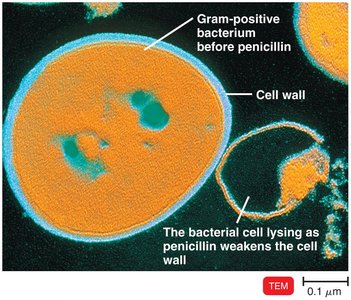
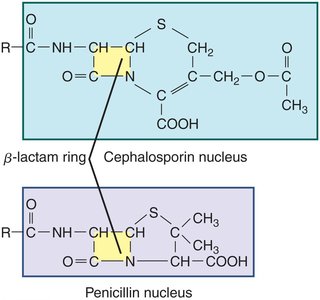
Drugs such as penicillins and cephalosporins prevent the synthesis of peptidoglycan, weakening the cell wall and causing lysis, especially in gram-positive bacteria.
Penicillins: Block cross-linking of peptidoglycans.
Cephalosporins: Similar mechanism, different structure.
Polypeptide antibiotics: Bacitracin (topical), Vancomycin (last line against MRSA).
Inhibition of Protein Synthesis
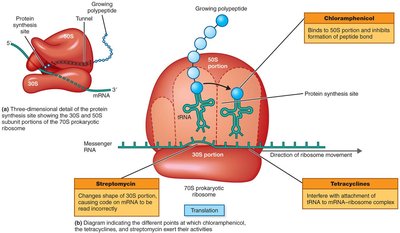
These drugs target bacterial 70S ribosomes, interfering with translation and protein production.
Chloramphenicol: Inhibits peptide bond formation.
Erythromycin, Streptomycin, Tetracyclines: Various actions on ribosomal subunits.
Injury to Plasma Membrane
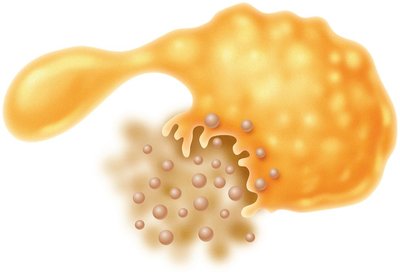
Some antibiotics disrupt membrane integrity, causing leakage of cellular contents.
Polypeptide antibiotics: Change membrane permeability.
Antifungal drugs: Combine with membrane sterols.
Ionophores: Allow uncontrolled movement of cations (not for human use).
Inhibition of Nucleic Acid Synthesis
These drugs block DNA replication or RNA transcription, interfering with genetic processes.
Quinolones, Fluoroquinolones: Inhibit topoisomerase.
Rifamycins: Inhibit RNA polymerase.
Inhibition of Synthesis of Essential Metabolites
Antimetabolites compete with normal substrates for enzymes, blocking metabolic pathways.
Sulfanilamide: Competes with PABA, stopping folic acid synthesis.
Classes of Antimicrobial Drugs
Inhibitors of Cell Wall Synthesis
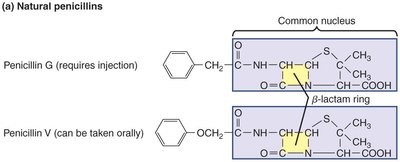
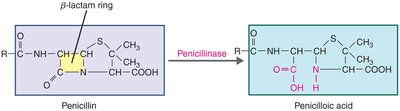
Natural Penicillins: Penicillin G (injection), Penicillin V (oral), narrow spectrum, susceptible to penicillinase.
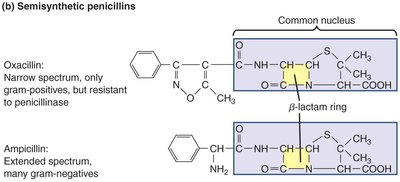
Semisynthetic Penicillins: Oxacillin (penicillinase-resistant), Ampicillin (broad spectrum).
Carbapenems: Broad spectrum, e.g., Imipenem.
Monobactams: Aztreonam, effective against gram-negatives.
Cephalosporins: Grouped by generation, increasing spectrum and activity against resistant bacteria.
Polypeptide antibiotics: Bacitracin (topical), Vancomycin (last line against MRSA).
Antimycobacterial antibiotics: Isoniazid, Ethambutol (target mycolic acid in cell wall).
Inhibitors of Protein Synthesis
Chloramphenicol: Broad spectrum, potentially toxic.
Aminoglycosides: Streptomycin, Neomycin, Gentamicin (broad spectrum).
Tetracyclines: Broad spectrum, interfere with tRNA attachment.
Macrolides: Erythromycin, Azithromycin, Clarithromycin (alternative to penicillin).
Streptogramins: Quinupristin and dalfopristin (Synercid), alternative for vancomycin-resistant bacteria.
Oxazolidinones: Linezolid, useful against penicillin-resistant gram-positive bacteria.
Injury to Plasma Membrane
Lipopeptides: Daptomycin (MRSA), Polymyxin B (topical, gram-negative bacteria).
Inhibitors of Nucleic Acid Synthesis
Rifamycins: Rifampin (inhibits RNA synthesis, tuberculosis).
Quinolones and Fluoroquinolones: Nalidixic acid, ciprofloxacin (inhibit DNA gyrase, urinary tract infections).
Competitive Inhibitors of Essential Metabolite Synthesis
Sulfonamides: Sulfamethoxazole-trimethoprim (broad spectrum, widely used combination).
Antifungal, Antiviral, Antiprotozoan, and Antihelminthic Drugs
Antifungal Drugs
Agents affecting fungal sterols: Polyenes (Nystatin, Amphotericin B), Azoles (Clotrimazole, Miconazole, Ketoconazole), Allylamines (Terbinafine).
Agents affecting fungal cell walls: Echinocandins (Caspofungin).
Agents inhibiting nucleic acids: Flucytosine.
Other antifungal drugs: Griseofulvin, Tolnaftate, Pentamidine.
Antiviral Drugs
Entry and fusion inhibitors: Maraviroc (HIV).
Uncoating, genome integration, nucleic acid synthesis inhibitors: Amantadine, Zidovudine (AZT), Acyclovir, Ribavirin.
Assembly and exit inhibitors: Nirmatrelvir, ritonavir, molnupiravir, Saquinavir, Zanamivir, oseltamivir.
Interferons: Alpha interferon (hepatitis).
Antiprotozoan Drugs
Chloroquine, mefloquine: Malaria.
Artemisinin: Kills Plasmodium sporozoites.
Metronidazole, tinidazole: Giardiasis, amebiasis, trichomoniasis.
Antihelminthic Drugs
Niclosamide: Tapeworms.
Praziquantel: Flatworms.
Mebendazole, albendazole: Intestinal roundworms.
Ivermectin: Paralyzes intestinal roundworms.
Antibiotic Resistance
Mechanisms of Resistance
Resistance arises through mutations and gene transfer, often via plasmids. Misuse of antibiotics accelerates resistance.
Blocking entry: Drug cannot penetrate cell wall.
Inactivation by enzymes: Drug is enzymatically destroyed.
Alteration of target molecule: Drug no longer binds its target.
Efflux of antibiotic: Drug is pumped out of the cell.
Factors Contributing to Resistance
Using outdated or weakened antibiotics.
Using antibiotics for non-bacterial infections.
Using antibiotics in animal feed.
Failing to complete prescribed regimens.
Using someone else's prescription.
Tests to Guide Chemotherapy
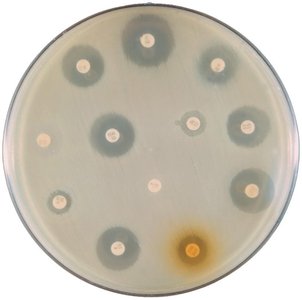
Disk-Diffusion Method (Kirby-Bauer Test)
This method tests the effectiveness of chemotherapeutic agents by measuring the zone of inhibition around antibiotic disks on agar plates.
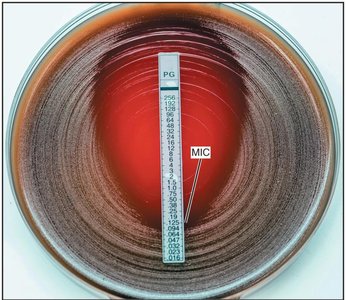
E Test (Epsilometer Test)
The E test determines the minimal inhibitory concentration (MIC) of antibiotics using a gradient diffusion strip.
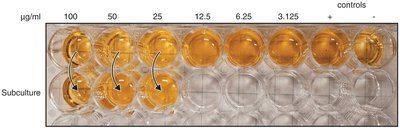
Broth Dilution Tests
These tests determine MIC and minimal bactericidal concentration (MBC) by observing bacterial growth in wells containing different drug concentrations.
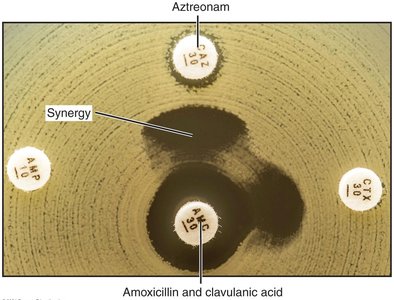
Synergism
Synergism occurs when two antibiotics work together to produce a greater effect than either alone.
Therapeutic Index
Risk vs. Benefit
The therapeutic index is a measure of drug safety, balancing the risks and benefits when administering antimicrobial drugs.
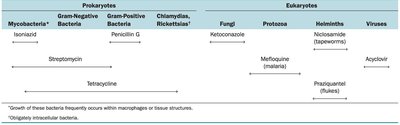
Summary Table: Representative Antimicrobial Drugs by Target
Prokaryotes | Eukaryotes |
|---|---|
Mycobacteria: Isoniazid, Streptomycin, Tetracycline | Fungi: Ketoconazole |
Gram-Negative Bacteria: Streptomycin, Tetracycline | Protozoa: Mefloquine (malaria) |
Gram-Positive Bacteria: Penicillin G, Tetracycline | Helminths: Niclosamide (tapeworms), Praziquantel (flukes) |
Chlamydias, Rickettsias: Tetracycline | Viruses: Acyclovir |
