 Back
Antimicrobial Drugs: Mechanisms, Spectrum, and Clinical Use
Study Guide - Smart Notes
 Tailored notes based on your materials, expanded with key definitions, examples, and context.
Controlling Microbial Growth in the Body: Antimicrobial Drugs
Introduction to Antimicrobial Drugs
Antimicrobial resistance is a critical global health issue, impacting individuals at all stages of life and affecting healthcare, veterinary, and agricultural practices. The development of antimicrobial drugs has revolutionized the treatment of infectious diseases, but their use must be carefully managed to prevent resistance and adverse effects.
History and Development of Antimicrobial Agents
Key Historical Figures and Discoveries
Paul Ehrlich: Proposed the concept of “magic bullets” and developed arsphenamine for syphilis treatment.
Alexander Fleming: Discovered penicillin, the first true antibiotic.
Howard Florey & Ernst Chain: Developed clinical testing and mass production of penicillin.
Gerhard Domagk: Discovered sulfanilamide (Prontosil), a key sulfa drug.
Selman Waksman & Albert Schatz: Discovered streptomycin and coined the term “antibiotic.”
Antibiotics are substances produced by microorganisms that inhibit or kill other microbes. Today, the term includes both natural and synthetic antibacterial agents.
Principles of Antimicrobial Therapy
Selective Toxicity
Selective toxicity refers to the ability of an antimicrobial drug to harm the pathogen without causing significant damage to the host. This principle is essential for effective and safe treatment.
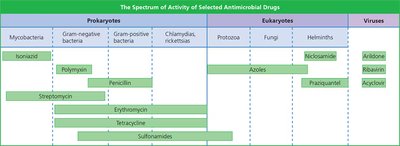
Spectrum of Activity
Narrow-spectrum drugs: Target specific types of microorganisms, minimizing disruption to normal flora.
Broad-spectrum drugs: Affect a wide range of pathogens but may lead to secondary or superinfections by disrupting normal microbiota.
Mechanisms of Action of Antimicrobial Drugs
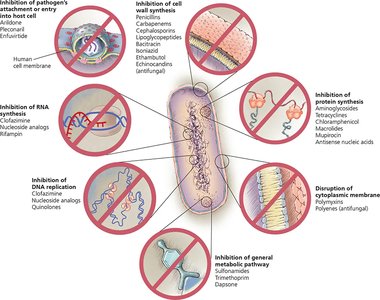
Antimicrobial drugs target essential processes in microbial cells. The five main mechanisms are:
Inhibition of cell wall synthesis
Inhibition of protein synthesis
Disruption of cytoplasmic membrane
Inhibition of general metabolic pathways
Inhibition of nucleic acid synthesis
Inhibition of Cell Wall Synthesis
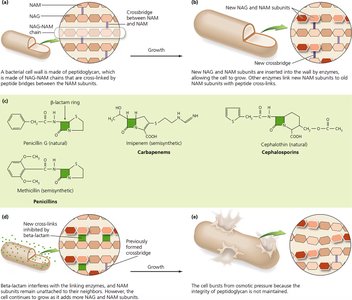
Most agents prevent cross-linkage of N-acetylmuramic acid (NAM) subunits in peptidoglycan, weakening the bacterial cell wall and causing lysis. Beta-lactam antibiotics (e.g., penicillin, amoxicillin) are competitive inhibitors of enzymes that cross-link NAM subunits. Other agents include:
Vancomycin: Blocks alanine-alanine linkage in Gram-positive bacteria (narrow-spectrum).
Bacitracin: Blocks secretion of NAG and NAM from the cytoplasm.
Isoniazid and Ethambutol: Inhibit mycolic acid synthesis in Mycobacterium species.
Inhibition of Protein Synthesis
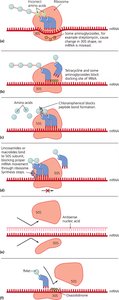
Antimicrobials can target prokaryotic ribosomes, interfering with protein synthesis. Examples include:
Aminoglycosides (e.g., streptomycin): Cause misreading of mRNA.
Tetracyclines: Block tRNA attachment.
Chloramphenicol: Inhibits peptide bond formation.
Macrolides: Block ribosomal translocation.
Inhibition of General Metabolic Pathways
Sulfonamides and related drugs inhibit folic acid synthesis by competing with PABA, a precursor in the pathway. This blocks nucleotide synthesis, preventing DNA and RNA formation.
Inhibition of Nucleic Acid Synthesis
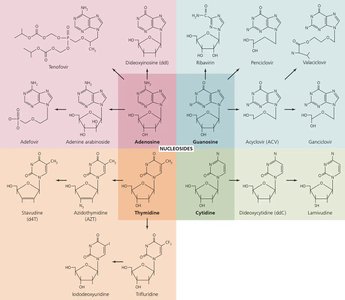
Some drugs block DNA replication or RNA transcription. These drugs often affect both prokaryotes and eukaryotes, so their use is limited to specific infections. Nucleotide analogs (e.g., acyclovir, AZT) are incorporated into viral DNA, causing chain termination and preventing replication.
Quinolones and fluoroquinolones: Inhibit DNA gyrase, preventing bacterial DNA replication (e.g., ciprofloxacin).
Disruption of Cytoplasmic Membrane
Some drugs (e.g., polymyxins, polyenes) disrupt the integrity of the cytoplasmic membrane, causing cell death. These are mainly used for Gram-negative bacteria and fungi.
Testing Antimicrobial Efficacy
Diffusion Susceptibility Tests (Kirby-Bauer)
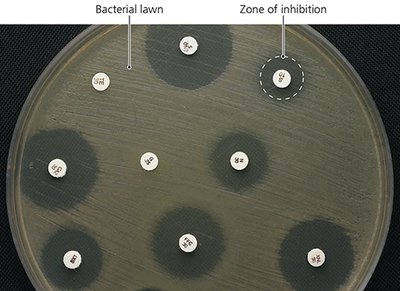
Antibiotic-impregnated disks are placed on an agar plate inoculated with bacteria. The zone of inhibition around each disk indicates the drug’s effectiveness.
Minimum Inhibitory Concentration (MIC) Test
The MIC test determines the lowest concentration of an antimicrobial that inhibits visible growth of a microorganism. This helps guide dosage decisions in clinical practice.
Routes of Administration
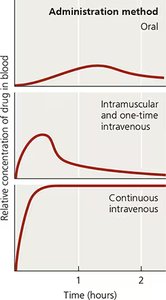
Antimicrobial drugs can be administered in several ways, affecting their absorption, distribution, and efficacy:
Topical: For external infections.
Oral: Convenient and self-administered, but absorption may be variable.
Intramuscular (IM): Injection into muscle for moderate absorption.
Intravenous (IV): Direct delivery into the bloodstream for rapid and high drug levels.
Pharmacokinetics: ADME
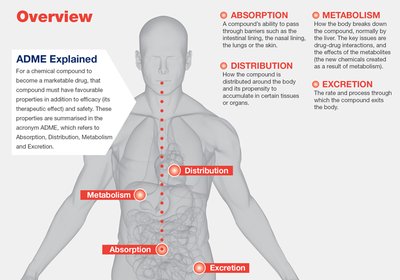
Understanding Absorption, Distribution, Metabolism, and Excretion (ADME) is essential for determining the appropriate drug, dose, and route of administration.
Adverse Effects and Considerations
Toxicity
Some drugs can damage the kidneys, liver, nervous system, or fetus.
The therapeutic index is the ratio of tolerated dose to effective dose; a higher index indicates greater safety.
Allergic Reactions
Rare but severe reactions (e.g., anaphylactic shock) can occur.
Disruption of Normal Microbiota
Broad-spectrum antibiotics may disrupt normal flora, leading to secondary infections such as Clostridium difficile colitis.
Clinical Trials and Drug Approval
Phase 1: Safety and dosage in healthy volunteers.
Phase 2: Efficacy and safety in patients with the disease.
Phase 3: Large-scale testing for efficacy and safety compared to placebo.
Summary Table: Main Mechanisms of Antimicrobial Action
Mechanism | Example Drugs | Target |
|---|---|---|
Inhibition of Cell Wall Synthesis | Penicillins, Cephalosporins, Vancomycin | Peptidoglycan cross-linking |
Inhibition of Protein Synthesis | Aminoglycosides, Tetracyclines, Macrolides | Prokaryotic ribosomes |
Disruption of Cytoplasmic Membrane | Polymyxins, Polyenes | Cell membrane integrity |
Inhibition of Metabolic Pathways | Sulfonamides, Trimethoprim | Folic acid synthesis |
Inhibition of Nucleic Acid Synthesis | Quinolones, Nucleotide analogs | DNA/RNA synthesis |
Additional info: The above notes integrate foundational concepts from microbiology and pharmacology to provide a comprehensive overview suitable for exam preparation and practical understanding of antimicrobial drugs.
