 Back
BackAntimicrobial Drugs: Mechanisms, Spectrum, and Resistance
Study Guide - Smart Notes
 Tailored notes based on your materials, expanded with key definitions, examples, and context.
Antimicrobial Drugs
Introduction to Antimicrobial Drugs
Antimicrobial drugs are chemical agents used to treat infections by inhibiting or killing microorganisms. Their development revolutionized medicine, allowing for the effective treatment of bacterial, fungal, and viral diseases. The concept of selective toxicity—destroying pathogens without harming the host—is central to their use.
Selective toxicity: The ability of a drug to target microbial cells without damaging host cells.
Chemotherapy: The use of chemicals to treat disease, including infections and cancer.
Antibiotic: A substance produced by a microbe that, in small amounts, inhibits another microbe.
Antimicrobial drugs: Synthetic or natural substances that interfere with the growth of microbes.
Discovery and Sources of Antibiotics
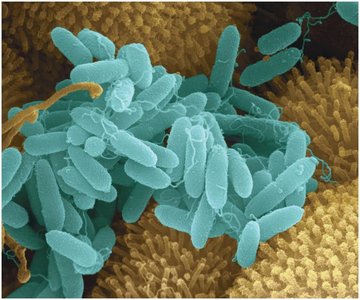
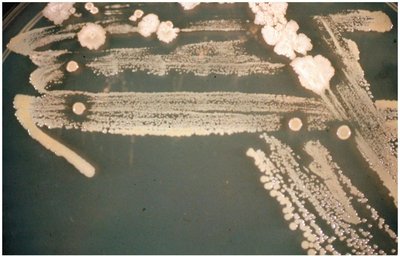
The discovery of antibiotics began with observations of antibiosis, where certain microbes inhibited the growth of others. Most antibiotics are derived from soil bacteria and fungi, especially the genus Streptomyces.
Major sources: Gram-positive rods (e.g., Bacillus), actinomycetes (e.g., Streptomyces), and fungi (e.g., Penicillium).
Example: Streptomyces species produce streptomycin, tetracycline, and erythromycin.
Spectrum of Activity
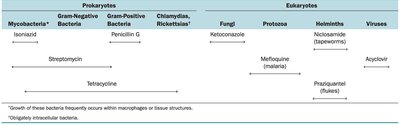
Antimicrobial drugs vary in their spectrum of activity:
Narrow-spectrum antibiotics: Affect a limited range of bacteria (e.g., only Gram-positive bacteria).
Broad-spectrum antibiotics: Affect a wide range of bacteria, including both Gram-positive and Gram-negative species.
Drawback: Broad-spectrum antibiotics can disrupt normal microbiota, leading to secondary infections (e.g., yeast overgrowth) and loss of beneficial functions.
Mechanisms of Antimicrobial Action
Cellular Targets of Antimicrobial Drugs
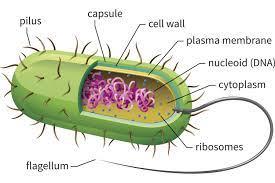
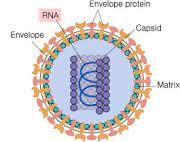
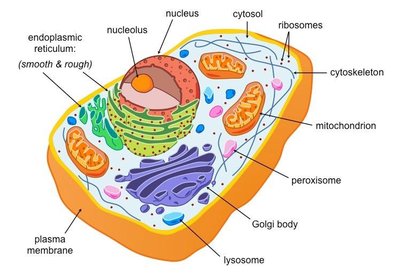
Antimicrobial drugs exploit differences between microbial and host cells. The main targets include the cell wall, protein synthesis machinery, nucleic acid synthesis, plasma membrane, and essential metabolic pathways.
Highly selective drugs target structures unique to microbes (e.g., peptidoglycan cell wall).
Low selectivity drugs may also affect host cells, increasing toxicity.
Major Modes of Action
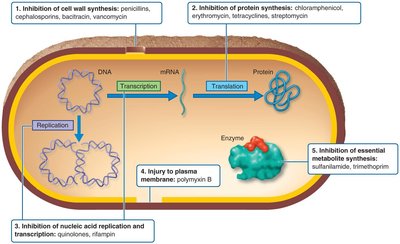
There are five primary mechanisms by which antibacterial drugs act:
Inhibition of cell wall synthesis (e.g., penicillins, cephalosporins, vancomycin)
Inhibition of protein synthesis (e.g., chloramphenicol, tetracyclines, streptomycin)
Inhibition of nucleic acid replication and transcription (e.g., quinolones, rifampin)
Injury to plasma membrane (e.g., polymyxin B)
Inhibition of essential metabolite synthesis (e.g., sulfanilamide, trimethoprim)
Inhibition of Protein Synthesis
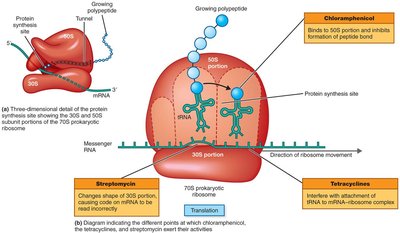
Antibiotics can target bacterial ribosomes, which differ structurally from eukaryotic ribosomes, thus providing selective toxicity.
Chloramphenicol: Binds to the 50S subunit and inhibits peptide bond formation.
Streptomycin: Changes the shape of the 30S subunit, causing mRNA misreading.
Tetracyclines: Interfere with tRNA attachment to the mRNA-ribosome complex.
Inhibition of Nucleic Acid Synthesis
Some drugs block DNA replication or transcription:
Quinolones: Inhibit DNA gyrase (topoisomerase), blocking DNA replication.
Rifampin: Inhibits RNA polymerase, blocking transcription.
Inhibition of Essential Metabolite Synthesis
Antimetabolites mimic normal substrates of enzymes, blocking key metabolic pathways.
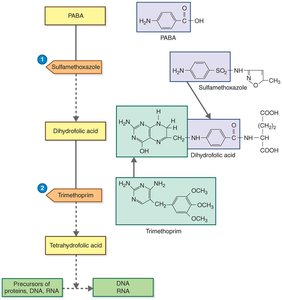
Sulfanilamide: Competes with para-aminobenzoic acid (PABA) for the enzyme involved in folic acid synthesis.
Trimethoprim: Inhibits a later step in folic acid synthesis.
Synergism: Combined use of sulfa drugs and trimethoprim is more effective than either alone.
Injury to the Plasma Membrane
Some antibiotics disrupt the plasma membrane, causing loss of membrane integrity and cell death.
Polymyxin B: Binds to membrane sterols, forming pores and increasing permeability.
Ionophores: Allow uncontrolled movement of cations (not used in humans).
Inhibitors of Cell Wall Synthesis: Penicillins and β-lactams
Penicillins
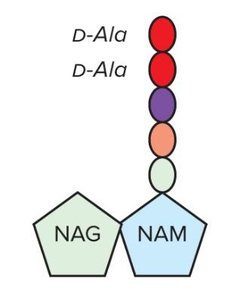
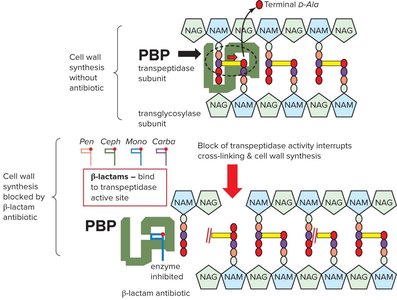
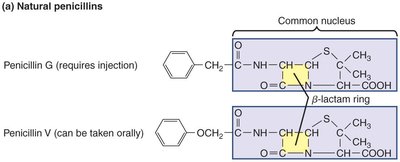
Penicillins are a group of antibiotics containing a β-lactam ring. They prevent the cross-linking of peptidoglycans, interfering with bacterial cell wall construction.
More effective against Gram-positive bacteria due to thicker peptidoglycan layer.
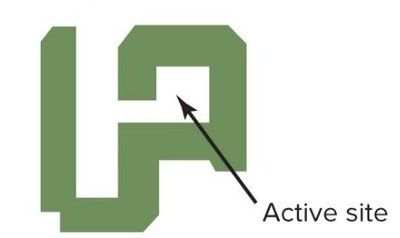
β-lactam antibiotics block the enzyme transpeptidase (penicillin-binding protein, PBP), halting cell wall synthesis.
Structure and Modifications of Penicillins
Penicillins share a common β-lactam ring but differ in their side chains, which affect their properties such as solubility and resistance to stomach acid.
Penicillin G: Requires injection; unstable in stomach acid.
Penicillin V: Can be taken orally; more acid-stable.
Pharmacokinetics: Route of Administration
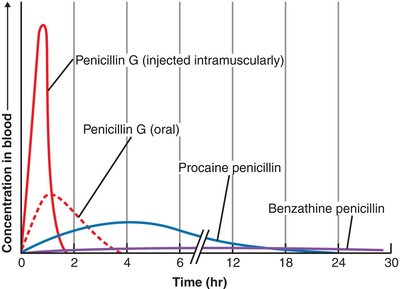
The effectiveness of penicillin depends on its route of administration, which affects its concentration in the blood over time.
Intramuscular injection: Rapid, high peak concentration.
Oral administration: Lower, more prolonged concentration.
Long-acting forms: Procaine and benzathine penicillin provide sustained levels.
Resistance: β-lactamase (Penicillinase)
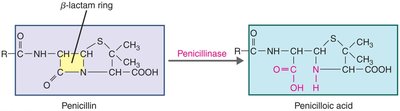
Some bacteria produce β-lactamase enzymes that hydrolyze the β-lactam ring, rendering penicillin inactive.
Penicillinase: Converts penicillin to penicilloic acid, which is inactive.
Antimicrobial Susceptibility Testing
Methods for Testing Susceptibility
Laboratories use several methods to determine the effectiveness of antimicrobial drugs against specific microbes:
Disk-diffusion method: Measures zones of inhibition around antibiotic disks.
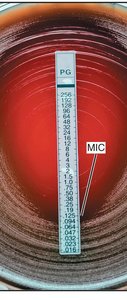
E-Test: Determines the minimum inhibitory concentration (MIC) using a gradient strip.
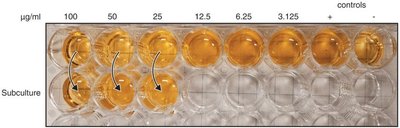
Broth dilution test: Determines MIC by observing growth in wells with decreasing concentrations of drug.
Mechanisms of Bacterial Resistance
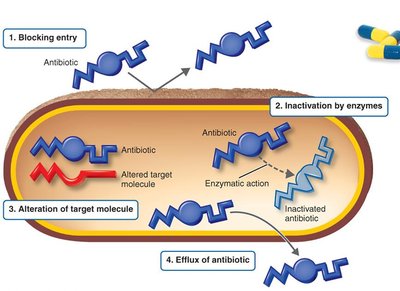
Bacteria can develop resistance to antibiotics through several mechanisms:
Blocking entry: Altering porin channels to prevent drug entry.
Inactivation by enzymes: Producing enzymes that destroy or modify the drug (e.g., β-lactamase).
Alteration of target molecule: Mutating the drug's binding site.
Efflux of antibiotic: Pumping the drug out of the cell.
Summary Table: Representative Sources of Antibiotics
Microorganism | Antibiotic |
|---|---|
Gram-Positive Rods | Bacitracin (Bacillus subtilis), Polymyxin (Paenibacillus polymyxa) |
Actinomycetes | Amphotericin B (Streptomyces nodosus), Chloramphenicol (Streptomyces venezuelae), Chlortetracycline and tetracycline (Streptomyces aureofaciens), Erythromycin (Saccharopolyspora erythraea), Neomycin (Streptomyces fradiae), Streptomycin (Streptomyces griseus), Gentamicin (Micromonospora purpurea) |
Fungi | Cephalothin (Cephalosporium spp.), Griseofulvin (Penicillium griseofulvum), Penicillin (Penicillium chrysogenum) |
Key Concepts and Applications
Selective toxicity is achieved by targeting structures unique to microbes (e.g., peptidoglycan, 70S ribosomes).
Broad-spectrum antibiotics can disrupt normal microbiota, leading to secondary infections.
Resistance mechanisms include enzymatic inactivation, altered targets, reduced permeability, and efflux pumps.
Testing for susceptibility is essential for effective therapy and preventing resistance.
