 Back
Antimicrobial Drugs: Mechanisms, Spectrum, Resistance, and Clinical Applications
Study Guide - Smart Notes
 Tailored notes based on your materials, expanded with key definitions, examples, and context.
History and Principles of Chemotherapy
Origins of Chemotherapy
Chemotherapy in microbiology refers to the use of chemicals to treat infectious diseases. The concept of selective toxicity, introduced by Paul Ehrlich, is fundamental: drugs should target pathogens without harming the host.
Selective Toxicity: The ability of a drug to target microbial cells without affecting host cells.
Magic Bullet: Ehrlich's idea of a compound that specifically targets pathogens.
Antibiotic: A substance produced by a microbe that inhibits the growth of another microbe.
Antimicrobial Drugs: Synthetic substances that interfere with microbial growth.
Discovery of Penicillin
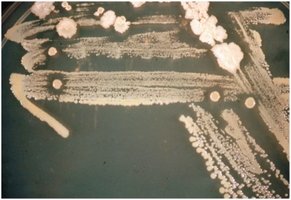
Alexander Fleming discovered penicillin in 1928, marking the beginning of the antibiotic era. The first clinical trials of penicillin occurred in 1940.
Penicillin: The first widely used antibiotic, effective against many bacterial infections.
Sources and Spectrum of Antibiotics
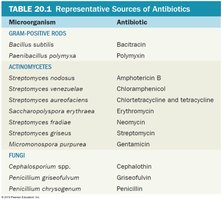
Representative Sources of Antibiotics
Antibiotics are derived from various microorganisms, including bacteria, actinomycetes, and fungi.
Gram-positive rods: Bacillus subtilis (Bacitracin), Paenibacillus polymyxa (Polymyxin)
Actinomycetes: Streptomyces species produce many antibiotics (e.g., Streptomyces nodosus produces Amphotericin B).
Fungi: Penicillium species produce penicillin.
Microorganism | Antibiotic |
|---|---|
Bacillus subtilis | Bacitracin |
Paenibacillus polymyxa | Polymyxin |
Streptomyces nodosus | Amphotericin B |
Streptomyces venezuelae | Chloramphenicol |
Streptomyces aureofaciens | Chlortetracycline and tetracycline |
Streptomyces erythraeus | Erythromycin |
Streptomyces fradiae | Neomycin |
Streptomyces griseus | Streptomycin |
Micromonospora purpurea | Gentamicin |
Cephalosporium spp. | Cephalothin |
Penicillium griseofulvum | Griseofulvin |
Penicillium chrysogenum | Penicillin |
Spectrum of Antimicrobial Activity
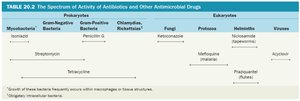
The spectrum of activity describes the range of organisms an antimicrobial drug can affect.
Broad-spectrum antibiotics: Effective against a wide variety of microbes.
Narrow-spectrum antibiotics: Target specific groups of bacteria.
Drug | Prokaryotes | Eukaryotes |
|---|---|---|
Penicillin G | Gram-positive bacteria | |
Streptomycin | Gram-negative bacteria, Mycobacteria | |
Tetracycline | Gram-negative, Gram-positive, Chlamydias, Rickettsias | Fungi, Protozoa |
Metronidazole | Protozoa | |
Acyclovir | Viruses |
Mechanisms of Action of Antimicrobial Drugs
Major Mechanisms
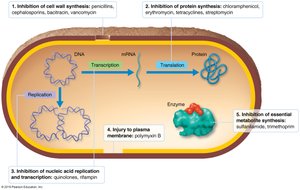
Antimicrobial drugs act by targeting essential microbial processes.
Inhibition of cell wall synthesis: Penicillins, cephalosporins, bacitracin, vancomycin
Inhibition of protein synthesis: Chloramphenicol, erythromycin, tetracyclines, streptomycin
Inhibition of nucleic acid replication and transcription: Quinolones, rifampin
Injury to plasma membrane: Polymyxin B
Inhibition of essential metabolite synthesis: Sulfanilamide, trimethoprim
Antibacterial Antibiotics: Inhibitors of Cell Wall Synthesis
Penicillins
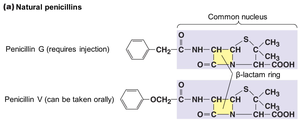
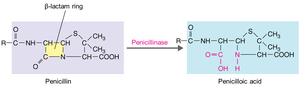
Penicillins contain a β-lactam ring and prevent cross-linking of peptidoglycans, interfering with cell wall construction, especially in gram-positive bacteria.
Natural penicillins: Penicillin G (injection), Penicillin V (oral)
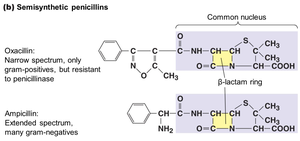
Semisynthetic penicillins: Modified to resist penicillinase or broaden spectrum (e.g., oxacillin, ampicillin)
Penicillinase-resistant penicillins: Methicillin, oxacillin
Extended-spectrum penicillins: Effective against gram-negatives and gram-positives
Penicillins plus β-lactamase inhibitors: Combine with clavulanic acid to inhibit penicillinase
Cephalosporins
Cephalosporins are structurally similar to penicillins but have a different β-lactam ring. They are grouped by generation and are effective against a broad range of bacteria. 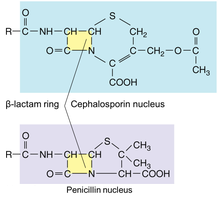
Polypeptide Antibiotics
Bacitracin: Topical application; effective against gram-positives
Vancomycin: Glycopeptide; last line against MRSA
Teixobactin: New class; effective against gram-positives
Antibacterial Antibiotics: Inhibitors of Essential Metabolites
Sulfonamides
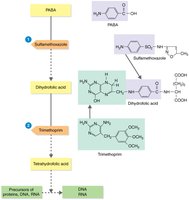
Sulfonamides inhibit folic acid synthesis, which is necessary for nucleic acid and protein synthesis. They competitively bind to the enzyme that normally binds PABA, a folic acid precursor.
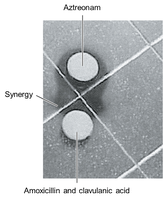
Drug synergism: Combination of trimethoprim and sulfamethoxazole (TMP-SMZ) increases efficacy.
Antifungal and Antiviral Drugs
Antifungal Drugs
Antifungal drugs target unique features of fungal cells.
Affect fungal sterols: Interrupt ergosterol synthesis, increasing membrane permeability
Affect fungal cell walls: Target β-glucan
Inhibit nucleic acids: Flucytosine interferes with RNA synthesis
Block microtubule assembly: Inhibit cell division
Antiviral Drugs
Antiviral drugs block various stages of viral infection.
Entry and fusion inhibitors: Block virus binding or fusion with host cell
Uncoating, genome integration, and nucleic acid synthesis inhibitors: Prevent viral uncoating or integration; nucleoside analogs inhibit RNA/DNA synthesis
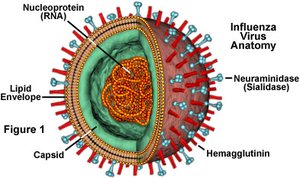
Assembly and exit inhibitors: Protease and neuraminidase inhibitors
Interferons: Proteins that inhibit viral replication
Tests to Guide Chemotherapy
Disk-Diffusion Method (Kirby-Bauer Test)
The disk-diffusion method uses paper disks with antibiotics placed on agar containing the test organism. The zone of inhibition indicates sensitivity. 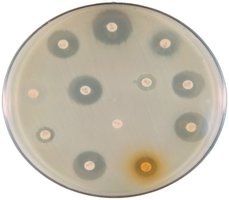
E Test
The E test determines the minimal inhibitory concentration (MIC), the lowest concentration preventing bacterial growth. 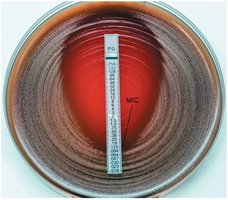
Broth Dilution Tests
Broth dilution tests determine MIC and minimal bactericidal concentration (MBC) by observing bacterial growth in wells with varying drug concentrations. 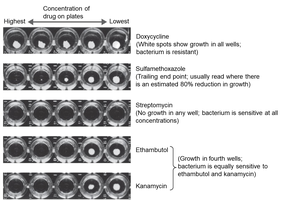
Resistance to Antimicrobial Drugs
Mechanisms of Resistance
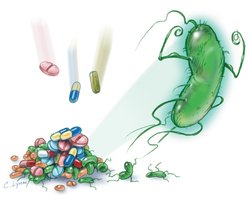
Bacteria can develop resistance through various mechanisms.
Persister cells: Survive antibiotic exposure due to genetic traits
Superbugs: Resistant to multiple antibiotics
Horizontal gene transfer: Resistance genes spread via plasmids or transposons
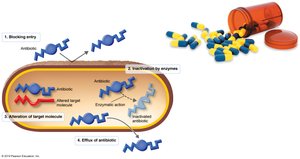
Mechanisms of Resistance
Blocking entry: Prevent antibiotic from entering cell
Inactivation by enzymes: Enzymes degrade or modify antibiotic
Alteration of target molecule: Target changes so antibiotic cannot bind
Efflux of antibiotic: Pumps remove antibiotic from cell
Antibiotic Misuse and Its Consequences
Misuse of Antibiotics
Misuse of antibiotics accelerates resistance. Common misuse includes:
Using outdated or weakened antibiotics
Using antibiotics for viral infections
Using antibiotics in animal feed
Failing to complete prescribed regimen
Using someone else’s prescription

Effects of Drug Combinations
Synergism and Antagonism
Synergism: Combined effect of two drugs is greater than either alone
Antagonism: Combined effect is less than either alone
Future of Chemotherapeutic Agents
Emerging Strategies
Targeting virulence factors: Disrupting mechanisms that allow pathogens to cause disease
Sequestering iron: Limiting iron availability to pathogens
Antimicrobial peptides: Produced by various organisms, including bacteria (bacteriocins)
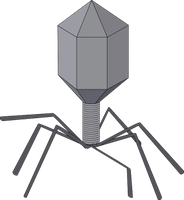
Phage therapy: Using bacteriophages to target bacterial infections
Additional info: Academic context was added to clarify mechanisms, sources, and clinical applications of antimicrobial drugs, as well as to explain resistance and future directions.
