 Back
BackAntimicrobial Drugs: Principles, Mechanisms, and Resistance
Study Guide - Smart Notes
 Tailored notes based on your materials, expanded with key definitions, examples, and context.
Antimicrobial Drugs: Introduction and Overview
Definition and Historical Impact
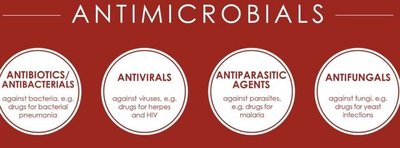
Antimicrobial drugs are therapeutic compounds used to kill or inhibit the growth of microbes, thereby preventing or treating infectious diseases. Their development revolutionized modern medicine, drastically reducing mortality from infections that were once often fatal.
Antimicrobial drug: Any substance that kills or inhibits the growth of microorganisms, including bacteria, viruses, fungi, and parasites.
Antibiotic: A type of antimicrobial specifically targeting bacteria.
Before antimicrobials, minor infections could be deadly, and infections were a leading cause of war-related deaths.
Discovery of Penicillin
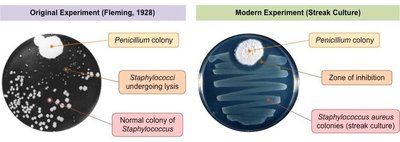
Alexander Fleming discovered penicillin in 1928 when he observed that a mold (genus Penicillium) inhibited the growth of Staphylococcus aureus on a culture plate. This led to the development of the first clinically used antibiotic.
Penicillin was mass-produced and clinically tested in the 1940s.
Penicillin is produced by the fungus Penicillium.
Classification and Spectrum of Antimicrobial Drugs
Spectrum of Activity
The spectrum of an antimicrobial drug refers to the range of microbes it affects.
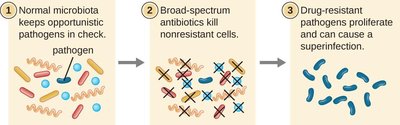
Broad-spectrum: Effective against a wide variety of microbes; useful for empiric therapy but may disrupt normal microbiota and promote superinfections.
Narrow-spectrum: Targets a limited group of microbes; preferred when the pathogen is identified to minimize collateral damage to normal flora.
Limited-spectrum: Effective against a single organism or disease.
Types of Antimicrobials by Source
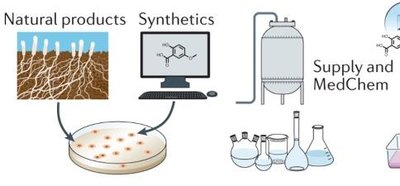
Naturally occurring: Produced by microorganisms (e.g., penicillin from Penicillium).
Synthetic: Fully manufactured by chemical processes.
Semisynthetic: Chemically modified natural antibiotics to improve efficacy, spectrum, or pharmacokinetics.
Drug Modifications and Generations
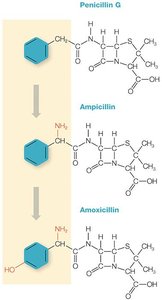
Antimicrobial compounds can be chemically modified to create new generations with improved properties, such as expanded spectrum, increased stability, or reduced toxicity.
Example: Ampicillin and amoxicillin are semisynthetic derivatives of penicillin G, with broader activity due to chemical modifications.
Principles of Antimicrobial Therapy
Selective Toxicity and Therapeutic Index
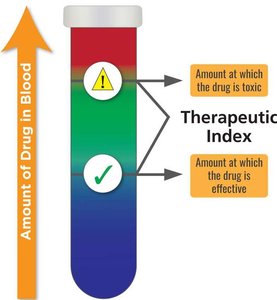
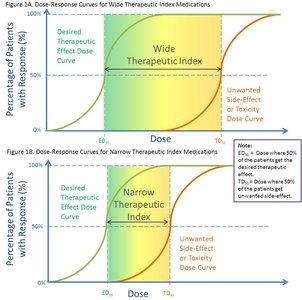
Antimicrobial drugs must exhibit selective toxicity, meaning they target microbial processes or structures not found in the host, minimizing harm to the patient.
Therapeutic Index (TI): The ratio of the toxic dose to the therapeutic dose. A higher TI indicates a safer drug.
Toxicity Considerations
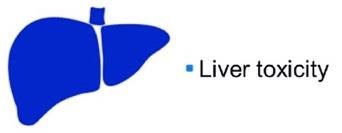
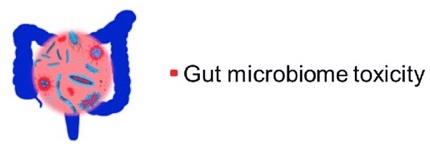
Some antimicrobials can cause toxicity to the liver (hepatotoxicity), kidneys (nephrotoxicity), or disrupt the gut microbiome. These risks must be balanced against the benefits, especially in severe infections.
Hepatotoxicity: Drug-induced liver injury.
Nephrotoxicity: Drug-induced kidney damage.
Gut microbiome toxicity: Disruption of normal intestinal flora.
Routes of Administration
Oral: Preferred for convenience and cost; drug must be stable in stomach acid and absorbed in intestines.
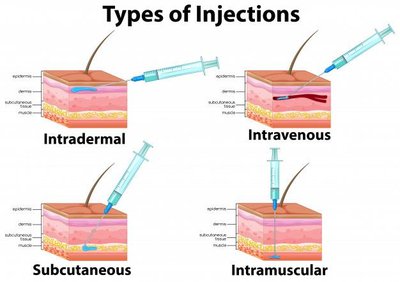
Parenteral: Non-oral routes (e.g., intravenous, intramuscular, subcutaneous, intradermal) allow rapid drug delivery but require needles and carry infection risk.
Drug Half-Life and Dosing
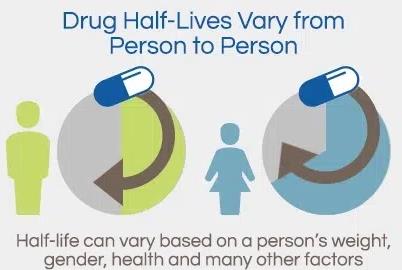
The half-life of a drug is the time required for half of the drug to be eliminated from the body. It determines dosing frequency and duration of action.
Short half-life: Requires frequent dosing (e.g., penicillin V).
Long half-life: Less frequent dosing (e.g., azithromycin).
Drug Interactions and Contraindications
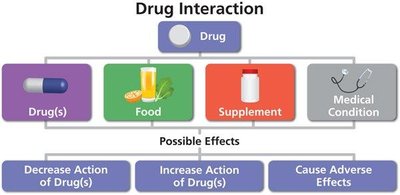
Antimicrobials may interact with other drugs, foods, or supplements, leading to decreased efficacy or increased toxicity. Some are contraindicated in pregnancy or with certain medical conditions.
Mechanisms and Targets of Antimicrobial Drugs
Antibacterial Drug Mechanisms
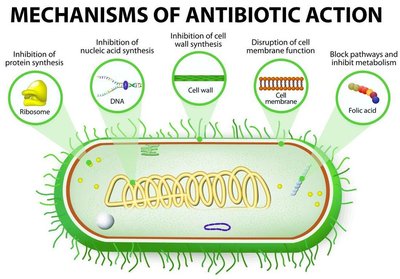
Antibacterial drugs exploit differences between prokaryotic and eukaryotic cells. Major targets include:
Cell wall synthesis (e.g., penicillins, cephalosporins)
Protein synthesis (e.g., tetracyclines, macrolides)
Nucleic acid synthesis (e.g., quinolones, rifamycins)
Cell membrane integrity (e.g., polymyxins)
Metabolic pathways (e.g., sulfa drugs, trimethoprim)
Bacteriostatic vs. Bactericidal Drugs
Bacteriostatic: Inhibit bacterial growth; rely on the immune system to clear infection.
Bactericidal: Kill bacteria directly; useful in immunocompromised patients or severe infections.
Category | Bactericidal | Bacteriostatic |
|---|---|---|
Definition | Kills bacteria | Inhibits bacterial growth |
Minimum Concentration | MBC | MIC |
Viability | Bacteria die | Bacteria remain viable |
Immune System | No effect | Helps immune system |
Reversibility | Irreversible | Reversible |
Antiviral, Antifungal, and Antiparasitic Drugs
Antivirals: Target steps in viral replication (attachment, penetration, uncoating, replication, assembly, release) or stimulate host immune responses. Most effective against actively replicating viruses.
Antifungals: Target fungal-specific structures such as ergosterol in cell membranes, cell wall synthesis, or nucleic acid synthesis.
Antiparasitics: Target unique features of protozoa or helminths, but development is challenging due to similarities with host cells and complex life cycles.
Assessing Sensitivity to Antimicrobial Drugs
Antibiotic Susceptibility Testing (AST)
AST determines which antimicrobials are effective against a specific pathogen. Common methods include:
Kirby-Bauer disk diffusion: Measures zone of inhibition to determine susceptibility.
E-test: Uses a drug gradient strip to determine minimum inhibitory concentration (MIC).
Broth dilution: Determines MIC and minimum bactericidal concentration (MBC).
Test | Purpose | Result |
|---|---|---|
Kirby-Bauer | Susceptibility | Zone of inhibition |
E-test | Susceptibility + MIC | MIC value |
Broth dilution | MIC/MBC | Lowest inhibitory/killing concentration |
Antimicrobial Drug Resistance and Stewardship
Types of Resistance
Intrinsic resistance: Natural, due to inherent structural or functional characteristics (e.g., Gram-negative outer membrane, endospore formation).
Acquired resistance: Due to genetic mutations or horizontal gene transfer (conjugation, transformation, transduction).
Mechanisms of Acquired Resistance
Alteration of drug target (prevents binding)
Inactivation of drug (enzymatic breakdown or modification)
Reduced drug concentration (decreased permeability or increased efflux)
Superbugs and Superinfections
Superbugs: Microbes resistant to multiple antimicrobials.
Superinfection: Secondary infection by resistant microbes after normal flora are eliminated by broad-spectrum drugs.
Factors Accelerating Resistance
Noncompliance with dosing (missed doses, incomplete courses)
Misuse (antibiotics for viral infections, inappropriate prescriptions, agricultural use)
Spread in healthcare and community settings
Antimicrobial Stewardship
Stewardship programs promote appropriate use of antimicrobials to improve outcomes, reduce resistance, and limit the spread of multidrug-resistant organisms. Key strategies include:
Using narrow-spectrum drugs when possible
Educating healthcare workers and patients
Following proper dosing and infection control practices
Summary Table: Types of Antimicrobial Therapy
Type of Therapy | Description |
|---|---|
Prophylaxis | Antibiotics used to prevent infection |
Empiric | Organism is unknown but syndrome is known |
Pathogen-directed | Organism is known but susceptibility is unknown |
Susceptibility-guided | Organism is known and susceptibility is known |
Additional info: This guide covers foundational concepts in antimicrobial drugs, including their discovery, mechanisms, clinical use, resistance, and stewardship. For further details on specific drugs, refer to advanced pharmacology or microbiology texts.
