 Back
Back5-4
Study Guide - Smart Notes
 Tailored notes based on your materials, expanded with key definitions, examples, and context.
Antimicrobial Resistance
Mechanisms of Antimicrobial Resistance
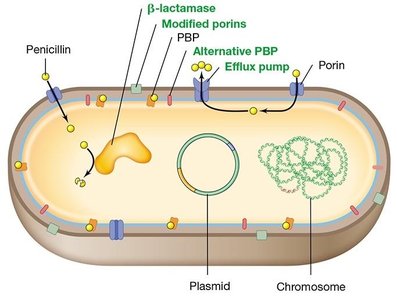
Antimicrobial resistance is the acquired ability of microorganisms to withstand the effects of drugs that would normally inhibit or kill them. Resistance genes are present in all populations of cells, and several natural mechanisms allow bacteria to resist antimicrobials:
Impermeability: The drug cannot enter the cell due to changes in membrane permeability.
Modification of Drug Target: The target molecule is altered so the drug can no longer bind effectively.
Enzymatic Inactivation: Bacterial enzymes modify or cleave the antimicrobial, rendering it inactive (e.g., β-lactamase cleaving penicillins).
Efflux Pumps: Specialized proteins actively expel the drug from the cell.
Metabolic Bypasses: The cell uses alternative metabolic pathways to circumvent the drug's action.
Biofilm Formation: Dense biofilms prevent drug penetration.
Decoy Proteins/Molecules: These bind the drug, preventing it from reaching its target.
Development and Spread of Resistance
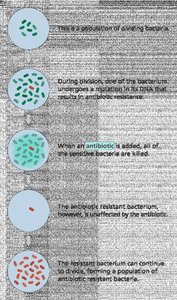
Genetic variation within bacterial populations means some cells may naturally be resistant. When exposed to antimicrobials, sensitive cells die, while resistant cells survive and replicate, leading to a population dominated by resistant bacteria. Antimicrobial use selects for resistance but does not cause the mutations directly.
Resistance Plasmids (R Plasmids)
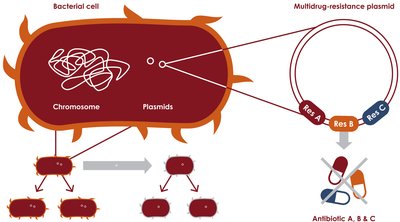
Resistance genes can be located on the bacterial chromosome or on plasmids. R plasmids are extrachromosomal DNA elements that carry resistance genes and can be transferred between bacteria via vertical (cell division) or horizontal (conjugation, transformation, transduction) gene transfer. A single R plasmid can confer resistance to one or multiple antibiotics, especially if the drugs are closely related.
Spread of Antimicrobial Resistance
Resistance spreads through bacterial populations by:
Vertical Transmission: Inheritance during cell division.
Horizontal Transmission: Transfer between cells via conjugation (direct contact), transformation (uptake of free DNA), or transduction (bacteriophage-mediated).
Selective pressure from antimicrobial use in medicine and agriculture maintains resistance. Misuse, such as stopping treatment early, sub-therapeutic dosing, or overuse, accelerates resistance spread.
Multiple-Drug Resistance and Combination Therapy
Some R plasmids carry multiple resistance genes, creating multi-drug resistant pathogens. Combination therapy (using drugs with different mechanisms) can enhance efficacy (synergism) and reduce resistance development. If selective pressure is removed, plasmids may be lost from the population.
Persistence and Dormancy
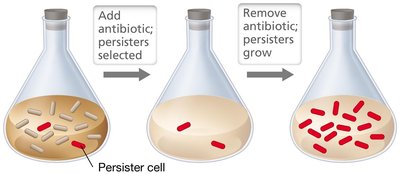
Some bacterial cells enter a dormant state (persisters), becoming metabolically inactive and thus tolerant to antibiotics that require active metabolism. These cells can survive treatment and cause recurrent infections when they resume growth.
Mechanisms of Antimicrobial Action
Major Mechanisms of Action
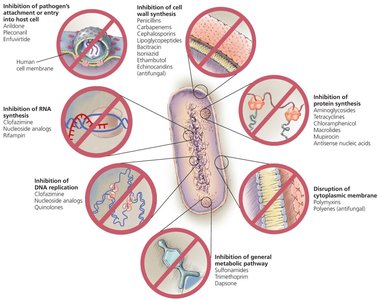
Antimicrobials are classified by their mechanism of action, which determines how they inhibit or kill microbes. The seven major groups are:
Inhibition of DNA Replication
Inhibition of RNA Synthesis
Inhibition of Protein Synthesis
Inhibition of Cell Wall Synthesis
Disruption of Cell Membrane
Disruption of Metabolic Pathways
Prevention of Pathogen Attachment/Entry
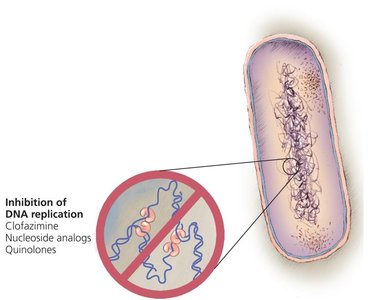
Inhibition of DNA Replication
Some drugs target enzymes involved in DNA replication, such as DNA gyrase or topoisomerase, which are unique to bacteria. Examples include quinolones and nucleoside analogs.
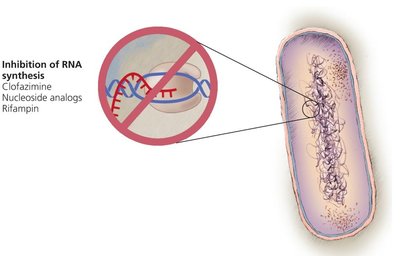
Inhibition of RNA Synthesis
Drugs like rifampin inhibit bacterial RNA polymerase, blocking transcription and thus protein synthesis.
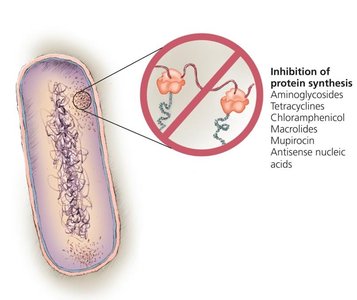
Inhibition of Protein Synthesis
Many antibiotics (e.g., aminoglycosides, tetracyclines, macrolides) target bacterial ribosomes, which differ from eukaryotic ribosomes, allowing selective toxicity. They may block ribosome assembly, initiation, or elongation during translation.
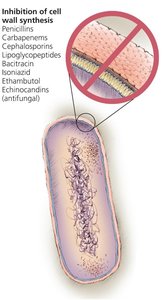
Inhibition of Cell Wall Synthesis
Drugs such as penicillins and cephalosporins inhibit enzymes involved in peptidoglycan synthesis, weakening the cell wall and causing lysis. These drugs are most effective against actively growing cells.
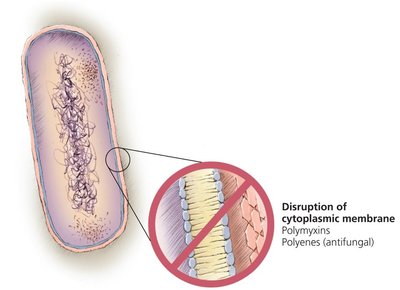
Disruption of Cytoplasmic Membrane
Agents like polymyxins and polyenes (antifungals) disrupt membrane integrity, causing cell lysis.
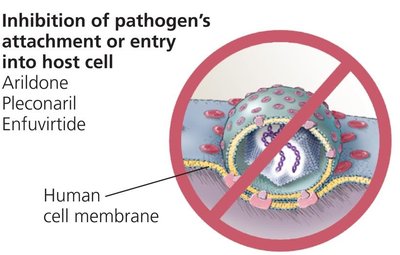
Inhibition of Pathogen Attachment or Entry
Some drugs prevent pathogens from attaching to or entering host cells, blocking infection at an early stage (e.g., antivirals like enfuvirtide).
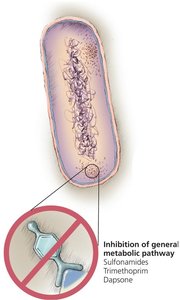
Inhibition of General Metabolic Pathways
Drugs such as sulfonamides and trimethoprim inhibit enzymes in metabolic pathways unique to microbes, such as folic acid synthesis.
Clinical Implications and Guidelines
Antibiotic Use Guidelines
Guidelines from the CDC and WHO help healthcare providers use antibiotics responsibly to slow resistance development. Recommendations include appropriate drug selection, dosing, and duration. Recent studies suggest that shorter courses may be effective in some cases.

Development of New Antimicrobials
New antimicrobials are needed due to rising resistance. Strategies include modifying existing drugs (semisynthetics), screening natural products, and designing molecules to target specific microbial structures. Considerations include toxicity, cost, and efficacy.

Koch’s Postulates and Infectious Disease
Germ Theory and Koch’s Postulates
The germ theory of disease states that microbes can cause disease. Koch’s Postulates provide a framework for linking a specific microbe to a specific disease:
The suspected agent must be present in every case of the disease and absent from healthy organisms.
The suspected pathogen must be isolated and grown in pure culture.
The cultured agent must cause disease when inoculated into a healthy, susceptible host.
The same agent must be reisolated from the diseased experimental host.
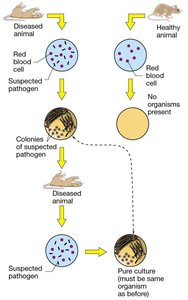
Limitations and Updates to Koch’s Postulates
Some pathogens cannot be grown in pure culture (e.g., viruses, prions).
Some diseases are caused by multiple pathogens or only cause disease in humans.
Modern updates include molecular and genetic evidence (e.g., DNA sequencing).
Suggestions for updates: Use molecular techniques to detect pathogen DNA/RNA in diseased tissue, and consider host factors and polymicrobial diseases.
Tables
Summary Table: Mechanisms of Antimicrobial Resistance
Mechanism | Description | Example |
|---|---|---|
Impermeability | Drug cannot enter cell | Modified porins in Gram-negative bacteria |
Target Modification | Drug target altered | Altered PBP in MRSA |
Enzymatic Inactivation | Drug destroyed or modified | β-lactamase cleaving penicillins |
Efflux Pumps | Drug pumped out of cell | Tetracycline efflux pumps |
Metabolic Bypass | Alternative pathway used | Folate synthesis bypass |
Summary Table: Major Mechanisms of Antimicrobial Action
Mechanism | Target | Example Drugs |
|---|---|---|
DNA Replication | DNA gyrase, topoisomerase | Quinolones |
RNA Synthesis | RNA polymerase | Rifampin |
Protein Synthesis | Ribosome subunits | Macrolides, tetracyclines |
Cell Wall Synthesis | Peptidoglycan enzymes | Penicillins, cephalosporins |
Cell Membrane | Membrane integrity | Polymyxins |
Metabolic Pathways | Enzymes in unique pathways | Sulfonamides |
Attachment/Entry | Host cell receptors | Enfuvirtide (antiviral) |
Key Terms
Antimicrobial resistance: The ability of a microbe to survive exposure to an antimicrobial agent.
R plasmid: A plasmid carrying one or more genes for antibiotic resistance.
Efflux pump: A protein that transports drugs out of the cell.
Synergism: The enhanced effect of using multiple drugs together.
Persister cell: A dormant bacterial cell tolerant to antibiotics.
Semisynthetic drug: A naturally derived drug that has been chemically modified.
Koch’s Postulates: Criteria for establishing a causative relationship between a microbe and a disease.
Example Questions and Answers
What is the role of efflux pumps in resistance? Efflux pumps remove drugs from inside the cell, reducing their effectiveness.
Does antibacterial treatment cause resistance? No, it selects for bacteria that already have resistance genes.
What is synergism in antimicrobial therapy? Synergism is when two or more drugs work together to enhance their effectiveness.
How does azithromycin inhibit bacterial growth? By binding to the 50S ribosomal subunit, it inhibits protein synthesis.
What is a semisynthetic drug? A drug derived from a natural product and chemically modified for improved properties.
