 Back
BackAntimicrobial Treatment: Principles, Mechanisms, and Resistance
Study Guide - Smart Notes
 Tailored notes based on your materials, expanded with key definitions, examples, and context.
Antimicrobial Treatment
Principles of Antimicrobial Therapy
The advent of antimicrobial drugs revolutionized medicine by reducing the incidence of infectious diseases. However, complete eradication of infections remains unattainable, and the threat of a post-antibiotic era is a growing concern due to increasing drug resistance.
Main Goal: Destroy the infective agent without harming the host’s cells.
Ideal Drug Characteristics: Toxic to microbes, nontoxic to host, microbicidal, soluble, potent, resistant to premature breakdown, does not induce resistance, complements host defenses, and does not disrupt host health.
Origins of Antimicrobial Drugs
Most antibiotics are metabolic products of bacteria and fungi, produced to inhibit competitors in their environment. The primary sources are:
Bacteria: Streptomyces, Bacillus
Molds: Penicillium, Cephalosporium
Antimicrobial Susceptibility Testing
Disc Diffusion (Kirby-Bauer) Test
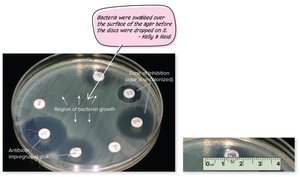
This method assesses the effectiveness of antibiotics against specific bacteria. The surface of an agar plate is swabbed with the test bacterium, and antibiotic discs are placed on the plate. Zones of inhibition are measured to determine susceptibility.
Zone of Inhibition: The area around the disc where bacterial growth is prevented.
Interpretation: Larger zones indicate greater sensitivity; smaller or absent zones indicate resistance.
Alternative Disc Diffusion Methods
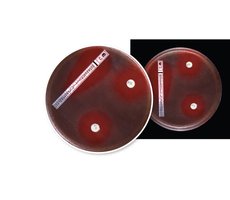
Other disc diffusion techniques may use different media or conditions to test susceptibility, but the principle remains the same: measuring zones of inhibition.
Tube Dilution Test
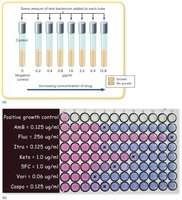
This quantitative method determines the minimum inhibitory concentration (MIC) of an antimicrobial. Serial dilutions of the drug are prepared in broth tubes, inoculated with bacteria, and incubated. The MIC is the lowest concentration that visibly inhibits growth.
MIC: Minimum concentration of drug that prevents visible growth.
Applications: Guides dosage and compares efficacy of different drugs.
Mechanisms of Drug Action
Primary Sites of Action
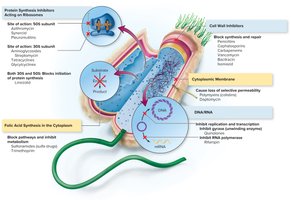
Antimicrobial drugs target specific cellular processes or structures. The five major targets are:
Cell Wall Synthesis (e.g., penicillins, cephalosporins)
Protein Synthesis (e.g., aminoglycosides, tetracyclines, macrolides)
Nucleic Acid Synthesis (e.g., fluoroquinolones, rifampin)
Cytoplasmic Membrane (e.g., polymyxins, daptomycin)
Folic Acid Synthesis (e.g., sulfonamides, trimethoprim)
Penicillins: Structure and Variants
Penicillin Structure
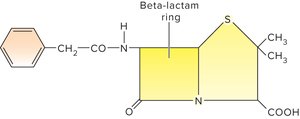
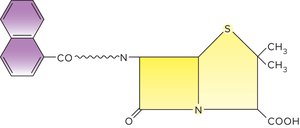
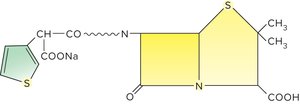
Penicillins share a core structure: a beta-lactam ring fused to a thiazolidine ring. Variations in side chains produce different penicillin drugs with distinct properties.
Beta-lactam ring: Essential for antimicrobial activity.
Side chains: Modify spectrum and resistance to enzymes.
Antimicrobial Resistance
Mechanisms of Drug Resistance
Microbes acquire resistance through mutations or horizontal gene transfer. Five main mechanisms include:
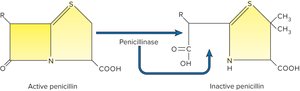
Enzymatic Inactivation: Enzymes like penicillinase cleave the drug, rendering it inactive.
Altered Target Sites: Modification of drug binding sites prevents drug action.
Efflux Pumps: Active transport pumps expel drugs from the cell.
Reduced Permeability: Changes in membrane permeability block drug entry.
Alternative Pathways: Bypass the blocked metabolic pathway.
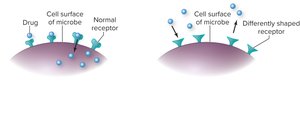
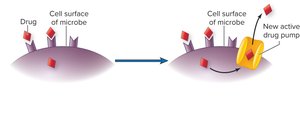
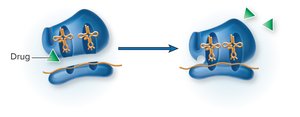
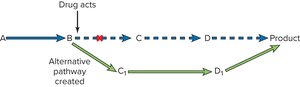
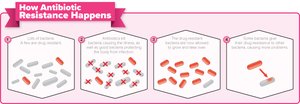
How Antibiotic Resistance Happens
Resistance develops when drug-resistant bacteria survive antibiotic treatment, proliferate, and transfer resistance genes to other bacteria. This process is accelerated by misuse and overuse of antibiotics.
Therapeutic Index and Drug Safety
Therapeutic Index (TI)
The therapeutic index is the ratio of the toxic dose to the minimum effective dose. A higher TI indicates a safer drug.
Formula:
Interpretation: TI > 10 is safer; TI close to 1 is risky.
Drug Toxicity, Allergies, and Superinfections
Drug Toxicity
Antimicrobials can cause adverse effects in various organs, including the liver, kidneys, GI tract, cardiovascular system, nervous system, skin, bones, and teeth.
Allergic Responses
Drugs may act as antigens, provoking allergic reactions. Penicillin allergies are most common, and sensitization can lead to severe responses upon re-exposure.
Superinfections
Broad-spectrum antibiotics can disrupt normal microbiota, allowing opportunistic pathogens to overgrow and cause disease (superinfection).
Summary Table: Mechanisms of Drug Resistance
Mechanism | Description | Example |
|---|---|---|
Enzymatic Inactivation | Drug is destroyed by microbial enzymes | Penicillinase inactivates penicillin |
Altered Target Site | Drug binding site is modified | Modified ribosome prevents macrolide binding |
Efflux Pump | Drug is pumped out of the cell | Tetracycline efflux pumps |
Reduced Permeability | Drug cannot enter the cell | Porin changes in gram-negative bacteria |
Alternative Pathway | Microbe uses a different metabolic pathway | Sulfonamide resistance |
Conclusion
Antimicrobial therapy is a cornerstone of modern medicine, but its effectiveness is threatened by resistance, toxicity, and disruption of normal microbiota. Understanding drug mechanisms, resistance, and proper use is essential for effective treatment and stewardship.
