 Back
Backlec 14
Study Guide - Smart Notes
 Tailored notes based on your materials, expanded with key definitions, examples, and context.
Prokaryotes: Archaea – The 'Other' Kingdom of Life
Introduction to Archaea
Archaea are a distinct domain of prokaryotic life, separate from Bacteria and Eukarya, recognized for their unique genetic, biochemical, and ecological characteristics. Their classification was revolutionized by the analysis of the 16S rRNA gene, which revealed fundamental differences from other domains.
16S rRNA gene: Used to construct the modern phylogenetic tree of life, pioneered by Carl Woese.
Major phyla: Crenarchaeota (mostly thermophiles), Euryarchaeota (methanogens, halophiles).
Extremophiles: Many archaea thrive in extreme environments, such as high temperature or salinity.
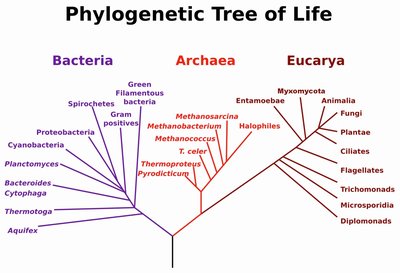
Historical Context: The Tree of Life
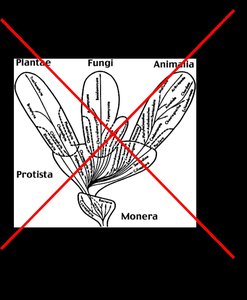
The classification of life was transformed by molecular phylogenetics, replacing older systems based on morphology. The three-domain system (Archaea, Bacteria, Eukarya) is now standard in microbiology.
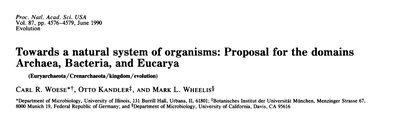
Carl Woese's proposal: Established Archaea as a separate domain based on ribosomal RNA sequences.
LUCA: Last Universal Common Ancestor, from which all life diverged.
Archaeal Cell Structure and Function
Cell Morphology and External Structures
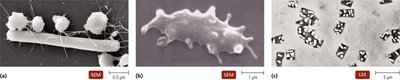
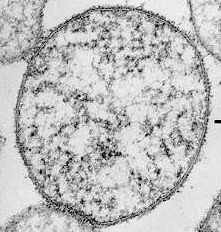
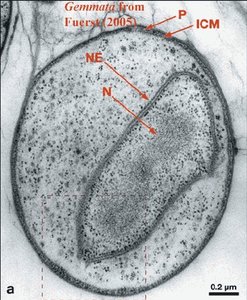
Archaeal cells display a variety of shapes and external features, some resembling bacteria or eukaryotes, but with unique adaptations.
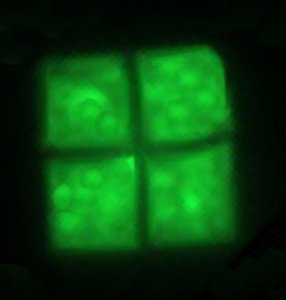
Shapes: Cocci, rods, spirals, pleomorphic, and even square/cuboidal forms.
Reproduction: Binary fission, budding, fragmentation; no known spore formation.
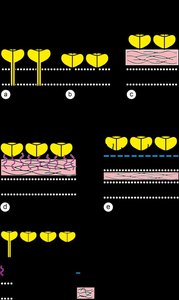
S-layer: Protein or glycoprotein surface layer present in almost all archaea.
Glycocalyces: Polysaccharide-rich layers aiding in biofilm formation and adhesion.
Flagella: Functionally similar to bacterial flagella but composed of different proteins.
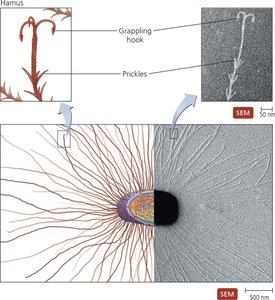
Fimbriae and Hami: Fimbriae for attachment; hami are unique, hook-like structures for surface adherence.
Cell Wall and Membrane Composition
Archaeal cell walls and membranes are distinct from those of bacteria and eukaryotes, conferring stability in extreme environments.
Cell wall: Lacks peptidoglycan; composed of specialized polysaccharides and proteins.
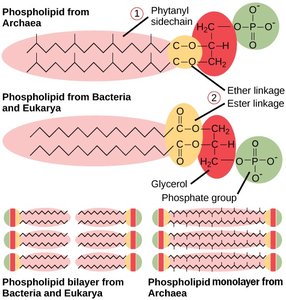
Membrane lipids: Branched and cyclized, with ether linkages (not ester linkages as in bacteria/eukaryotes).
Membrane function: Maintains gradients and controls transport; mechanically stronger and more stable at high temperatures and salinity.
Cytoplasmic Features
The cytoplasm of archaea shares some similarities with bacteria but also exhibits unique features.
Ribosomes: 70S size, but with different protein composition compared to bacteria.
Genetic material: Usually single, circular chromosome; genetic code and amino acid usage more similar to eukaryotes.
Cell division: Proteins involved are more similar to those in eukaryotes.
Archaeal Metabolism and Ecological Roles
Extremophiles and Methanogens
Archaea are renowned for their ability to inhabit extreme environments and play crucial roles in global geochemical cycles.
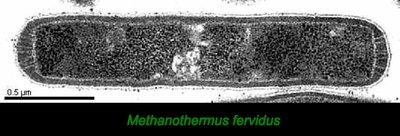
Thermophiles: Thrive at high temperatures.
Halophiles: Thrive in high-salt environments.
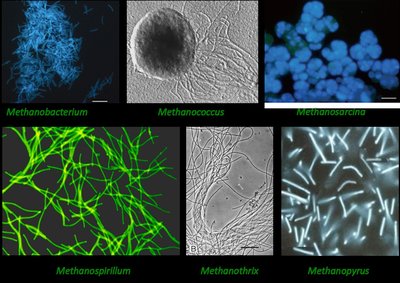
Methanogens: Largest group of archaea; obligate anaerobes that produce methane from CO2, H2, and organic acids.
Ecological impact: Methanogens contribute significantly to environmental methane, including in animal colons and ocean sediments.
Comparison of Archaea, Bacteria, and Eukaryotes
Key Differences and Similarities
Understanding the distinctions between these domains is fundamental in microbiology.
Nucleus: Absent in archaea and bacteria; present in eukaryotes.
Organelles: Absent in prokaryotes; present in eukaryotes.
Cell wall: Most archaea lack peptidoglycan; bacteria have peptidoglycan; eukaryotes have varied cell walls.
Membrane lipids: Ether-linked in archaea; ester-linked in bacteria and eukaryotes.
Motility: Flagella present in some; structure and mechanism differ across domains.
Unique structures: Hami are unique to archaea.
Ribosomes: 70S in archaea and bacteria; 80S in eukaryotic cytosol.
Chromosomes: Usually single and circular in prokaryotes; linear and multiple in eukaryotes.
Comparison Table
Characteristic | Archaea | Bacteria | Eukaryotes |
|---|---|---|---|
Nucleus | Absent | Absent | Present |
Cell wall | Present in most; lack peptidoglycan | Present in most; peptidoglycan | Present in plants, algae, fungi |
Membrane lipids | Ether-linked, branched | Ester-linked, linear | Ester-linked, linear |
Ribosomes | 70S | 70S | 80S (cytosol), 70S (mitochondria/chloroplasts) |
Motility | Flagella (unique structure) | Flagella (unique structure) | Flagella/cilia (microtubules) |
Hami | Present in some | Absent | Absent |
Chromosomes | Single, circular | Single, circular | Linear, multiple |
Summary
Archaea represent a unique and essential domain of life, with distinctive structural, metabolic, and ecological features. Their study is fundamental to understanding microbial diversity, evolution, and the roles of microorganisms in Earth's biosphere.
Example: Methanogen Metabolism
Methanogens convert CO2 and H2 into methane via the following reaction:
Equation:
Additional info:
Archaea are not known to cause disease in humans or animals.
Some archaea are found in the human microbiome, contributing to gut ecology.
