 Back
BackChapter 4
Study Guide - Smart Notes
 Tailored notes based on your materials, expanded with key definitions, examples, and context.
Bacterial Shapes and Arrangements
Bacterial Morphology
Bacteria exhibit a variety of shapes and arrangements, which are important for identification and classification. The main shapes include cocci (spherical), bacilli (rod-shaped), and spiral forms. Arrangements are determined by the pattern of cell division and how cells remain attached after division.
Cocci: Spherical bacteria. Examples include Staphylococcus (clusters) and Streptococcus (chains).
Bacilli: Rod-shaped bacteria. Can occur singly, in pairs (diplobacilli), or chains (streptobacilli). ENOD SPORES
Pleomorphic: Bacteria that can change shape or have an indistinct form.
Spiral Forms: Includes vibrios (comma-shaped), spirilla (rigid spirals), and spirochetes (flexible spirals).
Arrangements:
Diplo-: Pairs of cells.
Strepto-: Chains of cells. (CIRCLES)
Staphylo-: Grape-like clusters.
Tetrads: Groups of four cocci.
Sarcinae: Cubes of eight cocci.
Palisade: Parallel arrangement, often seen in bacilli.
Bacterial Growth and Reproduction
Binary Fission- NEED ENOUGH METABOLITES To cont. replication
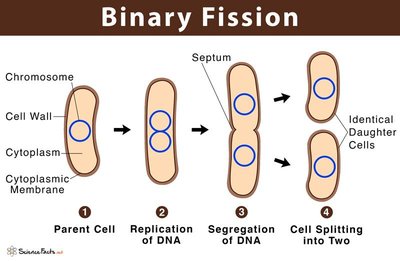
Bacteria reproduce asexually through binary fission, a process resulting in two genetically identical daughter cells. This process is tightly regulated and involves DNA replication, segregation, and cell division.
Step 1: Chromosome replication begins at the plasma membrane.
Step 2: Daughter chromosomes are anchored to different parts of the membrane.
Step 3: The cell elongates, and a septum forms, dividing the cell.
Step 4: Two identical daughter cells are produced.

When nutrients are depleted or toxic by-products accumulate, chemical signals called alarmones halt cell synthesis.
Bacterial Population Growth Curve
Phases of Growth
Bacterial populations in a closed system (batch culture) follow a characteristic growth curve with four phases:
Lag Phase: Cells adapt to the environment; no division occurs.
Log (Exponential) Phase: Rapid cell division; population doubles at a constant rate (generation time).
Stationary Phase: Nutrient depletion and waste accumulation halt growth; cell death equals cell division.
Death Phase: Cell death exceeds cell division due to harsh conditions.
Factors Influencing Microbial Growth
Methods for Measuring Microbial Growth
Quantifying Bacterial Populations
Microbial growth can be measured by cell mass or cell number:
Cell Mass: Dry weight measurements, turbidity (spectrophotometry), microscopy, and electronic counters.
Cell Number: Direct counts (living and dead cells), viable counts (pour plate, spread plate, most probable number method).
Nutritional Requirements for Bacterial Growth
Essential Elements and Energy Sources
Bacteria require various nutrients for growth, which can be classified by their source of energy and carbon:
Phototrophs: Obtain energy from light (photosynthesis).
Chemotrophs: Obtain energy from chemical compounds (e.g., glucose).
Photoautotrophs: Use sunlight and CO2 as carbon source.
Photoheterotrophs: Use sunlight and organic carbon.
Chemoautotrophs: Use inorganic chemicals and CO2.
Chemoheterotrophs: Use organic chemicals for both energy and carbon.
Other essential elements include nitrogen, sulfur, phosphorus, and trace minerals (e.g., potassium, magnesium, iron). Some bacteria require specific growth factors (vitamins, amino acids) they cannot synthesize.
Nutritional Requirements
These vary widely across species
Those that acquire energy from the light (photosynthesis) are called phototrophs
Those that acquire energy from chemical compounds (like glucose) are called
chemotrophs
The three pathways to create cellular energy are
1. Photosynthesis
2. Fermentation
3. Respiration
Carbon
Required by all life forms, can be acquired through the atmosphere ( AutoTrops) or from organic compounds (heterotrophs).They can be further classified based on the source of the carbon and energy.
PhotoAutotrophs- Sunligh +Atmospheric Carbon
Environmental and Nutritional Factors
Microbial growth is influenced by several physical and chemical factors:
Nutritional Requirements: Vary widely; include sources of carbon, nitrogen, sulfur, phosphorus, and trace minerals.
Temperature: Microbes are classified by their optimal temperature ranges:
Psychrophiles: Grow at 0°C or lower; optimal at -15°C.
Psychrotrophs: Grow slowly at 0°C; optimal at 25–30°C; cause food spoilage.
Mesophiles: Moderate temperatures (20–45°C); most human pathogens.
Thermophiles: Grow at 45°C or higher; found in hot environments.
Osmotic Pressure: Most bacteria cannot tolerate high salt (hypertonic) environments, which cause plasmolysis. Some are adapted:
Obligate Halophiles: Require high salt (e.g., ocean bacteria).HAVE TO HAVE IT
Facultative Halophiles: Tolerate high salt (e.g., Staphylococcus aureus). CAN DEAL WITH IT
Hydrostatic Pressure: Barotolerant and barophilic organisms survive or thrive under high pressure (deep ocean).
Atmospheric Conditions: Oxygen requirements vary:
Obligate Aerobes: Require oxygen. PEOPLE NEED OXYGEN OR WE DIE
Facultative Anaerobes: Grow with or without oxygen.- WILL FIND ANOTHER WAY AND WILL BE FINE
Obligate Anaerobes: Killed by oxygen.
Aerotolerant Anaerobes: Do not use oxygen but tolerate it.
Microaerophiles: Require low oxygen.
Capneic: Require elevated CO2.- CARBON DIOXIDE USED FOR BREATHING
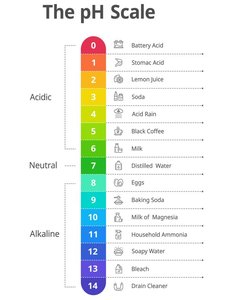
pH: Bacteria have preferred pH ranges:
Neutrophiles: pH 5–8
Acidophiles: pH < 5.5
Alkaliphiles: pH > 8.5
Classification of Bacteria
Criteria and Methods
Bacteria are classified based on a combination of phenotypic and genotypic characteristics:
Species: Group of bacteria with similar characteristics.
Strain: Subgroup with minor variations.
Binomial Nomenclature: Two-part scientific name (genus and species), e.g., Escherichia coli.
Phenotypic Criteria: Morphology, staining, colony appearance, biochemical tests, enzyme presence.
Serotyping: Identification using antibodies (antigens).
Analytical Methods: Instrument-based, including genotypic (DNA/RNA) analysis.
Bergey’s Manual of Systematic Bacteriology
Major Groups of Medically Important Bacteria
Bergey’s Manual is a key reference for bacterial classification, using both phenotypic and phylogenetic (rRNA sequence) data. Major groups include:
Spirochetes: Helical, motile bacteria (e.g., syphilis, Lyme disease).THINNER AND BENDY, WIGGLE AROUND
Aerobic and Microaerophilic Helical Vibrioid Gram-Negative Bacteria: Includes Helicobacter pylori (ulcers), Campylobacter (GI infections). SLIGHTLY CURVED, MOVE WITH FLAGELLA H,PYLORI
Gram-Negative Aerobic Rods and Cocci: Diverse, includes pathogens like Neisseria (meningitis), Bordetella (whooping cough). THEY USE RESPIRATION NOT FERMENTATION
Facultatively Anaerobic Gram-Negative Rods: Includes enteric bacteria (E. coli, Salmonella). FOUND IN THE GI TRACT BEST KNOWN IS E.COLI
Anaerobic Gram-Negative Cocci and Rods: Found in the GI tract, mouth, and vagina; can cause opportunistic infections.- FOUND ALONG THE GUM LINE
Rickettsias and Chlamydias: Obligate intracellular pathogens (e.g., typhus, chlamydia). SMALL GRAM-NEGATIVE BACTERIA, MOST REQUIRE HOST FOR REPLICATION
Mycoplasmas and Ureaplasmas: Smallest free-living bacteria, lack cell walls, resistant to many antibiotics.
Gram-Positive Cocci: Includes Staphylococcus, Streptococcus, and others; some are normal flora, others pathogenic.
Endospore-Forming Gram-Positive Rods and Cocci: Includes Bacillus (food spoilage) and Clostridium (tetanus, botulism). SPORES ARE RESISTANT TO HEAT AND DISINFECTANTS
Regular and Irregular Nonsporulating Gram-Positive Rods: Includes Lactobacillus (fermentation), Listeria (listeriosis FOOD POISONING WITH HIGH MORTALITY RATE).
Streptomycetes- MAKE ANITIBIOTICS and Nocardioforms: Soil bacteria, important for antibiotic production.
Archaea: Unique Microorganisms
Major Groups
Methanogens:ARCHEA Produce methane in anaerobic environments (swamps, marshes).
Extreme Thermophiles: Thrive in high temperatures; enzymes used in PCR BECUASE THEIR ENZYMES DONT DENATURE UNDER EXTREME HEAT WHICH MAKES THEM USEFUL IN SCIENCE
Extreme Halophiles: Live in high salt concentrations (e.g., Dead Sea).
