 Back
Bacterial Cell Structure and Function: Cell Walls, Membranes, and Endospores
Study Guide - Smart Notes
 Tailored notes based on your materials, expanded with key definitions, examples, and context.
Cell Structure and Function
Peptidoglycan Structure
The bacterial cell wall is primarily composed of peptidoglycan, a unique polymer found only in bacteria. Peptidoglycan provides structural integrity and shape to the cell, protecting it from osmotic lysis.
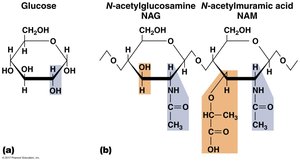
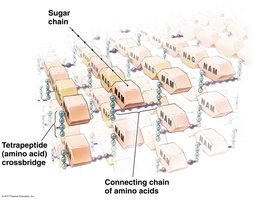
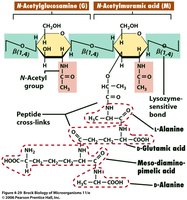
Peptidoglycan consists of alternating sugar molecules: N-acetylglucosamine (NAG) and N-acetylmuramic acid (NAM).
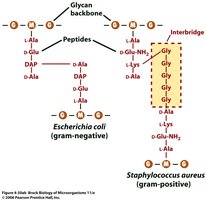
These sugars are linked in long chains and cross-linked by short peptides (tetrapeptide crossbridges).
Crossbridges may be direct or connected by additional amino acid chains, depending on the bacterial species.
Peptidoglycan is absent in some bacteria, such as Mycoplasma.
Peptidoglycan is a target for antibiotics (e.g., penicillin) and lysozyme.
Example: The structure of peptidoglycan is essential for Gram staining, which differentiates bacteria based on cell wall composition.
Types of Bacterial Cell Walls
Bacteria are classified based on their cell wall structure, which affects their staining properties and susceptibility to antibiotics.
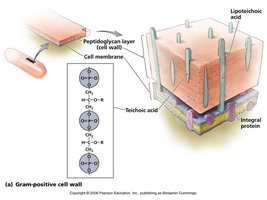
Gram-Positive Cell Walls:
Thick peptidoglycan layer.
Contains teichoic acids and lipoteichoic acids (anchor peptidoglycan to membrane).
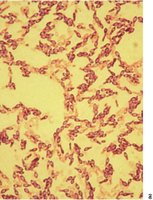
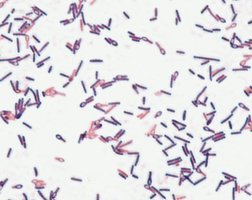
Retains crystal violet dye in Gram staining (appears purple).
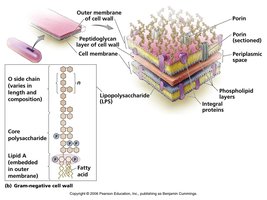
Gram-Negative Cell Walls:
Thin peptidoglycan layer.
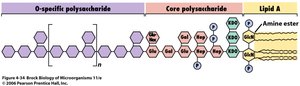
Outer membrane contains lipopolysaccharide (LPS), phospholipids, and porins.
LPS is an endotoxin; lipid A component triggers immune responses.
Does not retain crystal violet; appears pink after Gram staining.
Periplasmic space between membranes contains enzymes and transport proteins.
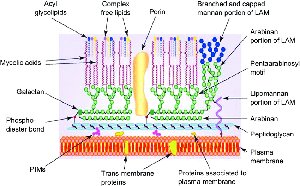
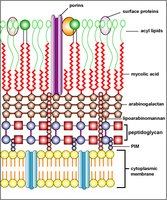
Acid-Fast Cell Walls:
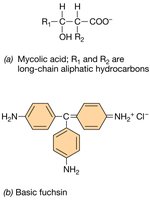
Contains wax-like lipids, mainly mycolic acids (up to 60% of wall).
Resistant to many chemicals and stains.
Characteristic of Mycobacterium species (e.g., tuberculosis).
Prokaryotic Cytoplasmic Membrane
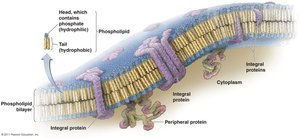
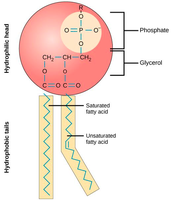
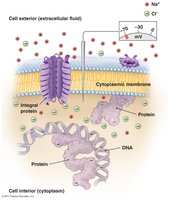
The cytoplasmic membrane is a phospholipid bilayer with embedded proteins, forming a selectively permeable barrier. It regulates the passage of substances and maintains cellular homeostasis.
Proteins in the membrane serve as enzymes, receptors, carriers, and channels.
Integral proteins span the membrane; peripheral proteins are attached to its surface.
The fluid mosaic model describes the dynamic nature of the membrane.
Archaeal membranes differ by having ether linkages and branched hydrocarbons.
Transport Across Membranes
Substances cross the cytoplasmic membrane by passive or active processes, maintaining concentration and electrical gradients.
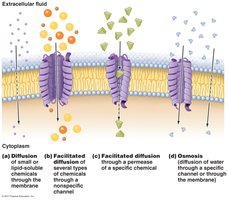
Passive Transport: No energy required.
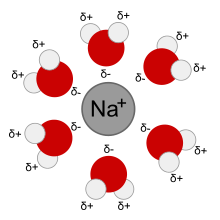
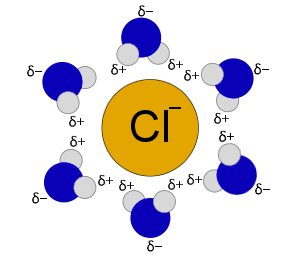
Diffusion: Movement of molecules from high to low concentration.
Facilitated Diffusion: Uses channel or carrier proteins.
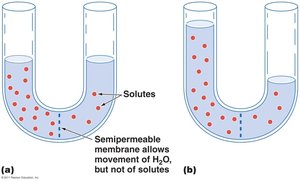
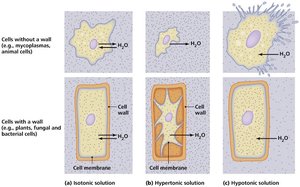
Osmosis: Movement of water across a semipermeable membrane.
Isotonic, Hypertonic, Hypotonic Solutions: Affect cell volume and integrity.
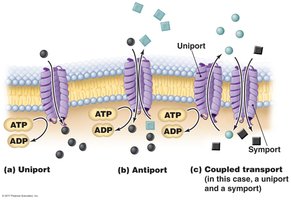
Active Transport: Requires energy (ATP).
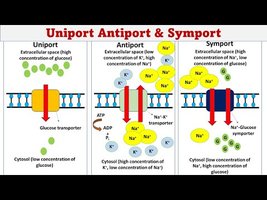
Uniport: Moves one substance in one direction.
Antiport: Moves two substances in opposite directions.
Symport: Moves two substances in the same direction.
Group Translocation: Substance is chemically modified during transport (e.g., glucose phosphorylation).
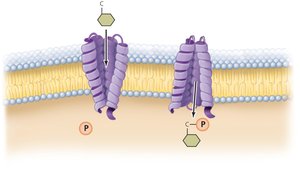
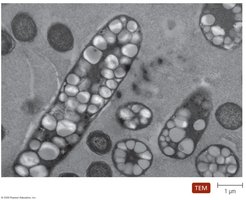
Inclusions
Bacteria store nutrients and other substances in cytoplasmic inclusions, which serve as reserves for times of scarcity.
Inclusions may contain lipids, starch, nitrogen, phosphate, sulfur, or gas.
Polyhydroxybutyrate (PHB) is a common lipid polymer stored for carbon and energy.
Gas inclusions help aquatic bacteria maintain buoyancy.
Example: Inclusions are visible under electron microscopy as dense granules.
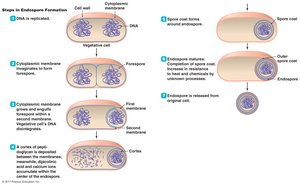
Bacterial Endospores
Endospores are highly resistant, dormant structures formed by certain Gram-positive bacteria (e.g., Bacillus and Clostridium) as a defense against harsh conditions.
Each vegetative cell forms one endospore; each endospore germinates into one vegetative cell.
Endospores are not reproductive structures (unlike fungal spores).
They are extremely resistant to heat, drying, radiation, and chemicals.
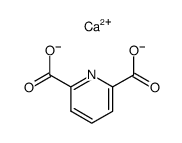
Spore core is dehydrated and contains high concentrations of calcium and dipicolinic acid (DPA).
Endospores can remain viable for thousands of years.
Serious concern in food safety and healthcare due to their persistence.
Example: Endospores of Clostridium botulinum and Clostridium tetani are medically significant.
Summary Table: Types of Bacterial Cell Walls
Type | Main Components | Unique Features | Gram Stain Result |
|---|---|---|---|
Gram-Positive | Thick peptidoglycan, teichoic acids | Retains crystal violet, lipoteichoic acids | Purple |
Gram-Negative | Thin peptidoglycan, outer membrane with LPS | LPS (endotoxin), periplasmic space | Pink |
Acid-Fast | Peptidoglycan, mycolic acids, glycolipids | Wax-like, resistant to stains | Variable (requires acid-fast stain) |
