 Back
BackBacterial Culture, Growth, and Nutrient Acquisition: Microbiology Study Notes
Study Guide - Smart Notes
 Tailored notes based on your materials, expanded with key definitions, examples, and context.
Bacterial Culture, Growth, and Development
Microbial Diversity and Nutrient Acquisition
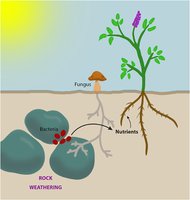
Microbes, including bacteria and fungi, thrive in diverse environments due to their ability to obtain nutrients and energy from a variety of sources. Their metabolic versatility allows them to utilize both organic and inorganic compounds, supporting ecological functions such as decomposition, nutrient cycling, and symbiosis.
Organic sources: Dead organisms, waste products.
Inorganic sources: Carbon dioxide (CO2), minerals.
Energy generation: Microbes use electron transfer reactions to produce ATP, the universal energy currency for cellular activities.
Ecological roles: Microbes contribute to rock weathering, soil formation, and plant nutrition.
Carbon and Nitrogen Sources in Microbes
Carbon Acquisition: Autotrophs vs. Heterotrophs
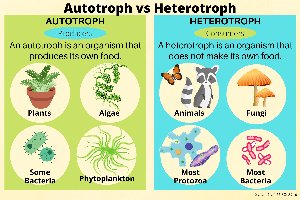
Microbes are classified based on their carbon source. Autotrophs synthesize organic molecules from CO2, while heterotrophs rely on organic compounds produced by other organisms.
Autotrophs: "Self-feeders" that convert CO2 into sugars and other organics. Examples: plants, algae, some bacteria, phytoplankton.
Heterotrophs: "Other-feeders" that consume organic molecules. Examples: animals, fungi, most protozoa, most bacteria.
Nitrogen Acquisition: Fixation and Assimilation
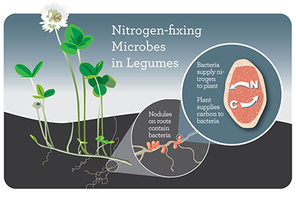
Nitrogen is essential for building proteins, DNA, and RNA. Microbes play a critical role in converting atmospheric nitrogen (N2) into usable forms through nitrogen fixation and assimilation.
Nitrogen fixation: Specialized bacteria convert N2 to ammonia (NH3) using enzymes. Some form symbiotic relationships with legumes, exchanging nitrogen for sugars.
Nitrogen assimilation: Microbes take up inorganic nitrogen (NH4+ or NO3-) and incorporate it into cellular components.
The Nitrogen Cycle
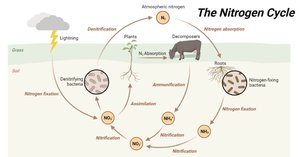
The nitrogen cycle illustrates the transformation of nitrogen through various forms in the environment, facilitated by microbial processes.
Key steps: Nitrogen fixation, assimilation, ammonification (mineralization), nitrification, denitrification.
Microbial roles: Nitrogen-fixing bacteria, nitrifying bacteria, denitrifying bacteria, decomposers.
Nitrogen Transport and Mineralization
Transport Proteins and Assimilation
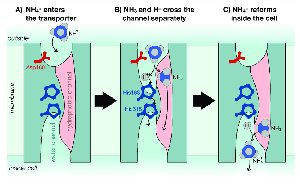
Microbes use specialized transport proteins to import nitrogen compounds across the cell membrane. Ammonium transporters facilitate the uptake of NH4+, which is then assimilated into amino acids and nucleic acids.
Ammonium transporters: Proteins that enable efficient uptake of ammonia.
Assimilation: Conversion of nitrate to ammonium, followed by incorporation into cellular molecules.
Mineralization (Ammonification)
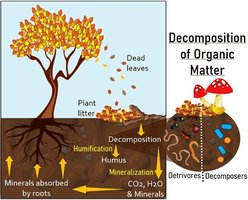
Microbes recycle organic nitrogen by breaking down proteins and releasing ammonium, which can be used by plants and other organisms. This process maintains ecosystem nutrient balance.
Extracellular enzymes: Break down large proteins into amino acids.
Deamination: Removal of nitrogen from amino acids, releasing NH4+.
Ecological importance: Returns nitrogen from dead organisms to the soil.
Nutrient Uptake and Membrane Transport
Passive Transport
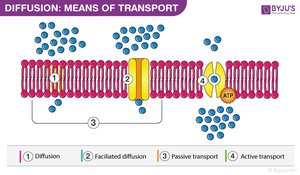
Passive transport involves the movement of substances across the cell membrane without energy expenditure, driven by concentration gradients.
Simple diffusion: Movement of small, non-polar molecules (e.g., O2, CO2) through the lipid bilayer.
Facilitated diffusion: Transport of larger or charged molecules via channel or carrier proteins.
Osmosis: Diffusion of water across a semi-permeable membrane, crucial for osmotic balance.
Osmotic Balance and Cell Lysis
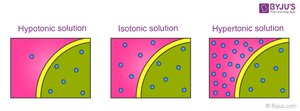
Microbes must maintain osmotic balance to prevent cell lysis, especially in hypotonic environments. Protective structures such as cell walls help prevent rupture.
Hypotonic solution: Water enters the cell, risk of lysis.
Isotonic solution: No net water movement.
Hypertonic solution: Water leaves the cell, risk of plasmolysis.
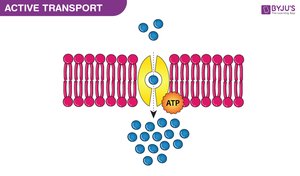
Active Transport
Active transport requires energy (ATP) to move substances against their concentration gradient. This is essential for microbes in nutrient-poor environments.
Primary active transport: Direct use of ATP by pumps (e.g., ABC transporters).
Secondary active transport: Utilizes proton gradients generated by cellular energy.
Group translocation: Nutrient is chemically modified during transport, preventing back diffusion.
Microbial Cultivation and Growth
The Five I's of Microbial Cultivation
Laboratory cultivation of microbes involves five key steps: Inoculation, Incubation, Isolation, Inspection, and Identification. These steps ensure the isolation and study of pure cultures under controlled conditions.
Inoculation: Introduction of microbes into sterile media using aseptic technique to prevent contamination
Incubation: Growth under controlled temperature, oxygen, and humidity.
Isolation: Separation of individual species, often using the streak plate method.
Inspection: Examination of colony and cell characteristics.
Identification: Determination of microbial species based on morphology and biochemical tests.
Controlled Atmospheric and Temperature Conditions
Microbes require specific environmental conditions for optimal growth, including oxygen levels and temperature.
Aerobic: Require oxygen.
Anaerobic: Require absence of oxygen.
Capnophilic: Thrive in elevated CO2 levels.
Temperature: Human pathogens grow best at 35–37°C; environmental microbes may require lower temperatures.
Enumeration of Microbes: Serial Dilution and CFUs
Quantifying viable microbes involves serial dilution and plating techniques to estimate colony-forming units (CFUs).
Serial dilution: Stepwise reduction of cell density for accurate counting.
Spread plating: Distribution of diluted samples on agar plates.
CFUs: Each colony represents one viable cell; reliable counts are 30–300 colonies per plate.
Microbial Growth Curve
Stages of Growth
The microbial growth curve describes population changes over time in a closed system. It consists of four distinct phases:
Lag phase: Cells adapt to new environment; no division.
Log (exponential) phase: Rapid cell division; population doubles at regular intervals.
Stationary phase: Division rate equals death rate; population stabilizes due to nutrient depletion and waste accumulation.
Death (decline) phase: Cell death exceeds division; population decreases.
Viable But Non-Culturable (VBNC) state: Some cells remain alive but do not grow on standard media.
Key Equations
Generation time (g): , where t is time and n is number of generations.
CFU calculation:
Additional info: Expanded explanations and context were added to ensure completeness and academic quality, including definitions, examples, and equations relevant to microbiology students.
