 Back
BackBacterial Recombination and DNA Transfer Mechanisms: Transformation & Conjugation
Study Guide - Smart Notes
 Tailored notes based on your materials, expanded with key definitions, examples, and context.
Recombination & Bacterial DNA Transfer Mechanisms
Introduction to Bacterial Genetic Variation
Bacteria can acquire new genetic traits through several mechanisms, increasing their adaptability and survival. While mutations can introduce genetic changes, bacteria also utilize more efficient processes for genetic exchange, including transformation, conjugation, and transduction. These mechanisms are central to microbial genetics and biotechnology.
Mutagenesis and Its Role in Bacterial Evolution
Definition and Consequences of Mutagenesis
Mutagenesis refers to the process by which the genetic information of an organism is changed, resulting in a mutation.
While often harmful, mutations can sometimes confer beneficial traits, such as antibiotic resistance or the ability to metabolize new substrates.
However, mutagenesis is generally inefficient compared to other DNA transfer mechanisms.
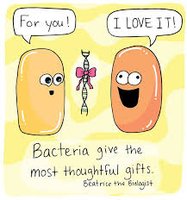
Mechanisms of Bacterial DNA Transfer
Overview of DNA Transfer Methods
Transformation: Uptake of free DNA from the environment.
Conjugation: Direct transfer of DNA through cell-to-cell contact (bacterial "mating").
Transduction: Transfer of DNA via bacterial viruses (phages).
Bacterial DNA Forms
Chromosomal DNA vs. Plasmids
Bacterial chromosome (nucleoid): Large, fragile, and contains essential genes.
Plasmids: Small, circular, self-replicating DNA molecules that often carry non-essential but advantageous genes (e.g., antibiotic resistance).
DNA released from lysed cells can be taken up by other bacteria.
For chromosomal DNA to be maintained, it must integrate into the host chromosome via recombination; otherwise, it is degraded or recycled.
Genetic Recombination in Bacteria
General (Homologous) Recombination
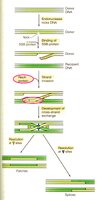
Recombination allows the integration of foreign DNA into the bacterial chromosome, primarily mediated by the RecA protein.
RecA: Facilitates homologous recombination by aligning similar DNA sequences and mediating strand exchange.
Process involves endonuclease nicking, single-stranded DNA binding proteins (SSB), and RecA-mediated strand invasion and exchange.
Plasmids, being self-replicating, do not require recombination for maintenance.
Transformation
Definition and Mechanism
Transformation is the process by which bacteria take up free DNA from their environment. This DNA can be chromosomal fragments or plasmids.
Competent cells: Cells capable of taking up DNA and undergoing transformation.
Natural transformation: Some species are naturally competent (e.g., Bacillus, Streptococcus).
Artificial competence: Induced in the lab using CaCl2, glycerol, and cold shock (e.g., in E. coli).
DNA uptake varies by species (single- or double-stranded, sequence specificity).
Transformation Process
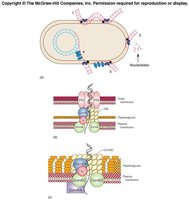
Step 1: DNA binds to the cell surface (competent cells bind much more DNA).
Step 2: Nucleases degrade one DNA strand (location differs in Gram-positive vs. Gram-negative bacteria).
Step 3: Single-stranded DNA enters the cell.
Step 4: SSB proteins bind the DNA, which is then incorporated into the chromosome by recombination (if not a plasmid).
Transformation: Chromosomal Fragments vs. Plasmids
Plasmids do not require recombination for maintenance after transformation.
Chromosomal fragments must recombine with the host chromosome to be retained.
Electroporation
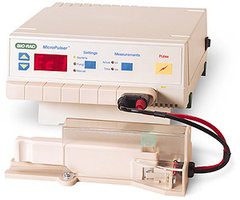
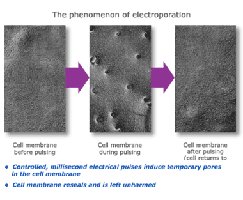
Electroporation is a laboratory technique used to introduce DNA into cells by applying short pulses of electricity, creating transient pores in the cell membrane.
Applicable to both prokaryotic and eukaryotic cells.
Allows for efficient transformation of cells that are not naturally competent.
Plasmids: Types and Functions
Categories of Plasmids
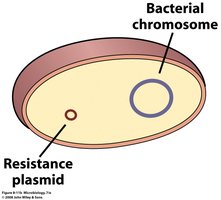
Resistance (R) Plasmids: Carry genes for antibiotic resistance.
Virulence Plasmids: Carry genes that enhance pathogenicity.
Col Plasmids: Encode bacteriocins, proteins that kill other bacteria.
Metabolic Plasmids: Encode enzymes for unusual metabolic pathways.
Conjugative Plasmids: Carry genes for plasmid transfer (e.g., F factor).
Resistance (R) Plasmids
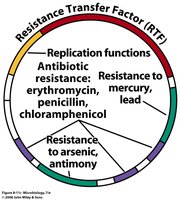
Confer resistance to antibiotics and other toxic compounds.
Highly infectious and easily transferred between bacteria.
Contain RTF (resistance transfer factor) for replication and conjugation, and r-determinant for resistance genes.
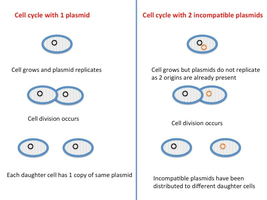
Plasmid incompatibility prevents uptake of similar plasmids, promoting diversity.
Virulence Plasmids
Carry genes for toxins, enzymes, and other factors that increase bacterial virulence.
Examples: enterotoxins, hemolysins, coagulase, siderophores.
Virulence genes can also be found on phages and transposons.
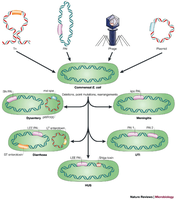
Col Plasmids
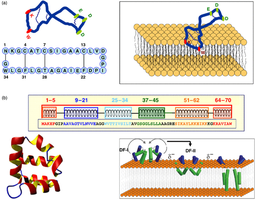
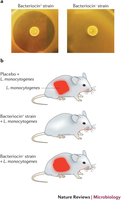
Encode bacteriocins, proteins that kill closely related bacteria by forming pores in their membranes.
Potential alternatives to antibiotics, especially for topical applications.
Metabolic Plasmids
Carry genes for specialized metabolic functions not related to resistance or virulence.
Examples: degradation of camphor or toluene, lactose utilization, urease production, nitrogen fixation.
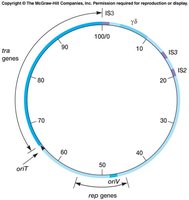
Conjugative Plasmids: The F (Fertility) Factor
Can exist as a plasmid (F+ strains) or integrate into the chromosome (Hfr strains).
Carry tra genes for DNA transfer and F pilus formation.
Contain oriT (origin of transfer) and oriV (origin of replication).
Insertion sequences (IS2/3) allow integration into the chromosome.
Conjugation
Cell Nomenclature and Roles
F+ cells: Contain the F factor as a plasmid; act as donors ("male").
Hfr cells: Have the F factor integrated into their chromosome; also act as donors.
F- cells: Lack the F factor; act as recipients ("female").
F+ and Hfr cells cannot act as recipients due to membrane alterations by F factor genes.
Conjugation between F+ and F- Cells
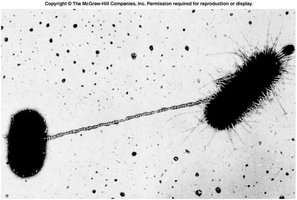
F+ cell forms a pilus to attach to the F- cell and brings it closer.
F factor replicates by rolling circle replication.
Single-stranded DNA is transferred through the pilus and converted to double-stranded DNA in the recipient.
The entire F factor is transferred, converting the F- cell into F+.
No recombination is needed since the entire plasmid is transferred.
Rolling Circle Replication
Plasmid DNA is nicked, and the intact strand is used as a template for synthesis.
The displaced single strand is transferred to the recipient cell.
Replication continues around the circle, hence the name "rolling circle."
Conjugation between Hfr and F- Cells
Hfr cells have the F factor integrated into their chromosome.
During conjugation, transfer begins at oriT and includes chromosomal genes adjacent to the F factor.
The F pilus often breaks before the entire F factor is transferred, so the recipient remains F- but acquires new chromosomal genes.
Recombination is necessary for the integration of donor DNA into the recipient chromosome.
Summary Table: Bacterial DNA Transfer Mechanisms
Mechanism | DNA Source | Requirement for Cell Contact | Recombination Needed? | Example |
|---|---|---|---|---|
Transformation | Free DNA (chromosomal or plasmid) | No | Yes (chromosomal DNA); No (plasmid) | Bacillus subtilis |
Conjugation (F+ x F-) | Plasmid (F factor) | Yes | No | Escherichia coli |
Conjugation (Hfr x F-) | Chromosomal DNA + part of F factor | Yes | Yes | Escherichia coli |
Transduction | Phage-mediated DNA | No | Yes | Salmonella phage P22 |
Next Topic Preview: Transduction
Transduction involves the transfer of bacterial DNA by bacteriophages (viruses that infect bacteria). This process will be discussed in detail in the next lecture.
