 Back
BIO210 Microbiology: Study Guide for Chapters 3, 5, and 6 (Cell Structure, Metabolism, and Growth)
Study Guide - Smart Notes
 Tailored notes based on your materials, expanded with key definitions, examples, and context.
Introduction to Microbiology
What are Microbes?
Microbes are microscopic organisms that include bacteria, archaea, fungi, protozoa, algae, viruses, and some multicellular parasites. They are found in virtually every environment on Earth and play essential roles in health, disease, and ecological balance.
Prokaryotes: Unicellular organisms lacking a nucleus (bacteria and archaea).
Eukaryotes: Organisms with a nucleus and membrane-bound organelles (algae, protozoa, fungi, animals, plants).
Viruses: Acellular entities composed of genetic material and a protein/lipid coat; obligate intracellular parasites.
Global Impact of Microbes
Infectious Diseases and Mortality
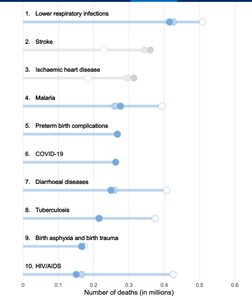
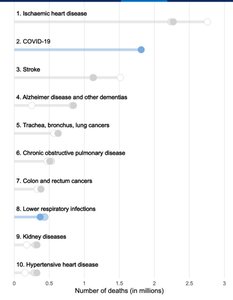
Microbial diseases remain leading causes of death worldwide, especially in low-income countries. Lower respiratory infections, diarrheal diseases, tuberculosis, malaria, and HIV/AIDS are among the top causes of death due to infectious agents.
Case Study: Cyclospora Outbreak
Cyclospora cayetanensis
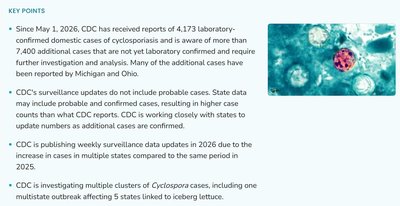
Cyclospora cayetanensis is a protozoan parasite that causes cyclosporiasis, a diarrheal disease transmitted via ingestion of contaminated food or water. Outbreaks are often linked to fresh produce.
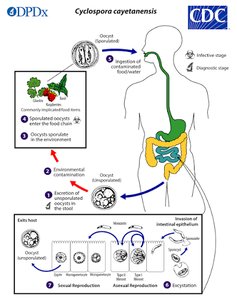
Oocysts are excreted in feces and contaminate the environment.
Humans ingest sporulated oocysts from contaminated food/water.
Diagnosis is by identification of oocysts in stool samples.

Good Microbes: The Human Microbiome
Role of the Gut Microbiome
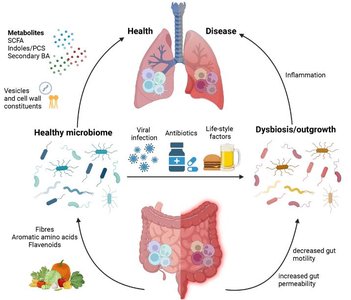
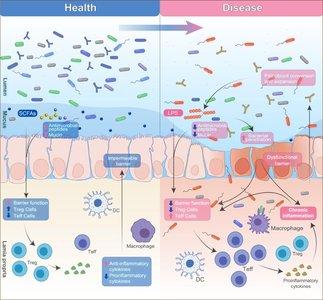
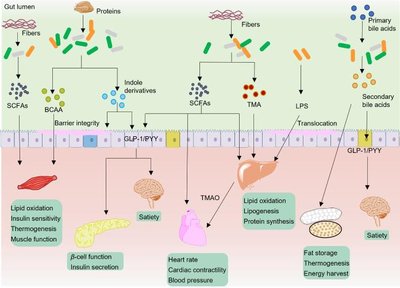
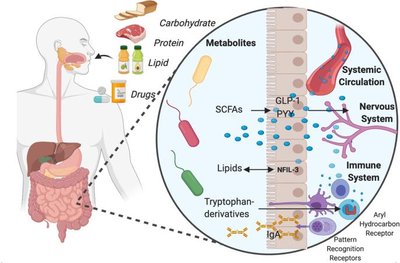
The gut microbiome consists of beneficial microbes that aid in digestion, synthesize vitamins, and protect against pathogens. Disruption (dysbiosis) can lead to disease.
Organizing the Microbial World
Classification of Microbes
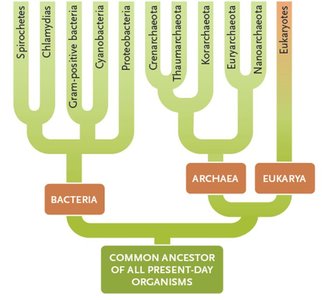
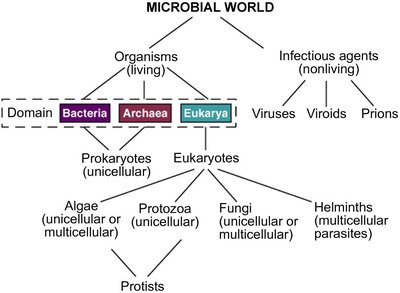
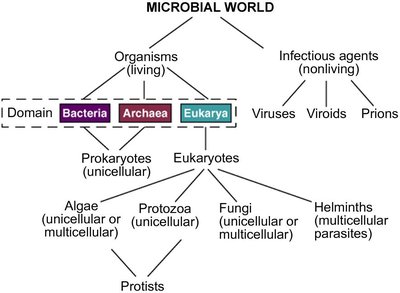
Microbes are classified into three domains: Bacteria, Archaea, and Eukarya. Infectious agents also include viruses, viroids, and prions.
Prokaryotes: Bacteria and Archaea
Bacteria: Ubiquitous, some pathogenic, reproduce asexually.
Archaea: Similar to bacteria but with distinct cell wall and membrane chemistry; rarely pathogenic.
Eukaryotic Microbes
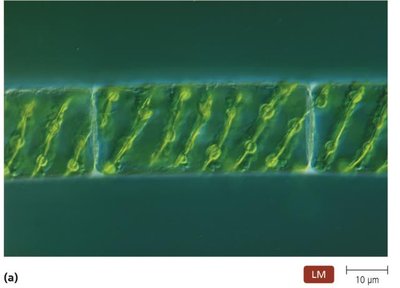
Algae: Unicellular or multicellular, photosynthetic, classified by pigments and cell wall composition.
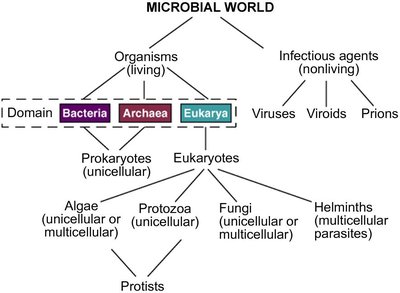
Protozoa: Single-celled, animal-like, classified by locomotion (pseudopodia, cilia, flagella).
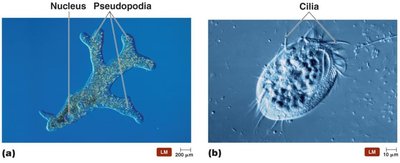
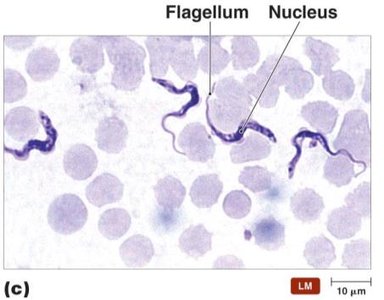
Fungi: Eukaryotic, non-photosynthetic, cell walls, includes molds (multicellular) and yeasts (unicellular).
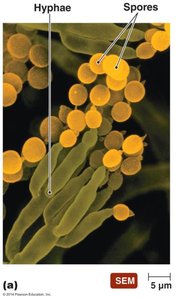
Cell Structure and Function
Prokaryotic vs. Eukaryotic Cells
Prokaryotes: No nucleus, small size (~1 µm), simple structure, no membrane-bound organelles.
Eukaryotes: Nucleus, larger size (10–100 µm), complex structure, membrane-bound organelles.
Microbial Metabolism
Overview of Metabolism
Metabolism is the sum of all biochemical reactions in a cell, divided into catabolism (breakdown, energy-releasing) and anabolism (biosynthesis, energy-consuming).
Catabolic pathways: Break down molecules, exergonic.
Anabolic pathways: Build complex molecules, endergonic.
ATP Production and Pathways
Glycolysis: Glucose → 2 pyruvate, net 2 ATP, 2 NADH.
Krebs Cycle: Acetyl-CoA → CO2, NADH, FADH2, 2 ATP per glucose.
Electron Transport Chain (ETC): NADH/FADH2 donate electrons, proton gradient drives ATP synthesis (oxidative phosphorylation).
Net ATP yield (prokaryotes): 38 ATP per glucose.
Alternative Pathways
Pentose Phosphate Pathway: Generates NADPH and ribose-5-phosphate for biosynthesis.
Fermentation: Incomplete oxidation of glucose, regenerates NAD+, produces organic acids/alcohols.
Microbial Nutrition and Growth
Requirements for Growth
Chemical: Carbon, nitrogen, sulfur, phosphorus, trace elements, growth factors.
Physical: Temperature, pH, osmotic and hydrostatic pressure.
Oxygen Requirements
Obligate aerobes: Require O2.
Obligate anaerobes: Killed by O2.
Facultative anaerobes: Can use O2 or grow without it.
Aerotolerant anaerobes: Tolerate O2, do not use it.
Microaerophiles: Require low O2 levels.
Biofilms and Quorum Sensing
Biofilms are complex communities of microbes attached to surfaces, coordinated by quorum sensing (chemical signaling).
Microbial Reproduction
Binary fission: Main method of bacterial reproduction; leads to exponential (logarithmic) growth.
Generation time: Time required for a population to double.
Laboratory Techniques in Microbiology
Aseptic Technique
Procedures to prevent contamination by unwanted microbes, including sterilization of media and instruments (autoclave, incinerator).
Staining Techniques
Simple stain: Reveals cell shape, size, arrangement.
Gram stain: Differentiates bacteria by cell wall structure (Gram-positive: thick peptidoglycan, purple; Gram-negative: thin peptidoglycan, pink).
Negative stain: Stains background, not cells; useful for capsules.
Acid-fast stain: Identifies Mycobacterium and Nocardia (waxy cell wall, mycolic acid).
Measuring Microbial Growth
Direct methods: Plate counts, microscopic counts, membrane filtration, most probable number (MPN).
Indirect methods: Turbidity (spectrophotometry), metabolic activity, dry weight.
Biosafety in the Microbiology Laboratory
Biosafety Levels (BSL)
BSL-1: Non-pathogenic microbes, open bench work.
BSL-2: Moderate risk, agents associated with human disease, use of biosafety cabinets.
BSL-3/4: High/Extreme risk, not used in undergraduate labs.
Basic Lab Safety
Wear gloves, lab coats, and eye protection as needed.
Practice proper hand hygiene and decontamination procedures.
Dispose of biomedical waste and sharps appropriately.
Summary Table: Classification of Microbes
Domain | Cell Type | Cell Wall | Examples |
|---|---|---|---|
Bacteria | Prokaryotic | Peptidoglycan | Escherichia coli, Staphylococcus aureus |
Archaea | Prokaryotic | Polysaccharide/protein (no peptidoglycan) | Halophiles, thermophiles |
Eukarya | Eukaryotic | Varies (cellulose, chitin, none) | Algae, fungi, protozoa |
Viruses | Acellular | Protein/lipid coat | Influenza virus, HIV |
Key Equations
Generation time:
Population size:
ATP from fatty acid oxidation:
Practice Questions
What is the difference between Gram-positive and Gram-negative bacteria?
How does the electron transport chain generate ATP?
What are the main biosafety practices in a BSL-2 laboratory?
