 Back
BackBiochemical Tests for Bacterial Identification
Study Guide - Smart Notes
 Tailored notes based on your materials, expanded with key definitions, examples, and context.
Biochemical Tests in Microbiology
Introduction
Biochemical tests are essential tools in microbiology for the identification and differentiation of bacterial species. These tests exploit unique metabolic and enzymatic properties of bacteria, allowing for the classification of organisms based on their biochemical activities. The following notes summarize key biochemical tests relevant to both Gram-positive and Gram-negative bacteria.
Tests Specific for Gram-Positive Bacteria
Bile Esculin Test
The bile esculin test is used to differentiate Enterococcus species and non-enterococcus group D Streptococcus from other Gram-positive cocci.
Selective Component: Bile salts inhibit non-enteric bacteria; sodium azide inhibits Gram-negative bacteria.
Differential Component: Ability to hydrolyze esculin.
Indicator: Ferric citrate reacts with esculetin (a hydrolysis product of esculin) to form a black complex.
Positive Result: More than half the medium turns black, indicating esculin hydrolysis.
Negative Result: No color change or less than half the medium turns black.
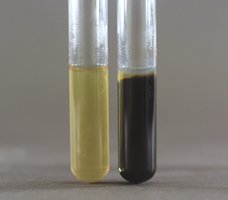
Example: Enterococcus faecalis is bile esculin positive, while most Streptococcus pyogenes are negative.
Tests for Both Gram-Positive and Gram-Negative Bacteria
Catalase Test
The catalase test detects the presence of the enzyme catalase, which breaks down hydrogen peroxide into water and oxygen.
Function: Protects bacteria from oxidative damage by reactive oxygen species.
Virulence Factor: Allows survival in oxygen-rich environments.
Positive Test: Immediate bubbling upon addition of hydrogen peroxide (release of O2 gas).
Application: Differentiates Staphylococcus (catalase positive) from Streptococcus (catalase negative).
Phenol Red Fermentation Tubes
These tubes test for the ability of bacteria to ferment specific sugars, producing acid and sometimes gas.
Indicator: Phenol red turns yellow in acidic conditions (positive for fermentation).
Durham Tube: Captures gas produced during fermentation.
Results Notation:
A/G: Acid and gas produced (yellow broth, gas bubble in Durham tube).
A/-g: Acid produced, no gas (yellow broth, no bubble).
CONTROL -/-g: No acid or gas (red broth, no bubble).
K (alkaline): Alkaline reaction (red or pink broth).
Example: Escherichia coli ferments glucose with acid and gas production (A/G).
Biochemical Tests for Gram-Negative Bacteria
Urease Test
The urease test detects the enzyme urease, which hydrolyzes urea to ammonia and carbon dioxide.
Indicator: Phenol red turns pink in alkaline conditions due to ammonia production.
Virulence Factor: Urease helps some pathogens survive acidic environments.
Results: Rapid positive (strong pink), delayed positive (weak pink), or negative (no color change).
Example: Proteus vulgaris is urease positive; Escherichia coli is negative.
Citrate Test
The citrate test determines if bacteria can use citrate as a sole carbon source and ammonia salts as a nitrogen source.
Indicator: Bromthymol blue turns from green to blue in alkaline conditions.
Enzyme: Citrate-permease transports citrate into the cell.
Positive Result: Blue color indicates citrate utilization.
Negative Result: No color change (remains green).
Example: Klebsiella pneumoniae is citrate positive; Escherichia coli is negative.
SIM Test (Sulfur, Indole, Motility)
The SIM test is a combination test for sulfur reduction, indole production, and motility.
S - Sulfur Reduction: Bacteria reduce sulfur-containing compounds to H2S, which reacts with ferrous ions to form a black precipitate.
I - Indole Production: Bacteria with tryptophanase convert tryptophan to indole; Kovac’s reagent produces a cherry red color if positive.
M - Motility: Motile bacteria grow away from the stab line, making the medium cloudy.
Example: Proteus vulgaris is positive for all three tests.
Oxidase Test
The oxidase test detects the presence of cytochrome c oxidase, an enzyme in the electron transport chain.
Indicator: Tetramethyl-p-phenylenediamine turns purple if oxidized by cytochrome c oxidase.
Positive Result: Purple color within seconds.
Application: Differentiates oxidase-positive Gram-negative bacteria (e.g., Pseudomonas) from oxidase-negative (e.g., Enterobacteriaceae), and from Staphylococcus and Streptococcus species.
Summary Table: Key Biochemical Tests
Test | Purpose | Indicator | Positive Result | Example Organism |
|---|---|---|---|---|
Bile Esculin | Differentiates Enterococcus from other Gram-positive cocci | Ferric citrate | Blackening of medium | Enterococcus faecalis |
Catalase | Differentiates Staphylococcus from Streptococcus | O2 bubbles | Bubbling | Staphylococcus aureus |
Phenol Red Fermentation | Detects sugar fermentation | Phenol red | Yellow color (acid), gas bubble | Escherichia coli |
Urease | Detects urease enzyme | Phenol red | Pink color | Proteus vulgaris |
Citrate | Detects citrate utilization | Bromthymol blue | Blue color | Klebsiella pneumoniae |
SIM | Sulfur reduction, indole production, motility | Ferrous ions, Kovac’s reagent | Black precipitate, red ring, cloudiness | Proteus vulgaris |
Oxidase | Detects cytochrome c oxidase | Tetramethyl-p-phenylenediamine | Purple color | Pseudomonas aeruginosa |
Additional info: These tests are foundational for clinical and research microbiology, enabling rapid identification and characterization of bacterial isolates.
