 Back
BackBiochemical Tests for Microbial Respiration and Identification
Study Guide - Smart Notes
 Tailored notes based on your materials, expanded with key definitions, examples, and context.
Respiration and Protective Enzymes in Microorganisms
Overview of Microbial Respiration
Microbial respiration involves the transfer of electrons through the electron transport chain (ETC), resulting in the production of reactive oxygen species (ROS) such as hydrogen peroxide and superoxide radicals. Microorganisms possess protective enzymes to neutralize these toxic byproducts, ensuring cellular survival.
Flavoprotein Reaction: Reduced flavoproteins transfer electrons to oxygen, producing hydrogen peroxide.
Superoxide Dismutase: Converts superoxide radicals to hydrogen peroxide and oxygen.
Catalase: Breaks down hydrogen peroxide into water and oxygen gas.
Key Equations: 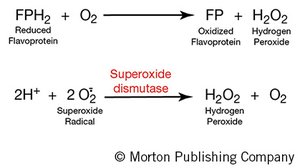
Catalase Reaction
Catalase is a critical enzyme for aerobic and facultative anaerobic bacteria, protecting cells from oxidative damage by decomposing hydrogen peroxide.
Reaction: Catalase converts hydrogen peroxide into water and oxygen gas.
Importance: Presence of catalase distinguishes certain bacterial genera.
Key Equation: 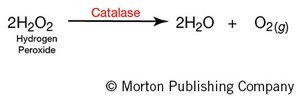
Catalase Test
Principle and Procedure
The catalase test detects the presence of catalase enzyme in bacteria. It is a rapid and simple test used to differentiate catalase-positive and catalase-negative organisms.
Procedure: Transfer bacterial growth onto a glass slide using a wooden applicator stick. Add a drop of hydrogen peroxide. Observe for bubble formation (oxygen gas).
Interpretation: Bubble formation indicates catalase-positive bacteria.
Clinical Relevance: Differentiates Staphylococcus (catalase-positive) from Streptococcus (catalase-negative).
Respiration: Oxidase Test
Principle and Procedure
The oxidase test identifies bacteria that produce cytochrome C oxidase, an enzyme involved in the final step of the ETC.
Procedure: Place bacterial growth on a paper or slide, add oxidase reagent (tetramethyl-p-phenylenediamine). Observe for color change.
Interpretation: Dark blue/purple color within 20 seconds indicates oxidase-positive bacteria.
Clinical Relevance: Differentiates oxidase-negative Enterobacteriaceae from oxidase-positive Pseudomonadaceae, Neisseria, and Vibrio.
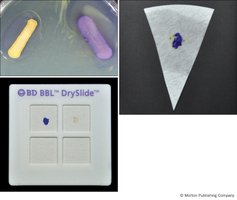
Multiple Test Systems for Bacterial Identification
EnteroPluri and Enterotube II Systems
Multiple test systems, such as EnteroPluri and Enterotube II, allow simultaneous biochemical testing for rapid identification of enteric bacteria.
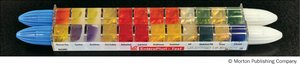
Structure: Consists of compartments containing different biochemical media.
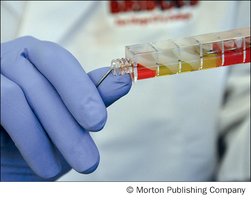
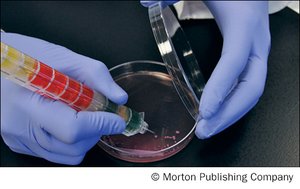
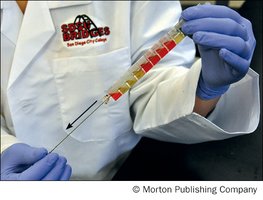
Procedure: Inoculate all compartments with a single wire, incubate, and observe color changes or gas production.
Interpretation: Each compartment tests for a specific metabolic activity (e.g., sugar fermentation, gas production, enzyme activity).
Identification: Results are recorded and converted into a code for species identification using a reference database.
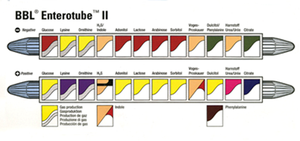
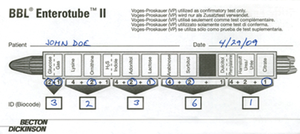
Summary Table: Enterotube II Compartment Tests
Compartment | Tested Metabolic Activity | Positive Result | Negative Result |
|---|---|---|---|
Glucose | Fermentation | Yellow | Red |
Lysine | Decarboxylation | Purple | Yellow |
Ornithine | Decarboxylation | Purple | Yellow |
Adonitol | Fermentation | Yellow | Red |
Lactose | Fermentation | Yellow | Red |
Arabinose | Fermentation | Yellow | Red |
Sorbitol | Fermentation | Yellow | Red |
H2S/Indole | H2S production/Indole | Black/Red after Kovac's reagent | No color change |
Dulcitol/PA | Fermentation/Deamination | Yellow/Brown | Red |
Urea | Hydrolysis | Pink | Yellow |
Citrate | Utilization | Blue | Green |
Post-lab Exercises
Application and Review
Students are expected to complete exercises related to biochemical testing and bacterial identification, reinforcing concepts of microbial metabolism and diagnostic microbiology.
Section 6, Ex. 29: Catalase and oxidase test interpretation
Section 6, Ex. 30: Enterotube II procedure and results analysis
Section 6, Ex. 59: Comprehensive review of multiple test systems
Additional info: The notes expand on the brief points in the original material, providing academic context and detailed explanations for each test and procedure.
