 Back
BackBiochemistry Basics and Microbial Metabolism: Structured Study Notes 2/8
Study Guide - Smart Notes
 Tailored notes based on your materials, expanded with key definitions, examples, and context.
Biochemistry Basics
Atoms and Their Structure
Atoms are the fundamental units of elements, which are pure substances that compose all matter. The atomic nucleus contains protons (positively charged) and neutrons (neutral), while electrons (negatively charged) orbit the nucleus. - Protons: Positively charged particles in the nucleus - Neutrons: Neutral particles in the nucleus - Electrons: Negatively charged particles in electron cloud 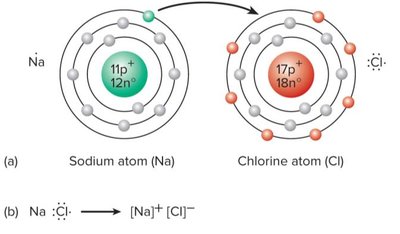
Ions: Variations of Atoms
Ions are atoms with unequal numbers of protons and electrons, resulting in a net charge. - Cations: Atoms that have lost electrons, becoming positively charged - Anions: Atoms that have gained electrons, becoming negatively charged
Molecules and Chemical Bonds
Molecules are formed when two or more atoms bond together. Chemical bonds are the forces that hold atoms together. - Compounds: Molecules made of more than one type of element - Organic molecules: Contain carbon and hydrogen - Inorganic molecules: May contain carbon, but lack associated hydrogen
Ionic Bonds
Ionic bonds are electrostatic attractions between oppositely charged ions, formed by electron transfer. When ionic compounds dissolve, the resulting free ions are called electrolytes. 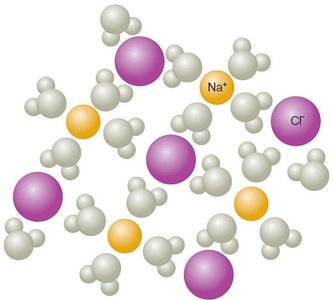
Covalent Bonds
Covalent bonds involve the sharing of electron pairs between atoms. - Single covalent bond: One pair of shared electrons (e.g., H2) - Double covalent bond: Two pairs of shared electrons (e.g., O2)
Polar Covalent Bonds
Polar covalent bonds result from unequal sharing of electrons, creating partial charges (dipoles) within the molecule. - Example: Water molecule (H2O) has partial positive and negative charges.
Hydrogen Bonds
Hydrogen bonds are noncovalent electrostatic attractions between molecules or within a large molecule. - Intermolecular hydrogen bonds: Between separate molecules (e.g., water) - Intramolecular hydrogen bonds: Within a single molecule (e.g., proteins) 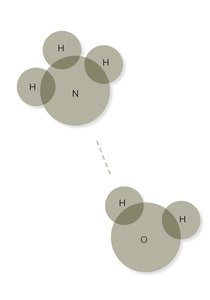
Chemical Reactions
Chemical reactions involve making or breaking chemical bonds. - Reactants: Starting materials - Products: Resulting substances - Catalysts: Substances that increase reaction rate (e.g., enzymes) - Synthesis: Building molecules, often with dehydration (loss of water) - Decomposition: Breaking molecules, often with hydrolysis (addition of water) 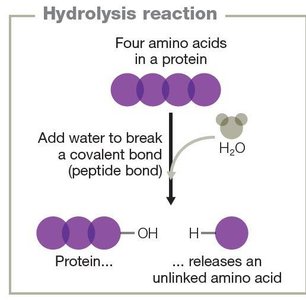
Energy in Chemical Reactions
Activation energy is the minimum energy required to start a reaction. - Exergonic reactions: Release more energy than is used; products have lower energy than reactants - Endergonic reactions: Use more energy than is released; products have higher energy than reactants 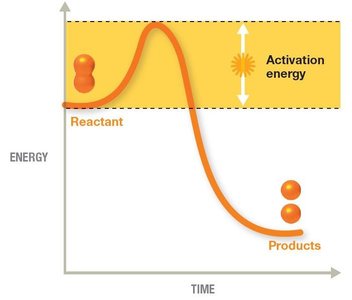
Classes of Biomolecules
There are four main classes of biomolecules: - Carbohydrates: Organic molecules made of sugar monomers (monosaccharides) - Lipids: Includes fats, oils, waxes, and steroids - Nucleic acids: Genetic material (DNA, RNA) made of nucleotides - Proteins: Polymers of amino acids; functions include enzymes
Microbial Metabolism
Metabolism Overview
Metabolism encompasses all chemical reactions used by organisms to break down substances for energy and to build new substances.
Metabolic Pathways
Metabolic pathways are sequences of reactions leading from a starting molecule to an end product, often through intermediates.
Types of Metabolic Pathways
- Catabolic pathways: Break down substances, releasing energy - Anabolic pathways: Build new substances, using energy - Amphibolic pathways: Can function in both breakdown and synthesis
ATP and Its Regeneration
ATP (adenosine triphosphate) is the main energy currency of the cell, made by catabolic reactions and used for anabolic reactions. - Structure: Adenine, ribose, three phosphate groups - Dephosphorylation: Removal of terminal phosphate releases energy, forming ADP (adenosine diphosphate) 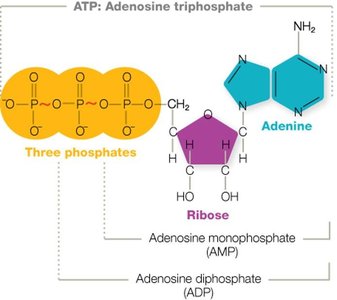 - Phosphorylation: Addition of phosphate to ADP regenerates ATP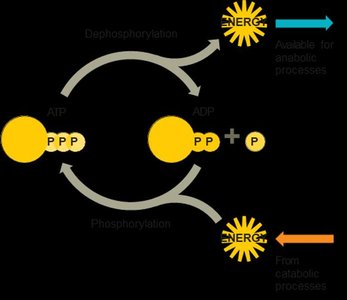
Enzymes: Structure and Function
Enzymes are protein catalysts that speed up chemical reactions by lowering activation energy. They are substrate-specific and their shape and function remain unchanged after the reaction. - Factors affecting enzyme activity: Temperature, pH, inhibitors, substrate concentration 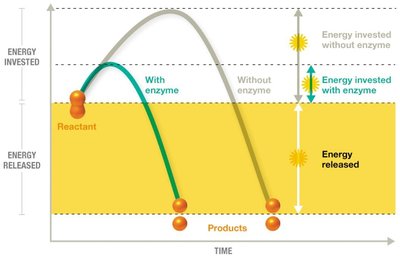
How Enzymes Work
Enzymes bind substrates at the active site, forming an enzyme-substrate complex. The induced fit model describes how enzymes mold to the substrate. 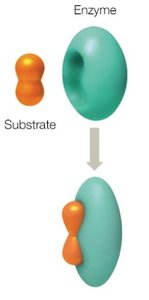
Enzyme Cofactors and Coenzymes
Some enzymes require cofactors (nonprotein, organic or inorganic) or coenzymes (organic, often vitamins) to function. Without these, no product is formed. 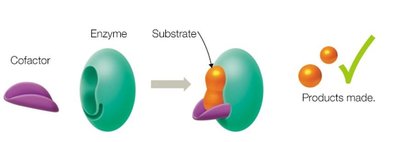
Enzyme Inhibition and Regulation
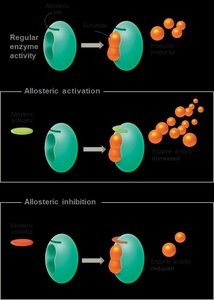
Enzyme activity can be regulated by inhibitors and allosteric regulation. - Competitive inhibitors: Compete with substrate for active site, slowing reaction 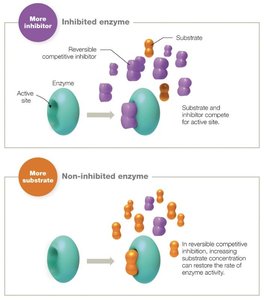 - Noncompetitive inhibitors: Bind elsewhere, decreasing activity
 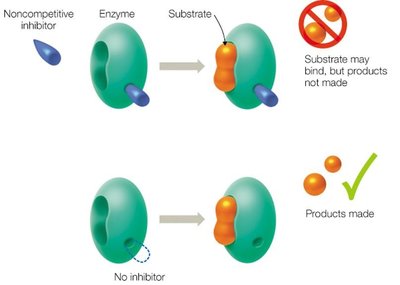 - Allosteric regulation: Activators or inhibitors bind to allosteric site, altering activity
  - Feedback inhibition: End product inhibits an enzyme earlier in the pathway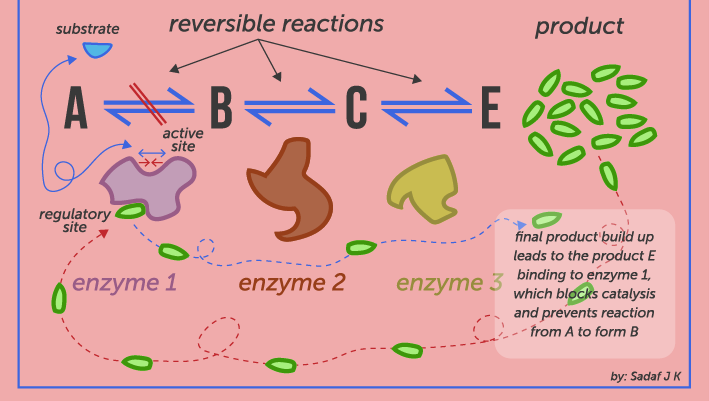
Redox Reactions and Energy Extraction
Cells extract energy from nutrients using oxidation-reduction (redox) reactions, often relying on coenzymes like NAD+ and FAD as electron carriers. - NADH: Reduced form of NAD+ - FADH2: Reduced form of FAD
Cellular Respiration and Fermentation
Cells extract energy from carbohydrates via cellular respiration (aerobic or anaerobic) and fermentation.
Cellular Respiration Steps
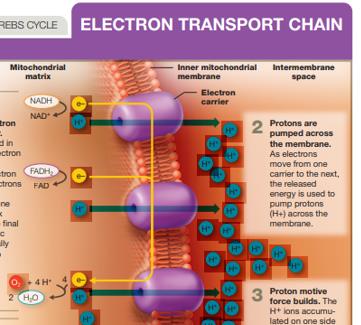
1. Glycolysis (cytoplasm, anaerobic): Glucose split into pyruvate, ATP, NADH 2. Intermediate step: Pyruvate converted to acetyl-CoA, CO2 released, NADH produced 3. Krebs cycle: Acetyl-CoA enters cycle, CO2, NADH, FADH2, ATP produced 4. Electron transport chain: NADH and FADH2 donate electrons, energy used to pump H+ ions, ATP synthesized 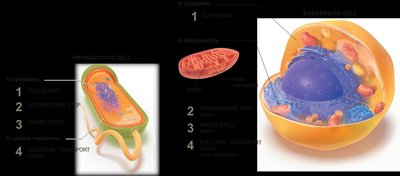
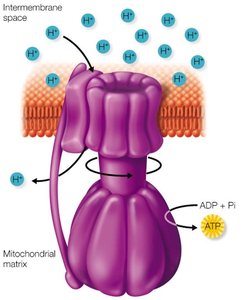
Fate of Electrons
- Aerobic respiration: Oxygen is the final electron acceptor, forming water - Anaerobic respiration: Other substances (nitrate, carbonate, sulfate) are final electron acceptors
Fermentation
Fermentation sustains ATP production by glycolysis when respiratory chains are unavailable. NADH passes electrons to an organic molecule, regenerating NAD+. - Lactic acid fermentation: Pyruvate is final electron acceptor, forming lactic acid (e.g., Streptococcus, Lactobacillus, human muscle) 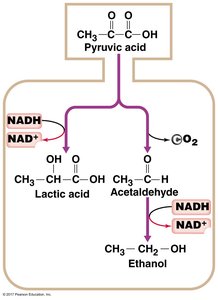 - Alcohol fermentation: Pyruvate converted to acetaldehyde, then to ethanol and CO2 (e.g., Saccharomyces cerevisiae)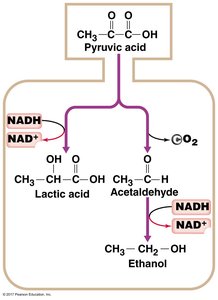
Metabolic Products, Enzymes, and Biochemical Tests
Microbes produce diverse metabolic products, which can be detected by biochemical tests to identify species. - Tests: Cytochrome c oxidase, catalase, gas production (sulfur, indole), specialized media, molecular/genetic/metabolic characteristics Additional info: Biochemical tests are essential in clinical microbiology for identifying pathogens based on their metabolic capabilities.
