 Back
BackBiochemistry Foundations for Microbiology: Structure and Function of Biological Molecules
Study Guide - Smart Notes
 Tailored notes based on your materials, expanded with key definitions, examples, and context.
Basic Chemistry for Microbiology
Atomic Structure and Elements
Understanding atomic structure is fundamental to biochemistry and microbiology. Atoms consist of protons, neutrons, and electrons, and their arrangement determines chemical properties.
Atomic Number: Number of protons in the nucleus.
Atomic Mass: Sum of protons and neutrons.
Isotopes: Atoms of the same element with different numbers of neutrons; some are unstable and decay (e.g., 14C).
CHNOPS: Carbon, Hydrogen, Nitrogen, Oxygen, Phosphorus, and Sulfur are the most common elements in living organisms.
Chemical Bonds and Molecular Interactions
Chemical bonds are essential for the formation and stability of biological molecules.
Ionic Bonds: Formed when atoms gain or lose electrons, resulting in attraction between oppositely charged ions (e.g., NaCl).
Covalent Bonds: Atoms share electrons; can be polar (hydrophilic) or non-polar (hydrophobic).
Hydrogen Bonds: Weak attractions between polar molecules, important in water and biological macromolecules.
Hydrophobic Associations: Non-polar molecules cluster together to avoid water.
Acids, Bases, Buffers, and pH
The pH scale measures the concentration of hydrogen ions in solution, affecting enzyme activity and cellular processes.
Acids: Proton donors, lower pH (0-6.9), can damage proteins.
Bases: Proton acceptors, raise pH (7.1-14), also damage proteins.
Buffers: Maintain stable pH by acting as both proton donors and acceptors.
Organic Molecules and Functional Groups
Organic Molecule Structure
Organic molecules contain carbon and hydrogen, forming chains or rings. Their structure determines their function in cells.
Oxidation: Loss of electrons, increase in charge.
Reduction: Gain of electrons, decrease in charge.
Functional Groups
Functional groups are specific clusters of atoms that confer distinct chemical properties to molecules.
Hydroxyl (-OH): Polar, found in alcohols, sugars, amino acids.
Sulfhydryl (-SH): Polar, found in amino acids, forms disulfide bonds in proteins.
Carbonyl (-CO, -CHO): Polar, found in sugars and carbohydrates.
Carboxyl (-COOH): Acidic, ionizes to -COO-, found in fatty acids and amino acids.
Phosphate (-H2PO4): Acidic, found in nucleic acids, nucleotides, phospholipids.
Amino (-NH2): Basic, ionizes to -NH3+, found in amino acids.
Methyl (-CH3): Non-polar, found in hydrocarbons and lipids.
Biological Macromolecules
Overview and Classification
Cells are composed of four major classes of biological macromolecules: carbohydrates, lipids, proteins, and nucleic acids. Each class has unique structural and functional properties.
Features | Carbohydrates | Lipids | Proteins | Nucleic Acids |
|---|---|---|---|---|
Elements | CHO (1:2:1) | CHO (mostly HCs) | CHONS | CHONP |
Functional Groups | -CO, -OH | -CH3, -COOH | -NH2, -COOH, 20 R-Groups | -H2PO4, -NH2, -COOH, -OH |
Polarity | Polar, hydrophilic | Non-polar, hydrophobic | Varies | Polar, acidic |
Monomer | Monosaccharide | Fatty acid | Amino acid | Nucleotide |
Polymer | Polysaccharide | Triglyceride, phospholipid, steroid | Polypeptide/protein | DNA, RNA |
Bond Type | Glycosidic | Ester | Peptide | Phosphodiester |
Functions | Energy, structure | Energy, membrane, hormones | Enzymes, structure, transport | Information storage, energy |
Carbohydrates
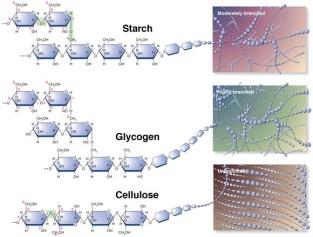
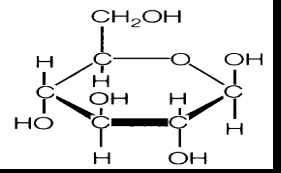
Carbohydrates are energy sources and structural components. They are composed of monosaccharides, which form polysaccharides through glycosidic bonds.
Monosaccharides: Simple sugars like glucose, fructose, galactose.
Polysaccharides: Starch, glycogen, cellulose, chitin, peptidoglycan.
Functions: Energy storage (starch, glycogen), structural support (cellulose, chitin).
Lipids
Lipids are hydrophobic molecules important for energy storage, membrane structure, and signaling.
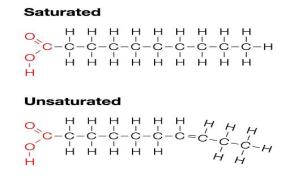
Fatty Acids: Can be saturated (no double bonds) or unsaturated (one or more double bonds).
Triglycerides: Energy storage molecules.
Phospholipids: Major component of cell membranes, amphipathic.
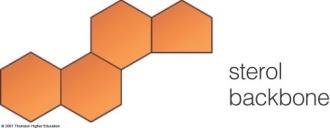
Steroids: Hormones and membrane components (e.g., cholesterol).
Proteins
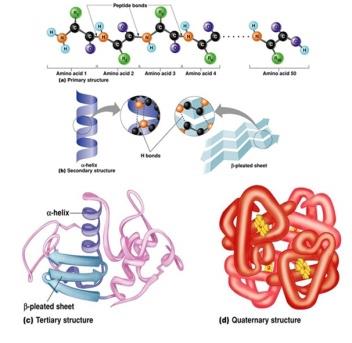
Proteins are polymers of amino acids, performing diverse functions such as catalysis, transport, structure, and regulation.
Amino Acids: Contain amino, carboxyl, and variable R groups.
Peptide Bonds: Link amino acids to form polypeptides.
Protein Structure: Four levels—primary (sequence), secondary (α-helix, β-sheet), tertiary (folding), quaternary (multiple polypeptides).
Functions: Enzymes, transport proteins, structural proteins, hormones, antibodies.
Denaturation: Loss of structure due to heat, pH, chemicals, or salt.
Nucleic Acids
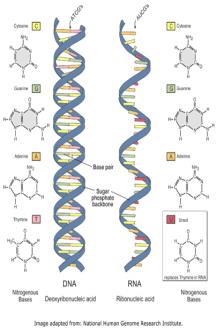
Nucleic acids store and transmit genetic information. DNA and RNA are polymers of nucleotides.
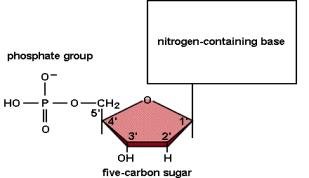
Nucleotide Structure: Phosphate group, five-carbon sugar (ribose or deoxyribose), nitrogenous base.
DNA: Double-stranded, contains thymine, stores genetic information.
RNA: Single-stranded, contains uracil, involved in protein synthesis.
ATP: Energy carrier molecule.
Polymerization and Hydrolysis
Dehydration Synthesis and Hydrolysis
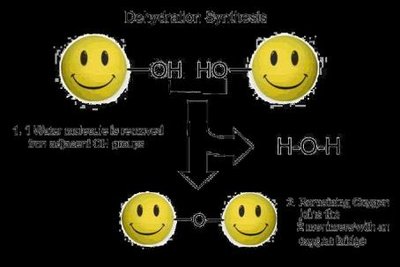
Biological macromolecules are assembled and broken down by dehydration synthesis and hydrolysis.
Dehydration Synthesis: Monomers join to form polymers, releasing water and requiring energy.
Hydrolysis: Polymers are broken into monomers by adding water, releasing energy.
Summary Table: Biological Molecules
The following table summarizes the main features of carbohydrates, lipids, proteins, and nucleic acids:
Class | Monomer | Polymer | Bond Type | Main Functions |
|---|---|---|---|---|
Carbohydrates | Monosaccharide | Polysaccharide | Glycosidic | Energy, structure |
Lipids | Fatty acid | Triglyceride, phospholipid | Ester | Energy, membrane, hormones |
Proteins | Amino acid | Polypeptide | Peptide | Enzymes, structure, transport |
Nucleic Acids | Nucleotide | DNA, RNA | Phosphodiester | Information storage, energy |
Additional info:
Structure is always related to function in biological molecules.
Mutation in nucleic acids allows evolution of new species.
Proteins may be denatured by extreme conditions.
