 Back
slides #7 -Biofilms: Structure, Formation, and Clinical Importance in Microbiology
Study Guide - Smart Notes
 Tailored notes based on your materials, expanded with key definitions, examples, and context.
sides 7 -Biofilms: Structure and Definition
What is a Biofilm?
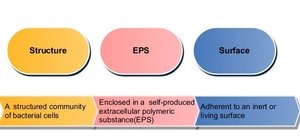
A biofilm is a structured community of microorganisms, often composed of multiple species, that are attached to a surface and embedded within a self-produced extracellular polymeric substance (EPS) matrix. This matrix is primarily composed of polysaccharides, proteins, lipids, and extracellular DNA. Biofilms are distinct from free-floating (planktonic) cells due to their coordinated community behavior, gene expression, and enhanced resistance to environmental stresses.
Structure: Organized layers of microbial cells.
EPS: Enclosed in a self-produced extracellular polymeric substance.
Surface: Adherent to inert or living surfaces.
Examples of Biofilm Occurrence
Biofilms are ubiquitous in nature and can be found in a variety of environments:
Aquatic environments: On algae, rocks, and ship hulls.
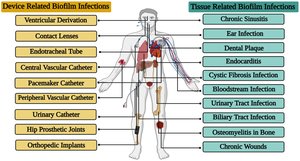
Medical settings: On catheters, prosthetic joints, dental plaque, contact lenses, and in chronic infections (e.g., cystic fibrosis, otitis media).
Industry: Inside pipes, on equipment, and in food processing facilities.
Pharmaceuticals and sewage treatment: Biofilms play roles in both contamination and bioremediation.
Biofilm Formation and Development
Stages of Biofilm Formation
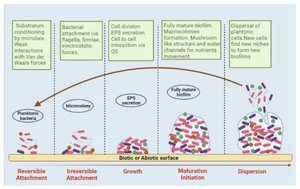
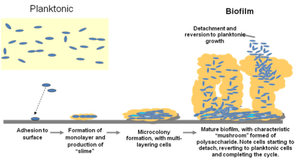
Biofilm development is a multi-step process involving initial attachment, maturation, and eventual dispersion:
Reversible attachment: Microbes weakly adhere to a surface via van der Waals forces.
Irreversible attachment: Cells use adhesins or pili to firmly attach and begin EPS production.
Microcolony formation: Cells proliferate and form small clusters.
Maturation: The biofilm develops a complex 3D structure with water channels for nutrient and waste exchange.
Dispersion: Some cells detach to colonize new surfaces, completing the cycle.
Microscopic Structure of Biofilms
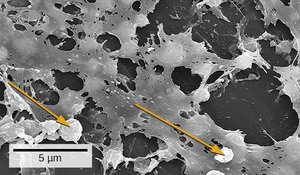
Biofilms exhibit a heterogeneous architecture with channels and clusters, allowing for nutrient flow and waste removal. The EPS matrix provides structural stability and protection.
Quorum Sensing in Biofilms
Definition and Mechanism
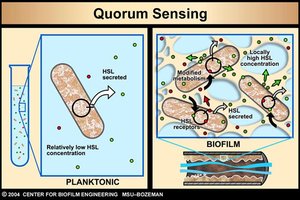
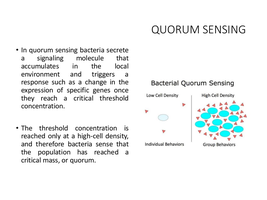
Quorum sensing is a cell-to-cell communication process that enables bacteria to sense their population density through the release and detection of signaling molecules called autoinducers. When a threshold concentration is reached, it triggers coordinated gene expression, including genes for EPS production, virulence factors, and other group behaviors essential for biofilm maturation and persistence.
Low cell density: Individual behaviors predominate.
High cell density: Group behaviors are activated, leading to biofilm formation and maintenance.
Biofilms vs. Colonies and Planktonic Cells
Key Differences
Biofilm: Surface-attached, embedded in EPS, physiologically diverse, with coordinated community behavior.
Colony: Clonal mass on solid media, usually from a single cell, described by shape and color, less physiological diversity.
Planktonic cells: Free-floating, typically grow faster, more susceptible to antibiotics and immune defenses.
Sessile cells: Attached to a surface, often as part of a biofilm.
Advantages of Biofilm Lifestyle
Benefits to Microorganisms
Protection: EPS matrix shields against antibiotics, toxins, immune cells, and environmental stresses.
Nutrient storage: EPS can store nutrients for the community.
Favorable microenvironments: Gradients within the biofilm allow for survival under low oxygen or nutrient conditions.
Community interactions: Enhanced gene transfer, quorum sensing, and formation of persister cells that survive stress.
Clinical and Environmental Importance of Biofilms
Biofilms in Disease and Industry
Biofilms are implicated in a wide range of chronic infections and industrial problems due to their resilience and persistence.
Medical devices: Catheters, prosthetic joints, and contact lenses are common sites for biofilm-associated infections.
Tissue infections: Chronic sinusitis, otitis media, cystic fibrosis lung infections, and dental plaque are all linked to biofilms.
Industrial impact: Biofilms can clog pipes, foul equipment, and contaminate food processing environments.
Biofilms and Dental Caries
Role in Tooth Decay
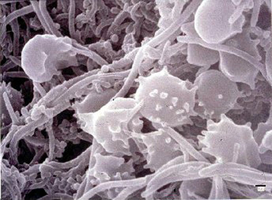
Dental plaque is a classic example of a biofilm. Streptococcus mutans and other bacteria adhere to tooth enamel, produce EPS (glucans) from dietary sugars, and ferment these sugars to acids (especially lactic acid). The resulting localized acidification leads to enamel demineralization and cavity formation.
Biofilm formation: Initiated by metabolism of sucrose by Strep. mutans.
Acid production: Fermentation by biofilm bacteria lowers pH, causing tooth decay.
Biofilm Resistance to Antibiotics
Mechanisms of Tolerance
Physical barrier: EPS matrix impedes antibiotic penetration.
Metabolic diversity: Slow-growing and persister cells are less susceptible to antibiotics targeting active growth.
Gene transfer: Close proximity facilitates horizontal gene transfer, increasing resistance.
Factors Affecting Biofilm Formation
Surface and Environmental Influences
Surface roughness: Rough surfaces promote biofilm formation by increasing surface area and protection from flow.
Surface charge and chemistry: Presence of antimicrobial or anti-adherent chemicals can inhibit biofilm development.
Flow velocity: Affects nutrient delivery and detachment rates.
Biofilms and Chronic Disease
Emerging Links to Human Health
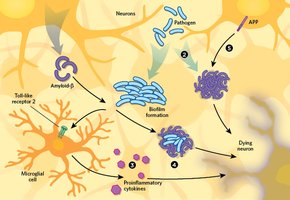
Recent research suggests that biofilms may play a role in chronic diseases such as heart attacks and Alzheimer's disease. For example, bacterial biofilms in arterial plaques may trigger inflammation and plaque rupture, while biofilms in the brain have been found in the same locations as amyloid plaques in Alzheimer's patients, potentially contributing to neuroinflammation and tissue damage.
Strategies for Biofilm Control
Prevention and Disruption
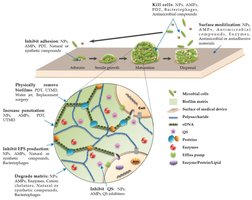
Surface modification: Nanospikes and other engineered surfaces can physically disrupt biofilm formation.
Antimicrobial agents: Targeting EPS production, quorum sensing, or using enzymes to degrade the matrix.
Dental hygiene: Brushing, flossing, and antimicrobial rinses reduce dental biofilm and associated diseases.
Key Vocabulary
Biofilm: Surface-attached microbial community in EPS matrix.
Planktonic cells: Free-floating microbial cells.
Sessile cells: Attached (often biofilm-associated) cells.
Extracellular polymeric substance (EPS): Gel-like matrix secreted by biofilm cells.
Quorum sensing: Cell-density-dependent gene regulation via signaling molecules.
