 Back
Biofilms: Structure, Formation, and Clinical Significance in Microbiology
Study Guide - Smart Notes
 Tailored notes based on your materials, expanded with key definitions, examples, and context.
Biofilms: An Overview
Definition and Basic Structure
Biofilms are organized microbial communities consisting of layers of microbial cells embedded in a self-produced extracellular polymeric substance (EPS). These communities adhere to surfaces, interfaces, or are embedded within host material. - Biofilm: A structured community of bacterial cells enclosed in a self-produced EPS and adherent to inert or living surfaces. - Planktonic cells: Free-floating microbial cells not associated with a biofilm. - Sessile cells: Microbial cells attached to a surface within a biofilm. 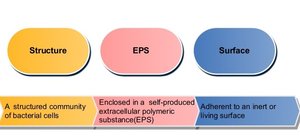
Occurrence and Examples
Biofilms are ubiquitous in nature and have significant implications in medicine, industry, and environmental microbiology. - Aquatic environments: Found on algae, rocks, and ships. - Medical devices: Catheters, contact lenses, air conditioners, and within the GI and GU tracts. - Chronic infections: Biofilms are implicated in up to 80% of chronic infections, including cystic fibrosis, otitis media, and possibly Alzheimer’s disease. - Industry: Present in pipes, equipment, food processing, pharmaceuticals, and sewage treatment. 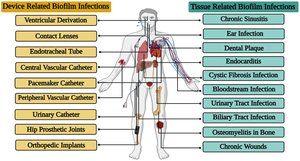
Biofilm Formation and Development
Stages of Biofilm Formation
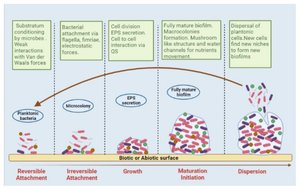
The formation of a biofilm is a multi-step process involving initial attachment, microcolony formation, maturation, and eventual dispersion. - Attachment: Microbes adhere to a surface, often facilitated by surface roughness and charge. - Microcolony formation: Cells divide and produce EPS, forming multilayered structures. - Maturation: Biofilm develops complex architecture with channels for nutrient flow. - Dispersion: Cells detach and revert to planktonic growth, completing the cycle. 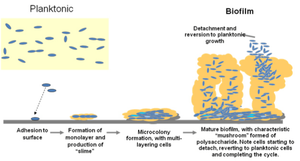
Extracellular Polymeric Substance (EPS)
EPS is a matrix composed of polysaccharides, DNA, proteins, and lipids, providing structural stability and protection to the biofilm. - Extracellular DNA: Fundamental to biofilm stability; released in response to quorum sensing signals. 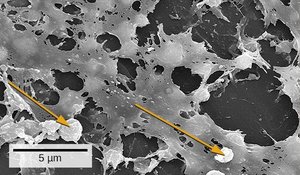
Quorum Sensing
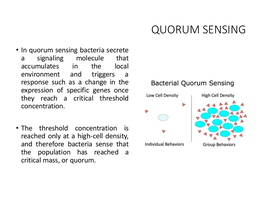
Quorum sensing is a cell-to-cell communication mechanism that enables bacteria to coordinate gene expression based on population density. - Bacteria secrete signaling molecules (e.g., HSL) that accumulate and trigger gene expression once a critical threshold is reached. - This process regulates biofilm formation, virulence, and antibiotic resistance. 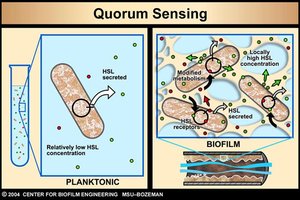
Biofilm vs. Colony and Planktonic Existence
Comparison of Biofilms and Colonies
- Biofilms: Structured, multi-species communities embedded in EPS, attached to surfaces, and exhibiting coordinated behaviors. - Colonies: Typically single-species, grown on solid media, lacking EPS and complex architecture.
Advantages of Biofilm Lifestyle
Living in a biofilm confers several advantages to bacteria: - Protection: Enhanced resistance to antibiotics, toxins, and immune cells. - Nutrient storage: EPS serves as a reservoir for nutrients. - Microenvironments: Biofilms create favorable conditions, such as low oxygen zones. - Community interactions: Facilitate gene transfer, quorum sensing, and persister cell formation. 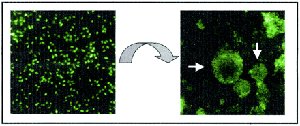
Factors Affecting Biofilm Formation
Several factors influence biofilm development: - Surface properties: Rough surfaces promote biofilm formation; charge and presence of antimicrobial or anti-adherent chemicals also play roles. - Conditioning by medium: The composition of the surrounding environment affects attachment and growth. - Flow velocity: Shear forces can impact biofilm stability and dispersal. 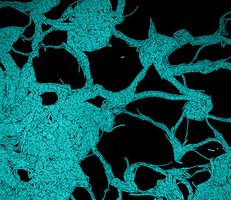
Biofilms in Disease and Clinical Relevance
Biofilms and Heart Disease
Recent research suggests that dormant bacterial biofilms within arterial plaques may be activated by viral infections, leading to inflammation, plaque rupture, and heart attacks.
Biofilms in Dental Caries
Dental caries result from acid production by bacteria metabolizing sugars within a biofilm on the tooth surface. - Streptococcus mutans: Key species in dental plaque biofilm formation. - Fermentation: Sucrose is metabolized to glucose and fructose; glucose forms the biofilm matrix, while fermentation produces acidic products that demineralize enamel. 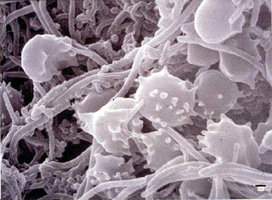
Biofilms and Antibiotic Resistance
Biofilm-associated bacteria exhibit increased resistance to antibiotics compared to planktonic cells. - Minimum bactericidal concentration (MBC): Higher for biofilm cells, indicating greater resistance. - Gene transfer: Biofilms facilitate horizontal gene transfer, spreading resistance traits.
Biofilms and Chronic Infections
Biofilms are implicated in chronic infections such as cystic fibrosis, otitis media, and device-related infections (e.g., catheters, prosthetic joints).
Biofilms and Alzheimer’s Disease
Evidence suggests that bacterial biofilms may contribute to the formation of amyloid plaques in Alzheimer’s patients, triggering inflammation and neuronal damage. 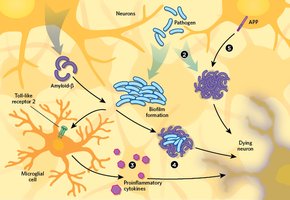
Controlling and Preventing Biofilms
Strategies for Biofilm Control
- Dental control: Vaccines targeting S. mutans and agents disrupting quorum sensing are under investigation. - Nanospikes: Surfaces engineered with nanospikes can physically disrupt biofilm formation, inspired by natural surfaces like cicada and dragonfly wings. 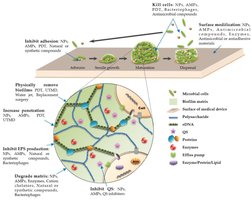
Plaque Control and Oral Hygiene
Effective oral hygiene practices, including brushing, flossing, and rinsing with antimicrobial agents, significantly reduce plaque and gingivitis. 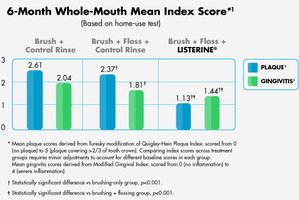
Summary Table: Biofilm Characteristics
Feature | Biofilm | Colony | Planktonic |
|---|---|---|---|
Structure | Multi-layered, EPS matrix | Single-layer, no EPS | Free-floating |
Community | Polymicrobial | Usually single species | Individual cells |
Resistance | High (antibiotics, immune) | Moderate | Low |
Gene Transfer | Frequent | Rare | Rare |
Key Terms
Biofilm
Planktonic cells
Sessile cells
Extracellular polymeric substance (EPS)
Quorum sensing
Additional info:
Biofilms are a major topic in microbiology, relevant to chapters on microbial growth, microbial mechanisms of pathogenicity, and microbial diseases.
Understanding biofilm formation and control is critical for clinical, industrial, and environmental applications.
