Back
BackBiomedical Applications: Vaccines, Diagnostics, Therapeutics, and Molecular Methods
Study Guide - Smart Notes
 Tailored notes based on your materials, expanded with key definitions, examples, and context.
Vaccines and Immunity
Types of Acquired Immunity
Immunity can be acquired through natural or artificial means, and can be either active or passive. Understanding these distinctions is crucial for clinical and public health applications.
Naturally acquired active immunity: Occurs when an individual is exposed to a pathogen and mounts an immune response, such as after recovering from an infection.
Naturally acquired passive immunity: Involves the transfer of antibodies from mother to child, such as through the placenta or breast milk.
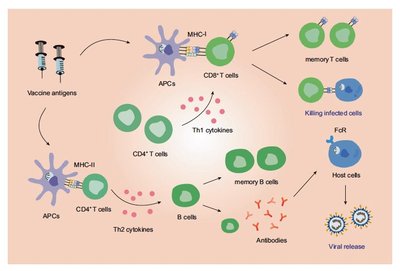
Artificially acquired active immunity: Achieved through vaccination, where exposure to antigens stimulates the immune system to develop memory cells.
Artificially acquired passive immunity: Involves the administration of pre-formed antibodies, such as antivenom, to provide immediate but temporary protection.
History and Development of Vaccines
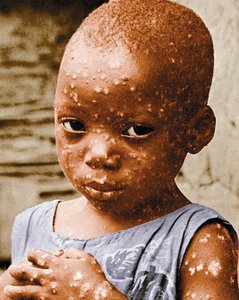
The history of vaccines is marked by significant achievements and controversies. Early practices such as variolation in China and Edward Jenner's smallpox vaccination experiments laid the foundation for modern immunization strategies.
Variolation: The practice of using material from smallpox scabs to induce a mild infection and subsequent immunity.
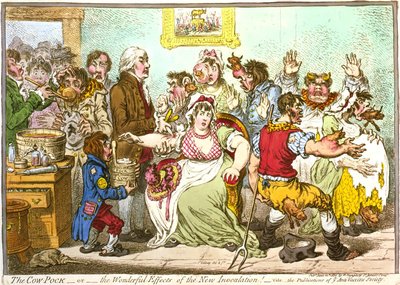
Jenner's Experiment: Edward Jenner demonstrated that cowpox infection could protect against smallpox, leading to the development of the first vaccine.
Vaccine Controversies: Opposition to vaccines has existed since their inception, with concerns ranging from religious beliefs to individual rights and safety fears.

Herd Immunity
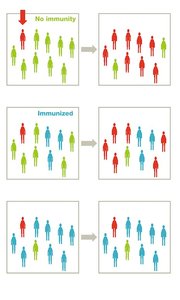
Herd immunity occurs when a significant portion of a population becomes immune to a disease, making its spread unlikely and protecting those who are not immune. Public health immunization programs aim to achieve herd immunity to prevent outbreaks.
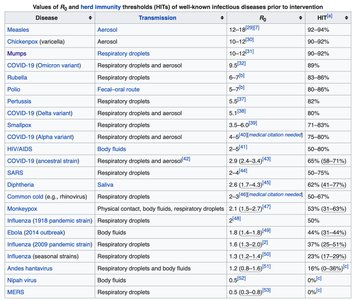
Most pathogens require vaccination rates of about 85% for effective herd immunity.
Highly contagious diseases like measles and pertussis require rates as high as 95%.
Herd immunity protects vulnerable individuals who cannot be vaccinated.
Herd Immunity Thresholds and Calculations
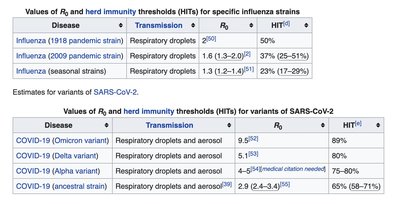
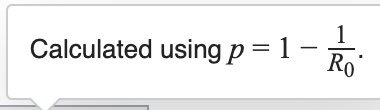
The herd immunity threshold (HIT) is the proportion of the population that must be immune to prevent disease spread. It is calculated using the basic reproduction number ():
Formula:
Example: If , then (80% of the population must be immune).
Vaccine Types and Formulations
Vaccines can be administered via injection, inhalation, or ingestion, and are categorized based on their composition and method of production.
Live attenuated vaccines: Contain weakened pathogens that stimulate strong, long-lasting immunity but may not be suitable for immunocompromised individuals.
Inactivated vaccines: Contain killed pathogens or subunits and are safer but may require booster doses.
Subunit vaccines: Include only specific antigens, such as proteins or polysaccharides, and often require adjuvants to enhance immune response.
Toxoid vaccines: Contain inactivated toxins, e.g., tetanus and diphtheria vaccines.
Conjugate vaccines: Link polysaccharide antigens to proteins to improve immunogenicity, e.g., Hib and pneumococcal vaccines.
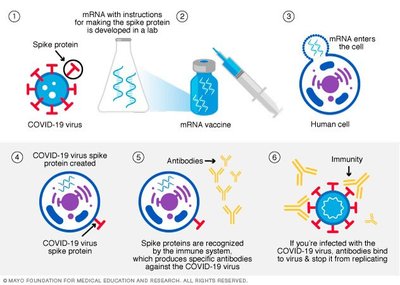
mRNA vaccines: Use messenger RNA to instruct cells to produce a pathogen protein, stimulating immunity (e.g., COVID-19 vaccines).
Vector vaccines: Use a harmless virus or bacterium to deliver genetic material from the pathogen.
Immunological Diagnostics
Antigen–Antibody Interactions
Immunological diagnostic tests rely on the specific binding between antigens and antibodies. These tests are essential for identifying pathogens and immune status.
Serology: The study of serum and immune responses in body fluids.
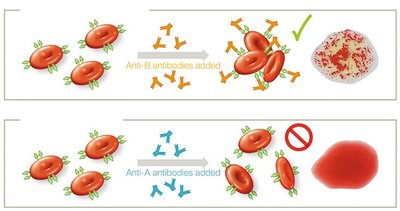
Agglutination reactions: Used in blood typing and pathogen identification; visible clumping indicates a positive reaction.
Enzyme-Linked Immunosorbent Assay (ELISA)
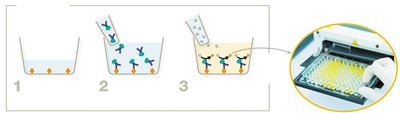
ELISA is a sensitive and rapid diagnostic test that detects antigens or antibodies in a sample using enzyme-linked antibodies and colorimetric detection.
Direct ELISA: Detects antigens directly using a labeled antibody.
Sandwich ELISA: Uses a capture antibody to bind the antigen, followed by a detection antibody.
Neutralization Reactions
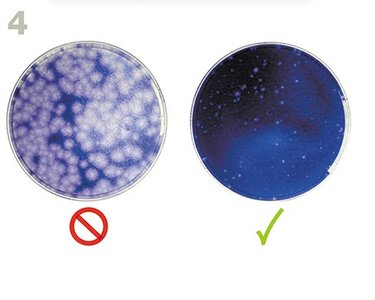
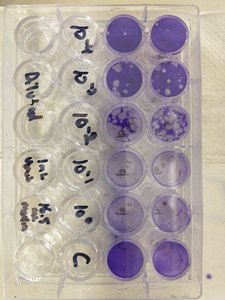
Neutralization tests, such as the plaque reduction neutralization test (PRNT), assess the ability of antibodies to neutralize pathogens, preventing infection of cultured cells.
Positive result: Fewer plaques indicate the presence of neutralizing antibodies.
Negative result: No reduction in plaques indicates absence of neutralizing antibodies.
Molecular Methods in Microbiology
Polymerase Chain Reaction (PCR)
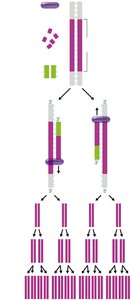
PCR is a molecular technique used to amplify specific DNA sequences, enabling detection and analysis of genetic material from pathogens.
Steps: Melting (denaturation), annealing, and extension.
Exponential amplification: Each cycle doubles the amount of target DNA ( copies after n cycles).
Reverse Transcription PCR (RT-PCR)
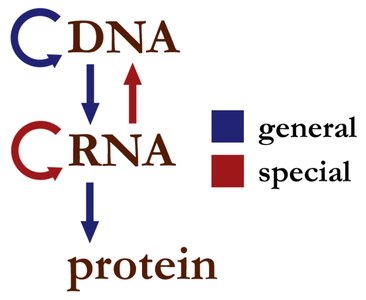
RT-PCR is used to detect RNA viruses by converting RNA into complementary DNA (cDNA) using reverse transcriptase, followed by PCR amplification.
CRISPR-Cas9 Gene Editing
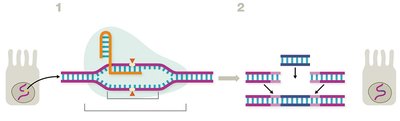
CRISPR-Cas9 is a revolutionary gene-editing tool that allows precise modification of genetic material. It uses a guide RNA to target specific DNA sequences, and the Cas9 enzyme to introduce double-strand breaks, enabling insertion or correction of genes.
Applications: Gene therapy, functional genomics, and potential cures for genetic diseases.
Gene Therapy and Functional Cure
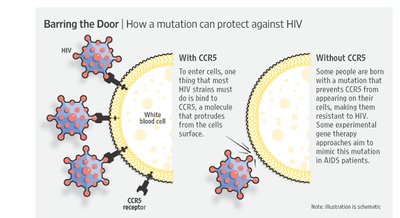
Gene therapy involves introducing new genetic material into cells to treat or prevent disease. A notable example is the use of CCR5-Δ32 mutation to confer resistance to HIV infection.
CCR5-Δ32: A deletion mutation in the CCR5 gene prevents HIV from entering cells, offering protection against infection.
Summary Table: Vaccine Types and Diagnostic Methods
Vaccine Type | Description | Example |
|---|---|---|
Live attenuated | Weakened but live pathogen | MMR, Varicella |
Inactivated (whole-agent) | Killed pathogen | IPV, Hepatitis A |
Subunit | Purified antigen or part of pathogen | Hepatitis B, HPV |
Toxoid | Inactivated toxin | Tetanus, Diphtheria |
Conjugate | Polysaccharide linked to protein | Hib, Pneumococcal |
mRNA | mRNA encoding antigen | COVID-19 (Pfizer, Moderna) |
Vector | Genetically modified carrier virus | Johnson & Johnson COVID-19, Ebola |
Visual Summary