Back
BackBiomedical Applications: Vaccines, Diagnostics, Therapeutics, and Molecular Methods
Study Guide - Smart Notes
 Tailored notes based on your materials, expanded with key definitions, examples, and context.
Biomedical Applications: Vaccines, Diagnostics, Therapeutics, and Molecular Methods
Overview of Immunity and Vaccination
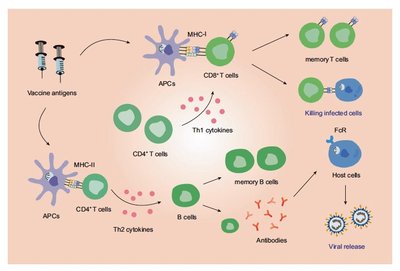
Immunity can be acquired naturally or artificially, and may be passive or active. Vaccines are a cornerstone of public health, providing protection against infectious diseases by stimulating the immune system to develop memory against specific pathogens.
Active Immunity: The immune system produces its own antibodies in response to infection or vaccination.
Passive Immunity: Antibodies are transferred from another source (e.g., maternal antibodies across the placenta, or antivenom).
Natural vs. Artificial: Immunity can be acquired through natural infection or artificially via medical intervention (e.g., vaccination).
History and Controversies of Vaccination
The development of vaccines has a rich history, marked by both triumphs and controversies. Early practices such as variolation in China and Edward Jenner's smallpox vaccination experiments laid the foundation for modern immunization.
Variolation: Use of dried smallpox scabs to induce mild infection and immunity.
Jenner's Experiment: Inoculation with cowpox provided immunity to smallpox, leading to the first vaccine.
Controversies: Opposition to vaccination has existed since its inception, with concerns ranging from religious beliefs to individual rights and, more recently, vaccine safety.
Modern Issues: Discredited studies linking vaccines to autism have led to decreased vaccination rates and outbreaks of preventable diseases.
Herd Immunity and Immunization Programs
Herd immunity occurs when a sufficient proportion of a population is immune to an infectious disease, making its spread unlikely and protecting those who are not immune. Public health initiatives aim to achieve herd immunity through widespread vaccination.
Threshold: Most pathogens require vaccination of about 85% of the population for effective herd immunity; some, like measles, require up to 95%.
Protection: Herd immunity protects vulnerable individuals who cannot be vaccinated.
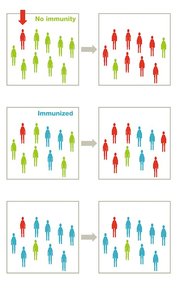
Formula for Herd Immunity Threshold:

Vaccine Types and Formulations
Vaccines can be administered via injection, inhalation, or ingestion, and are categorized based on their composition and method of production.
Live Attenuated Vaccines: Contain weakened pathogens that do not cause disease in healthy individuals but elicit strong, long-lasting immunity. Drawbacks: Not suitable for immunocompromised individuals; require refrigeration.
Inactivated Vaccines: Contain killed pathogens (whole-agent) or purified components (subunit). Benefits: Safe for immunocompromised; stable at room temperature. Drawbacks: Require booster doses.
Subunit Vaccines: Contain only immunogenic parts of the pathogen. May include purified proteins, toxoids (inactivated toxins), or conjugate vaccines (polysaccharides linked to proteins).
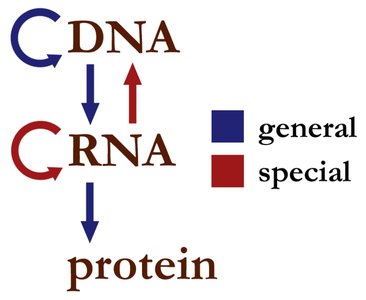
mRNA Vaccines: Contain messenger RNA encoding a pathogen protein, which is produced by host cells to stimulate immunity.
Vector Vaccines: Use a harmless virus or bacterium to deliver genetic material from the pathogen.
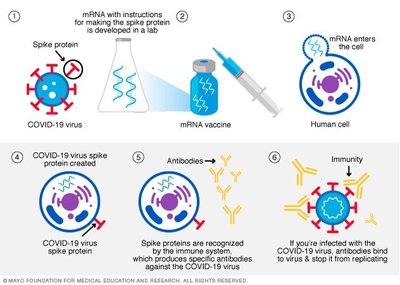
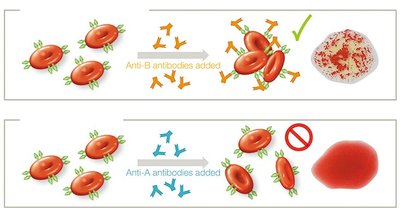
Immunological Diagnostic Methods
Immunological diagnostics are essential for identifying pathogens and monitoring immune responses. These tests often rely on antigen-antibody interactions.
Agglutination Reactions: Used in blood typing and pathogen detection. Antibodies cause clumping of cells or particles if the target antigen is present.
Enzyme-Linked Immunosorbent Assay (ELISA): Detects antigens or antibodies using enzyme-linked antibodies and a colorimetric readout. Types include direct, indirect, and sandwich ELISA.
Neutralization Reactions: Assess the ability of patient antibodies to neutralize pathogens, such as in the plaque reduction neutralization test (PRNT).
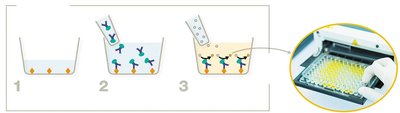
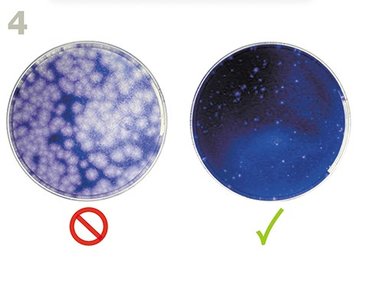
Molecular Diagnostic and Therapeutic Methods
Molecular biology techniques are widely used for pathogen detection, genetic analysis, and therapeutic interventions.
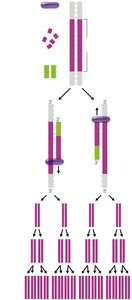
Polymerase Chain Reaction (PCR): Amplifies specific DNA sequences exponentially. Key steps include denaturation, annealing, and extension.
Reverse Transcription PCR (RT-PCR): Converts RNA to DNA for amplification, useful for detecting RNA viruses.
CRISPR-Cas9 Gene Editing: Allows precise modification of genetic material by introducing double-strand breaks at specific DNA sequences, enabling insertion or correction of genes.
Gene Therapy: Uses viral vectors to introduce therapeutic genes into human cells to treat genetic diseases.
Applications in HIV Research and Therapy
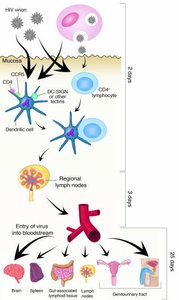
Biomedical advances have led to new approaches for managing and potentially curing viral infections such as HIV.
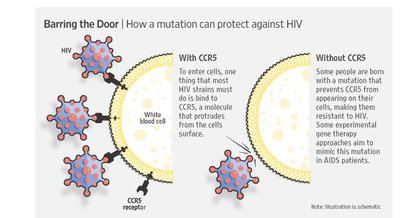
CCR5 Mutation: Individuals with the CCR5-Δ32 mutation lack a functional CCR5 receptor, conferring resistance to HIV infection.
Functional Cure: Bone marrow transplantation from a donor with CCR5-Δ32 can eliminate detectable HIV in a patient, though this is not a universal cure.
HIV Latency: Research focuses on detecting and eradicating latent HIV reservoirs to achieve a true cure.