 Back
Biotechnology and DNA Technology: Microbiology Study Guide
Study Guide - Smart Notes
 Tailored notes based on your materials, expanded with key definitions, examples, and context.
Biotechnology and DNA Technology
Introduction to Biotechnology
Biotechnology is a rapidly advancing field that utilizes microorganisms, cells, or cell components to produce useful products such as foods, antibiotics, vitamins, and enzymes. Recombinant DNA (rDNA) technology involves the insertion or modification of genes to produce desired proteins, enabling the creation of genetically modified organisms for various applications.
Biotechnology: The use of living systems and organisms to develop or make products.
Genetic Modification: Altering the genetic material of an organism to achieve desired traits.
Recombinant DNA Technology: Techniques for combining DNA from different sources to produce new genetic combinations.
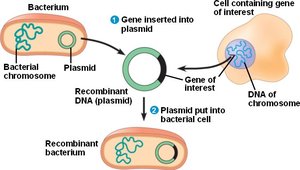
Vector: A self-replicating DNA molecule (such as a plasmid or virus) used to transport foreign DNA into a cell.
Clone: A population of genetically identical cells arising from one cell, each carrying the vector.
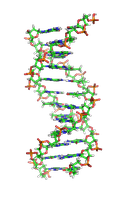
Overview of Recombinant DNA Procedures
Recombinant DNA procedures involve the insertion of a gene of interest into a vector, which is then introduced into a host cell. The host cell replicates, producing clones that express the desired gene product. This process is foundational for genetic engineering and biotechnology.
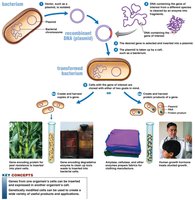
Tools of Biotechnology
Selection and Mutation
Selection involves isolating naturally occurring microbes that produce desired products, while mutation uses mutagens to induce genetic changes that may result in beneficial traits. Site-directed mutagenesis allows for targeted changes in specific genes.
Selection: Choosing organisms with naturally occurring desirable traits.
Mutation: Inducing genetic changes to create new traits.
Site-Directed Mutagenesis: Making specific, targeted changes in a gene sequence.
Restriction Enzymes
Restriction enzymes are proteins that cut DNA at specific sequences, enabling the creation of recombinant DNA. In nature, they protect bacteria from bacteriophage infection by digesting foreign DNA. Bacterial DNA is protected from restriction enzymes by methylation.
Restriction Enzymes: Cut DNA at specific recognition sequences.
Methylation: Modification of cytosine bases in bacterial DNA to prevent digestion by restriction enzymes.
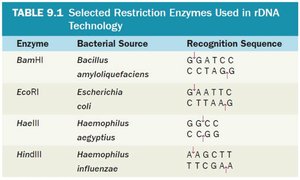
Properties of Vectors
Must be able to self-replicate within the host cell.
Should carry selectable markers for identification.
Must have unique restriction sites for insertion of foreign DNA.
Should be small enough to manipulate easily.
Polymerase Chain Reaction (PCR)
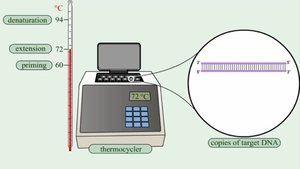
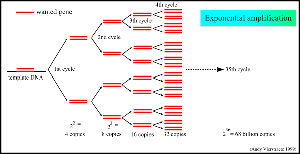
PCR is a technique used to amplify small quantities of DNA, making it possible to analyze genetic material for diagnostic tests, genetic diseases, and pathogen detection. The process uses a thermocycler to control temperature changes required for denaturation, priming, and extension.
Primer: Short DNA sequences that initiate DNA synthesis.
DNA Polymerase: Enzyme that synthesizes new DNA strands.
94°C: Temperature for denaturation of DNA strands.
Inserting Foreign DNA into Cells
There are several methods for introducing foreign DNA into cells, each with unique advantages depending on the host organism. Common methods include transformation, electroporation, and protoplast fusion. Different organisms are used to produce gene products, such as E. coli, Saccharomyces cerevisiae, plant cells, and mammalian cells.
Transformation: Uptake of DNA from the environment by cells.
Electroporation: Use of electrical current to create pores in cell membranes for DNA entry.
Protoplast Fusion: Fusion of cells with removed cell walls to combine genetic material.
E. coli: Easy to grow, well-characterized genomics, but produces endotoxins and does not secrete proteins efficiently.
Saccharomyces cerevisiae: Expresses eukaryotic genes easily, larger genome, easy to grow.
Plant Cells: Large-scale, low-cost production, easy to grow.
Mammalian Cells: Can produce human medical products, but are harder to grow.
Applications of DNA Technology
Therapeutic Applications
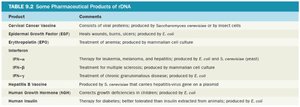
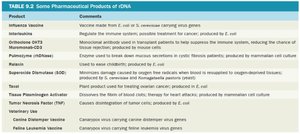
DNA technology is used to produce human enzymes, proteins, and vaccines. Gene therapy and gene editing (such as CRISPR) are employed to correct genetic defects. Gene silencing uses siRNAs to destroy specific mRNA, preventing expression of harmful genes.
Subunit Vaccines: Made from pathogen proteins in genetically modified yeasts.
DNA Vaccines: Nonpathogenic viruses carrying genes for pathogen antigens.
Gene Therapy: Replacement of defective or missing genes.
Gene Editing: CRISPR technology for correcting mutations.
Gene Silencing: siRNAs bind to mRNA, leading to its destruction by RISC.
RNA Interference (RNAi): Inserting DNA encoding siRNA into plasmids for gene silencing.
Genome Projects
Genome projects involve sequencing entire genomes to understand genetic information. Shotgun sequencing assembles small DNA fragments, while metagenomics studies genetic material from environmental samples. The Human Genome Project and Human Proteome Project are major initiatives in this area.
Shotgun Sequencing: Sequencing small pieces of genomes and assembling them computationally.
Metagenomics: Study of genetic material from environmental samples.
Human Genome Project: Sequenced the entire human genome.
Human Proteome Project: Mapping proteins expressed in human cells.
Scientific Applications
Bioinformatics: Computer-assisted analysis to understand gene function.
Proteomics: Study of proteins expressed in cells.
Reverse Genetics: Discovering gene function from genetic sequences.
Genetic Testing: Screening for genetic diseases.
Ancestry Testing: Understanding genetic background.
Forensics
DNA fingerprinting is used to identify pathogens and individuals based on unique genetic mutations. PCR microarrays and DNA chips can screen for multiple pathogens simultaneously. Proper evidence collection and chain of custody are essential in forensic applications.
Safety Issues and Ethics of DNA Technology
There are important safety and ethical considerations in the use of DNA technology. These include preventing accidental release of genetically modified organisms, ensuring the safety of genetically modified crops, avoiding the creation of resistant organisms, and protecting individual genetic information from misuse by governments, insurance companies, or employers.
Accidental Release: Preventing environmental contamination.
Safety of GM Crops: Ensuring food and environmental safety.
Resistance Organisms: Avoiding creation of new health threats.
Genetic Privacy: Protecting access to individual genetic information.
----------------------------------------
