 Back
BackBiotechnology and DNA Technology: Principles and Applications
Study Guide - Smart Notes
 Tailored notes based on your materials, expanded with key definitions, examples, and context.
Biotechnology and DNA Technology
Introduction to Biotechnology and Recombinant DNA
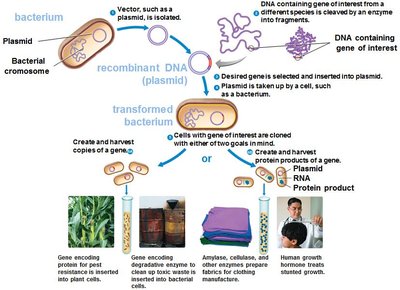
Biotechnology involves the use of microorganisms, cells, or cell components to produce useful products such as foods, antibiotics, vitamins, and enzymes. Recombinant DNA technology refers to the insertion or modification of genes to produce desired proteins, enabling the creation of genetically modified organisms (GMOs). This technology is foundational in modern microbiology and has revolutionized medicine, agriculture, and research.
Biotechnology: Application of biological systems for practical purposes.
Recombinant DNA technology: Techniques for combining genes from different sources into a single DNA molecule, often using plasmids as vectors.
Vectors: DNA molecules (e.g., plasmids, viruses) used to carry foreign genes into host cells.
Gene transfer methods: Conjugation, transduction, and transformation are natural mechanisms for DNA transfer in bacteria.
Milestones in Molecular Biology
Several key discoveries have shaped the field of molecular biology and biotechnology:
1952: DNA identified as genetic material (Hershey & Chase).
1953: Discovery of DNA structure (Watson & Crick).
1960s: Discovery of restriction enzymes (Arber, Smith, Nathans).
1972: First recombinant DNA molecule (Paul Berg, Boyer, Cohen).
1977: DNA sequencing methods (Sanger, Maxam & Gilbert).
1985: Polymerase Chain Reaction (PCR) developed by Kary Mullis.
1990: Human Genome Project launched.
2012: CRISPR-Cas9 gene editing (Doudna, Charpentier).
Tools of Biotechnology
Selection, Mutation, and Site-Directed Mutagenesis
Biotechnologists use several strategies to obtain organisms with desirable traits:
Selection: Culturing naturally occurring microbes that produce desired products.
Mutation: Using mutagens to induce genetic changes that may result in beneficial traits.
Site-directed mutagenesis: Introducing specific changes into a DNA sequence to alter protein function.
Restriction Enzymes
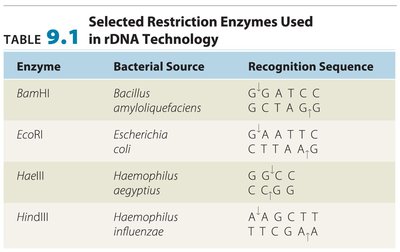
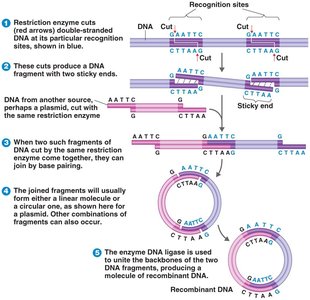
Restriction enzymes, or restriction endonucleases, are proteins that cut DNA at specific nucleotide sequences. They are essential tools for creating recombinant DNA molecules.
They recognize palindromic sequences and may produce 'sticky ends' (overhangs) or 'blunt ends'.
Sticky ends facilitate the joining of DNA fragments from different sources.
DNA ligase is used to covalently link DNA backbones, forming recombinant DNA.
Vectors and Cloning
Plasmids and Viral Vectors
Vectors are DNA molecules used to transport foreign genetic material into a host cell. Plasmids and viruses are commonly used vectors in genetic engineering.
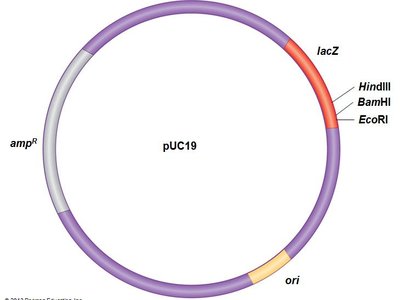
Plasmids: Small, circular DNA molecules separate from the bacterial chromosome, capable of autonomous replication.
Shuttle vectors: Plasmids that can replicate in multiple species.
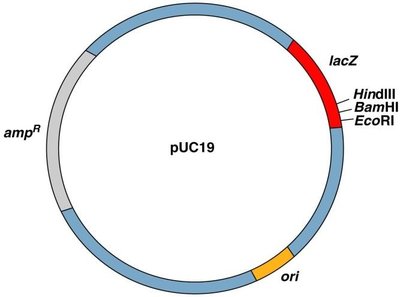
Plasmids can be engineered to carry selectable markers (e.g., antibiotic resistance genes) and multiple cloning sites.
Gene Libraries
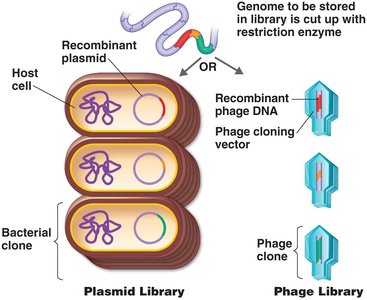
Gene libraries are collections of DNA fragments that represent the entire genome of an organism. These fragments are stored in vectors and propagated in host cells.
Shotgun cloning: Randomly cutting genomic DNA and inserting fragments into plasmids or phages.
Gene libraries facilitate the identification and isolation of specific genes of interest.
Obtaining DNA: cDNA and Synthetic DNA
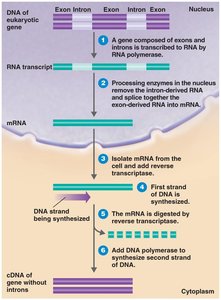
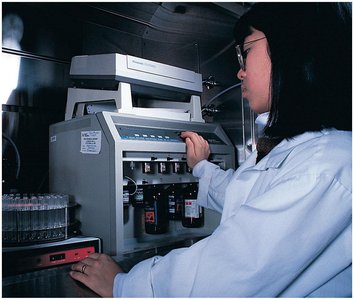
Complementary DNA (cDNA) is synthesized from mRNA using reverse transcriptase, allowing cloning of eukaryotic genes without introns. Synthetic DNA can also be produced using automated machines.
cDNA: Useful for expressing eukaryotic genes in prokaryotes, as it lacks introns.
Synthetic DNA: Custom DNA sequences can be chemically synthesized for research or therapeutic purposes.
Polymerase Chain Reaction (PCR)
PCR Principles and Applications
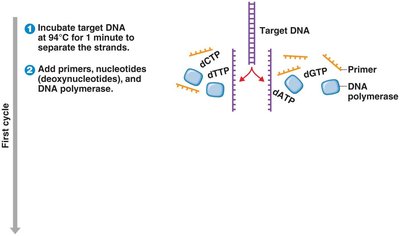
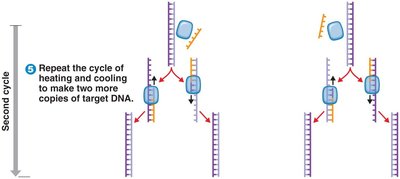
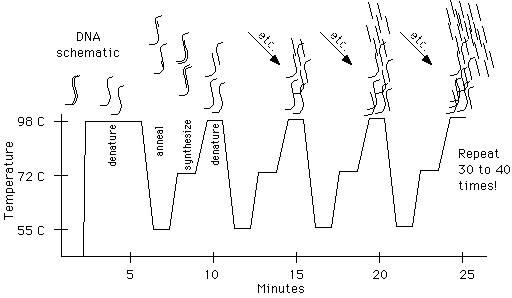
The Polymerase Chain Reaction (PCR) is a technique used to amplify specific DNA sequences exponentially. It is essential for cloning, diagnostics, forensics, and research.
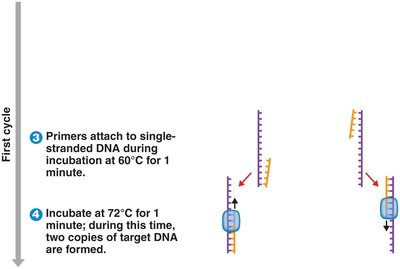
Steps: Denaturation (heating to separate DNA strands), annealing (primers bind to target sequence), extension (DNA polymerase synthesizes new DNA).
Taq DNA polymerase: A heat-stable enzyme from Thermus aquaticus is used for DNA synthesis at high temperatures.
Applications: Cloning, sequencing, pathogen detection, genetic disease diagnosis, forensic analysis.

Creating Recombinant DNA
Cutting and Pasting DNA
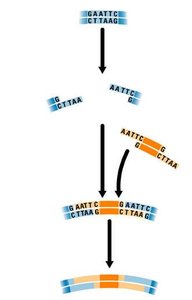
Restriction enzymes cut DNA at specific sites, generating fragments with sticky or blunt ends. DNA ligase joins these fragments, forming recombinant DNA molecules.
Fragments with compatible sticky ends can anneal and be ligated together.
Recombinant DNA can be inserted into vectors for propagation in host cells.
Inserting Recombinant DNA into Cells
Several methods are used to introduce recombinant DNA into host cells:
Transformation: Uptake of naked DNA by competent cells.
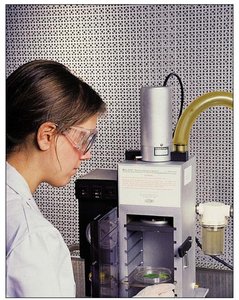
Electroporation: Electric pulses create pores in cell membranes for DNA entry.
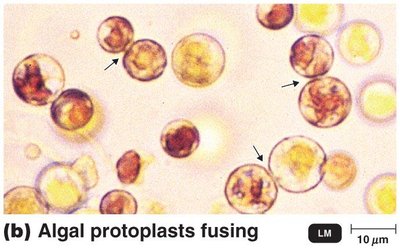
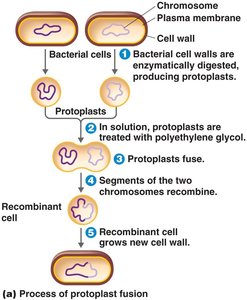
Protoplast fusion: Fusion of cells without cell walls, allowing genetic recombination.
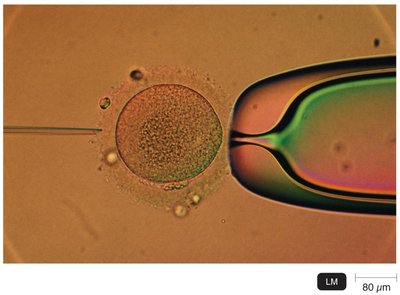
Gene gun and microinjection: Physical methods for introducing DNA into plant and animal cells.
Selection and Screening of Recombinant Clones
Blue-White Screening
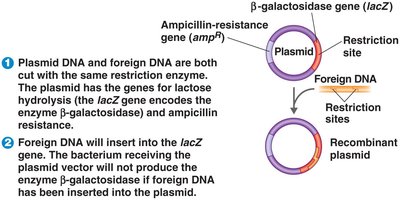
Blue-white screening is a common method for identifying bacterial colonies containing recombinant plasmids. It uses the lacZ gene, which encodes β-galactosidase, and the substrate X-gal.
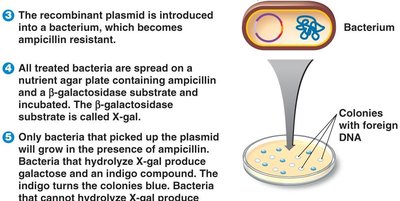
Insertion of foreign DNA disrupts lacZ, resulting in white colonies (recombinant).
Non-recombinant colonies remain blue due to intact β-galactosidase activity.
Antibiotic resistance markers are used for selection.
DNA Probes and Colony Hybridization
DNA probes are short, labeled DNA sequences used to detect the presence of complementary sequences in clones. Colony hybridization allows identification of clones carrying the gene of interest.
Probes can be radioactive or fluorescently labeled.
Base pairing between probe and target DNA indicates the presence of the desired gene.
Applications of Recombinant DNA Technology
Production of Gene Products
Recombinant DNA technology enables the production of medically and industrially important proteins in various host cells:
E. coli: Used for rapid protein production but may require removal of endotoxins.
Saccharomyces cerevisiae: Yeast used for eukaryotic protein expression.
Mammalian and plant cells: Used for complex proteins and therapeutic agents.
Therapeutic Applications
Genetic engineering has led to the development of important pharmaceuticals and therapies:
Human insulin (Humulin®): Produced in E. coli for diabetes treatment.
Human growth hormone (HGH): Treats growth deficiencies.
Erythropoietin (EPO): Treats anemia.
Subunit vaccines: Engineered proteins used for immunization.
Gene therapy: Replacement of defective genes to treat genetic diseases.
Gene Silencing and RNA Interference (RNAi)
Gene silencing involves the use of small interfering RNAs (siRNAs) to target and degrade specific mRNA molecules, preventing gene expression. RNA interference (RNAi) is a promising tool for gene therapy and disease treatment.
CRISPR-Cas9 and Gene Editing
CRISPR-Cas9 is a revolutionary gene-editing technology derived from a bacterial immune system. It allows precise modification of genomes in various organisms.
Cas9: An endonuclease guided by RNA to specific DNA sequences for targeted cutting.
Applications: Gene knockout, gene correction, and genome engineering in research, medicine, and agriculture.
Ethical concerns: Potential for germline editing and unintended consequences.
Genomics and DNA Sequencing
Human Genome Project and Sequencing Technologies
Genomics is the study of entire genomes. The Human Genome Project aimed to sequence all human DNA, leading to advances in sequencing technology and bioinformatics.
Sequencing methods: Sanger (dideoxy) method, Maxam-Gilbert method, and next-generation sequencing (NGS).
Applications: Disease gene identification, evolutionary studies, and personalized medicine.
Scientific and Forensic Applications
Recombinant DNA and genomics have numerous scientific and forensic applications:
Bioinformatics: Computer-assisted analysis of genetic data.
Proteomics: Study of protein expression and function.
DNA fingerprinting: Identification of individuals based on unique DNA patterns, used in forensics and paternity testing.
Southern blotting: Technique for detecting specific DNA sequences in samples.
RFLP analysis: Comparison of restriction fragment length polymorphisms for genetic identification.
Agricultural and Industrial Applications
Genetically Modified Organisms (GMOs)
Genetic engineering is widely used in agriculture to create crops with desirable traits, such as pest resistance, herbicide tolerance, and improved nutrition.
Ti plasmid: Used to introduce genes into plants via Agrobacterium tumefaciens.
Bt toxin: Engineered into crops for insect resistance.
GMO crops: Widely adopted in the United States and other countries.
Nanotechnology
Bacteria can be engineered to produce nanoscale particles for drug delivery and other applications.
Safety, Ethics, and Regulation
Safety Issues and Ethical Considerations
The use of recombinant DNA technology raises important safety and ethical questions:
Potential creation of hazardous organisms.
Environmental and health concerns regarding GMOs.
Strict laboratory safety protocols are required to prevent accidental release.
Ethical, legal, and social implications (ELSI) include privacy of genetic information and access to genetic therapies.
