 Back
BackBiotechnology and DNA Technology: Principles and Applications
Study Guide - Smart Notes
 Tailored notes based on your materials, expanded with key definitions, examples, and context.
Biotechnology: Definitions and Scope
Traditional and Modern Biotechnology
Biotechnology is the use of cells, biological processes, and molecules to create useful products. Traditionally, this includes the culturing of microbes for food (e.g., cheese, yogurt, beer) and industrial products (e.g., antibiotics, enzymes). Modern biotechnology expands this definition to include the application of biological knowledge for producing useful products and information, such as genomics, transcriptomics, proteomics, gene cloning, gene therapy, and transgenics.
Genomics: Study of entire genomes, including sequencing and analysis.
Transcriptomics: Study of gene expression patterns.
Proteomics: Study of protein interactions and functions.
Gene Cloning: Replicating and expressing genes to produce proteins.
Gene Therapy: Replacement of dysfunctional genes to treat diseases.
Transgenics: Incorporation of new genes into organisms.
Key Discoveries in Modern Biotechnology
Milestones in DNA Technology
Major advances include the discovery of DNA polymerase (1955), elucidation of the genetic code (1961), development of restriction enzymes and DNA ligase (1970-72), invention of PCR (1983), and sequencing of the human genome (2003). These discoveries underpin modern genetic engineering and molecular biology.
Polymerase Chain Reaction (PCR)
Principle and Steps of PCR
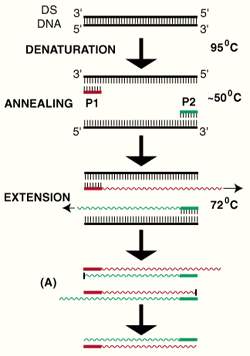
PCR is a technique used to amplify specific DNA sequences, making millions of copies from a small initial sample. It is essential in research, diagnostics, and forensics. The process involves repeated cycles of denaturation, annealing, and extension.
Denaturation: Double-stranded DNA is heated to 95°C to separate strands.
Annealing: Primers bind to complementary sequences at ~50°C.
Extension: DNA polymerase synthesizes new DNA at 72°C.
Cycles: Steps are repeated 25-50 times to amplify the target sequence.
Equation:
Where is the number of DNA molecules after cycles.
RT-PCR and COVID-19 Diagnostics
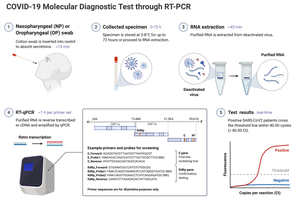
Reverse Transcriptase PCR (RT-PCR) is used to detect RNA viruses like SARS-CoV-2. Viral RNA is converted to DNA by reverse transcriptase, then amplified by PCR for detection.
DNA Sequencing and Genomics
DNA Sequencing Techniques
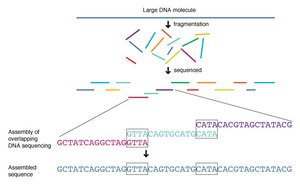
DNA sequencing determines the order of nucleotides in DNA. Modern methods use sequencing by synthesis, where incorporation of nucleotides is detected in real time. Genomic sequencing involves fragmenting DNA, sequencing each fragment, and assembling the complete sequence using computational methods.
The Human Genome Project
The Human Genome Project (2003) sequenced the entire human genome, revealing 20,000-25,000 genes. This project advanced our understanding of development, evolution, and disease, and laid the foundation for genomics, transcriptomics, and proteomics.
Bioinformatics
Role and Applications
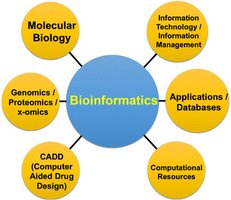
Bioinformatics applies computational tools to store, analyze, and interpret data from genomics, transcriptomics, and proteomics. It is essential for managing large datasets and extracting meaningful biological insights.
Comparative Genomics and Disease Organisms
Comparative Genomics
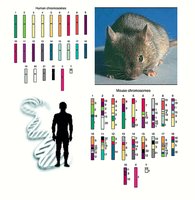
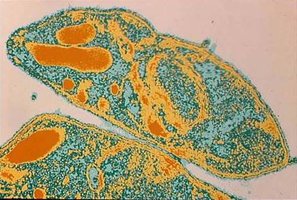
Comparative genomics identifies genes in other organisms to understand similar genes in humans. Sequencing disease organisms helps develop diagnostics and therapeutics.
Applications of Human Sequence Determination
Practical Uses
Human DNA sequencing is used in crime scene investigations, paternity testing, genealogy, and the diagnosis of genetic diseases and cancer. More commonly, genotyping is performed to analyze specific genetic markers rather than sequencing entire genomes.
Genotyping: SNPs and STRs
Single Nucleotide Polymorphisms (SNPs) and Short Tandem Repeats (STRs)
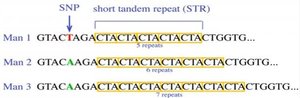
Genotyping identifies genetic variation by analyzing SNPs (single base changes) and STRs (repeated DNA sequences). These markers are used in forensics, paternity testing, and personalized medicine.
Gene Expression Analysis
Techniques for Assessing Gene Expression
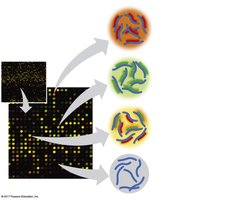
Gene expression analysis determines which genes are active in different cell types or conditions. Techniques include in situ hybridization, RT-PCR, and microarrays. Microarrays allow simultaneous analysis of thousands of genes to compare expression patterns between samples.
Pharmacogenomics
Personalized Medicine
Pharmacogenomics studies how genetic variation affects drug response. This enables personalized medicine, where treatments are tailored to an individual's genetic profile, improving efficacy and reducing adverse effects.
Gene Cloning and Recombinant DNA Technology
Overview of Gene Cloning
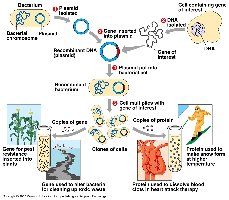
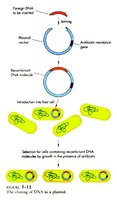
Gene cloning produces many identical copies of a gene for research, diagnostics, therapy, or industrial use. The process involves inserting a gene of interest into a vector (often a plasmid), introducing it into a host cell, and selecting for successful clones.
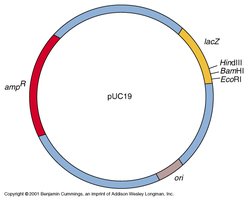
Engineered Plasmids
Plasmids are circular DNA molecules used as vectors in gene cloning. Engineered plasmids contain an origin of replication, antibiotic resistance gene, and restriction sites for gene insertion.
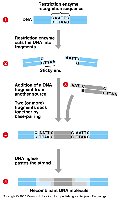
Restriction Enzymes
Restriction enzymes cut DNA at specific sequences, enabling the insertion of foreign genes into plasmids. These sites are often palindromic.
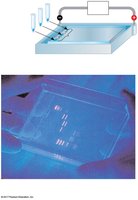
Gel Electrophoresis
Gel electrophoresis separates DNA fragments by size using an electric field. It is used to verify the presence and size of DNA fragments during cloning.
Transformation and Selection
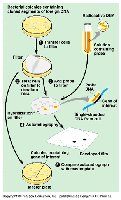
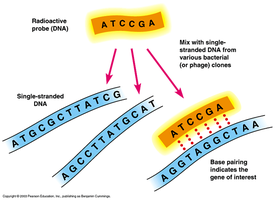
Transformation introduces recombinant plasmids into host cells. Selection is achieved by growing cells on antibiotic-containing media; only cells with the plasmid survive. Colony blotting and DNA probes are used to identify clones with the desired gene.
cDNA Cloning
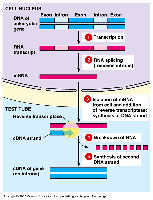
cDNA cloning involves synthesizing complementary DNA (cDNA) from mRNA using reverse transcriptase. This allows cloning of eukaryotic genes (without introns) for expression in bacteria.
Bacteria as Host Cells
Bacteria are commonly used as host cells due to their rapid growth and ease of manipulation. However, they may not express complex eukaryotic proteins correctly, necessitating the use of eukaryotic hosts for some applications.
Applications of Recombinant DNA Technology
Therapeutics, Vaccines, and Industrial Enzymes
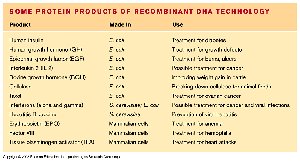
Recombinant DNA technology is used to produce therapeutic proteins (e.g., insulin), vaccines, industrial enzymes, and for gene therapy to treat genetic diseases.
Gene Therapy
Principles and Methods
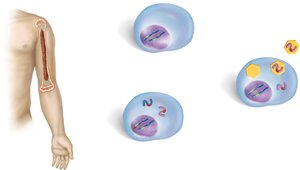
Gene therapy involves inserting normal genes into human cells to treat genetic disorders. Delivery methods include modified viruses (e.g., retroviruses) and can be performed ex vivo (outside the body) or in vivo (directly into the patient).






Transgenic Organisms
Definition and Applications
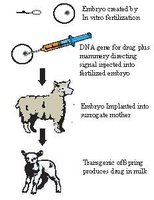
Transgenic organisms contain genes from other species. Applications include improved crops (e.g., golden rice with vitamin A), animal models for disease research, and production of pharmaceuticals.

Ethical and Environmental Considerations
Concerns about Transgenics
The introduction of herbicide and antibiotic resistance genes into crops raises concerns about gene escape and environmental impact. Public debate continues regarding the safety and ethics of genetically modified organisms (GMOs).
