 Back
BackBiotechnology and Recombinant DNA: Tools and Applications in Microbiology
Study Guide - Smart Notes
 Tailored notes based on your materials, expanded with key definitions, examples, and context.
Biotechnology and Recombinant DNA
Introduction to Biotechnology
Biotechnology is a rapidly advancing field that utilizes microorganisms, cells, or cellular components to produce valuable products such as foods, antibiotics, vitamins, and enzymes. This discipline is foundational in microbiology and has revolutionized medicine, agriculture, and industry.
Biotechnology: The use of living systems and organisms to develop or make products, often involving the manipulation of microorganisms for industrial, medical, or agricultural purposes.
Clone: A population of cells arising from a single parent cell, ensuring genetic uniformity.
Example: Insulin and hepatitis vaccines are produced by genetically modified bacteria and yeasts, respectively.

Recombinant DNA Technology
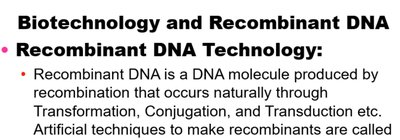
Recombinant DNA (rDNA) technology involves combining DNA from different sources to create new genetic combinations. This can occur naturally (via transformation, conjugation, or transduction) or through artificial laboratory techniques. The technology enables the insertion of a gene from one organism into another, allowing the recipient to express the gene and produce the encoded product.
Recombinant DNA: DNA molecules formed by laboratory methods of genetic recombination to bring together genetic material from multiple sources.
Applications: Production of human proteins (e.g., insulin, human growth hormone), vaccines, and genetically modified organisms (GMOs).

Genetic Engineering Procedures
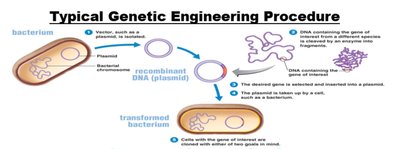
Typical Genetic Engineering Procedure
The process of genetic engineering typically involves isolating a vector (such as a plasmid), inserting a gene of interest, and introducing the recombinant DNA into a host cell. The host cell can then be cloned to produce either copies of the gene or the protein product encoded by the gene.
Key Steps:
Isolation of vector DNA (e.g., plasmid).
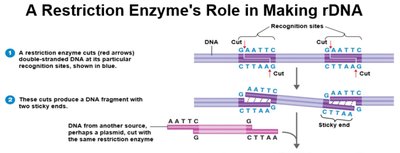
Cleavage of DNA containing the gene of interest using restriction enzymes.
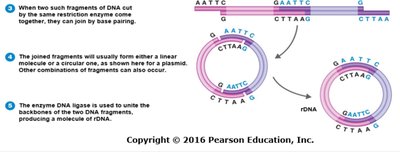
Insertion of the gene into the vector.
Introduction of recombinant DNA into a host cell (transformation).
Cloning and selection of cells with the desired gene.
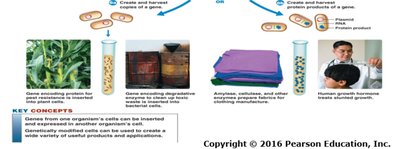
Applications: Creating pest-resistant plants, bacteria that degrade toxic waste, and production of industrial enzymes.
Benefits of Recombinant DNA Technology
Medical and Industrial Applications
Recombinant DNA technology has enabled the cost-effective and safe production of important proteins and hormones. For example, human growth hormone (hGH) is now produced by genetically engineered Escherichia coli, replacing earlier methods that were expensive and posed health risks.
Human Growth Hormone (hGH): Previously extracted from human pituitary glands, now produced in E. coli for safety and efficiency.
Other Applications: Production of insulin, vaccines, and other therapeutic proteins.
Tools of Biotechnology
Selection and Mutation
Selection and mutation are essential tools in biotechnology for obtaining microorganisms with desirable traits. Selection involves culturing naturally occurring microbes that produce a desired product, while mutation uses mutagens to induce genetic changes.
Selection: Isolating and culturing microbes that naturally produce useful products (e.g., antibiotics).
Mutation: Inducing genetic changes to enhance or introduce new traits (e.g., increased penicillin production in Penicillium).
Site-directed Mutagenesis: Precisely altering DNA sequences to change protein function.
Restriction Enzymes
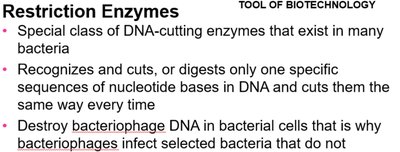
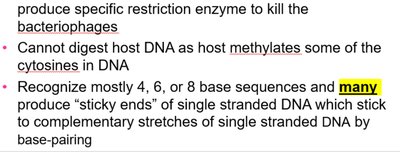
Restriction enzymes are specialized proteins that cut DNA at specific nucleotide sequences. They are crucial for creating recombinant DNA molecules by generating compatible ends for ligation.
Function: Recognize and cut specific DNA sequences, often producing "sticky ends" that facilitate the joining of DNA fragments.
Biological Role: Protect bacteria from bacteriophage infection by degrading foreign DNA.
Application: Essential for gene cloning and molecular biology research.
Vectors
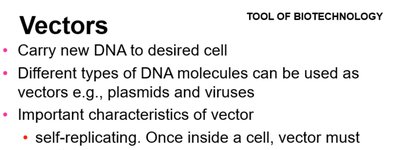
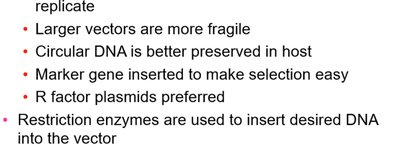
Vectors are DNA molecules used to transport foreign genetic material into another cell. Common vectors include plasmids and viruses. They must be self-replicating and often contain marker genes for selection.
Types: Plasmids, viruses, and shuttle vectors (which can replicate in multiple host species).
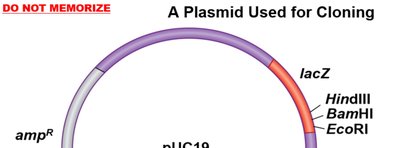
Key Features: Self-replication, selectable markers, and multiple cloning sites.
Application: Used in gene cloning, gene therapy, and genetic modification of organisms.
Polymerase Chain Reaction (PCR)
Principle and Applications
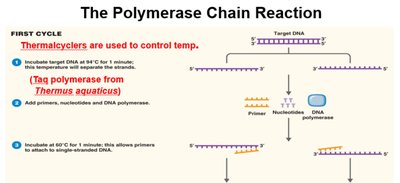
The Polymerase Chain Reaction (PCR) is a technique used to amplify specific DNA sequences, generating millions of copies from a small initial sample. PCR is essential for cloning, sequencing, diagnosing genetic diseases, and detecting pathogens.
Steps:
Denaturation: Heating to separate DNA strands.
Annealing: Cooling to allow primers to bind to target sequences.
Extension: DNA polymerase synthesizes new DNA strands.
Enzyme: Taq polymerase (from Thermus aquaticus), which is heat-stable.
Techniques for Genetic Engineering
Methods for Introducing DNA into Cells
Several techniques are used to introduce foreign DNA into host cells, each with specific applications and advantages.
Transformation: Uptake of naked DNA from the environment by competent cells (e.g., E. coli made competent by calcium chloride treatment).
Electroporation: Application of an electrical field to create pores in cell membranes, allowing DNA entry. Effective for most cell types, especially after cell wall removal (protoplast formation).
Protoplast Fusion: Fusion of cells without cell walls (protoplasts), often facilitated by polyethylene glycol, allowing genetic recombination. Used in plants and algae.
Microinjection: Direct injection of DNA into animal cells using a fine micropipette.
Gene Gun: Physical delivery of DNA-coated particles into plant cells using high-velocity microprojectiles.



Gene Libraries and DNA Synthesis
Gene Libraries
Gene libraries are collections of DNA fragments that represent the entire genome of an organism, stored in vectors such as plasmids or bacteriophages. These libraries are essential for gene cloning and functional studies.
Construction: Genomic DNA is cut with restriction enzymes and inserted into vectors, which are then introduced into host cells.
Types: Plasmid libraries and phage libraries.
Synthetic DNA and cDNA
Synthetic DNA can be produced using automated DNA synthesizers for research or therapeutic purposes. Complementary DNA (cDNA) is synthesized from mRNA using reverse transcriptase, allowing expression of eukaryotic genes in prokaryotes by removing introns.
cDNA: DNA synthesized from an mRNA template; lacks introns, making it suitable for expression in bacteria.
Application: Production of hormones, enzymes, and other proteins in microbial systems.
Therapeutic Applications
Medical Products and Gene Therapy
Recombinant DNA technology has enabled the production of various therapeutic proteins and hormones, as well as the development of gene therapy and vaccines.
Insulin: Produced by inserting synthetic genes into E. coli, replacing animal-derived insulin.
Somatostatin: Human somatostatin is produced in genetically engineered bacteria, replacing extraction from animal tissues.
Gene Therapy: Replacement of defective or missing genes to treat genetic disorders.
Subunit Vaccines: Vaccines containing only the antigenic protein portion of a pathogen, produced in yeast or other systems (e.g., Hepatitis B vaccine).
Gene Silencing and RNA Interference
Gene silencing techniques, such as RNA interference (RNAi), use small interfering RNAs (siRNAs) to target and degrade specific mRNA molecules, preventing the expression of harmful genes (e.g., cancer or viral genes).
Mechanism: siRNA binds to target mRNA, which is then degraded by the RNA-induced silencing complex (RISC), blocking protein synthesis.
Safety and Ethical Issues
Considerations in Biotechnology
The use of recombinant DNA technology raises important safety and ethical concerns, including the potential for accidental release of genetically modified organisms, food and environmental safety, and privacy of genetic information.
Regulation: Ensuring GMOs are safe for consumption and the environment.
Ethics: Addressing who has access to genetic information and the implications for society.
