 Back
BackCell Growth, Division, and Environmental Factors in Microbiology
Study Guide - Smart Notes
 Tailored notes based on your materials, expanded with key definitions, examples, and context.
Cell Growth and Division
Definition and Overview
Cell growth in microbiology refers not only to an increase in cell size but primarily to cell division, which is the process by which cells reproduce. This is fundamental for population expansion and the maintenance of microbial communities.
Cell division is the main mechanism of growth in microorganisms.
Cell division ensures genetic continuity and population increase.
Prokaryotic Cell Division: Binary Fission
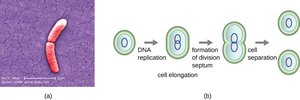
Prokaryotes, such as bacteria and archaea, reproduce asexually through binary fission, a process that results in two genetically identical daughter cells.
Binary fission involves DNA replication, cell elongation, formation of a division septum, and cell separation.
This process is rapid and efficient, allowing for exponential population growth.
Eukaryotic Cell Division: Mitosis and Meiosis
Eukaryotic cells can divide asexually (mitosis) or sexually (meiosis).
Mitosis produces genetically identical cells, important for growth and repair.
Meiosis produces genetically unique gametes, essential for sexual reproduction.
Cell cycle stages: interphase (preparation), mitosis (chromosome division), cytokinesis (cell division).
Eukaryotic Reproduction Examples
Diatoms: Diploid most of the time; reproduce asexually by mitosis and sexually by forming haploid gametes. 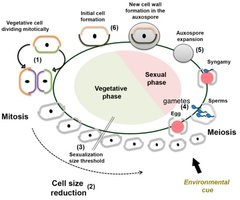 Zygomycete Fungi: Haploid most of the time; asexual reproduction by mitosis, sexual reproduction involves diploid zygote formation and meiosis to produce haploid spores.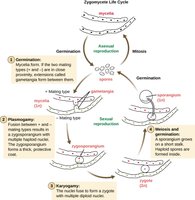
DNA Replication
Overview
DNA replication is the process by which a cell copies its DNA before cell division, ensuring each daughter cell receives a complete genome.
Enzymes involved: Helicase (opens DNA), Primase (lays down RNA primers), DNA polymerase (synthesizes new DNA), Ligase (joins DNA fragments).
RNA primers provide a 3’ end for DNA polymerase to build on.
Leading strand is synthesized continuously; lagging strand is synthesized in fragments (Okazaki fragments).
Linear vs. Circular DNA Replication
Circular DNA (prokaryotes): Replication starts at a single origin and proceeds bidirectionally.
Linear DNA (eukaryotes): Multiple origins; ends have telomeres to protect genetic material.
Telomerase enzyme replaces lost telomere DNA after replication.
Microbial Growth in Nature and Laboratory
Growth Forms
Planktonic: Free-floating or motile cells in aquatic environments.
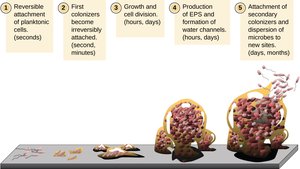
Biofilm: Adherent microorganisms embedded in an extracellular matrix; common in natural and clinical settings.
Biofilm Formation and Human Health
Biofilms are involved in ~80% of bacterial/fungal infections.
Biofilms are difficult to treat due to drug resistance and adherence.
Example: Pseudomonas aeruginosa wound infection.
Growth in the Laboratory
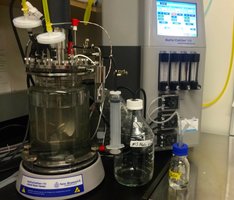
Closed system: No addition/removal of nutrients or waste; used to study growth phases.
Open system: Continuous addition/removal; maintains cells in exponential phase (e.g., chemostat).
Liquid and solid media: Used for culturing microbes.
Growth Phases in a Closed System
Lag phase: Cells prepare for division.
Exponential (log) phase: Rapid cell division.
Stationary phase: Division and death rates equal; population size stabilizes.
Death phase: Cell death exceeds division.
Generation Time
Generation time (doubling time): Time required for a population to double.
Example calculation: If a population grows from 2 to 16 cells in 3 hours, generation time is 1 hour.
Environmental Factors Affecting Microbial Growth
Oxygen Requirements
Obligate aerobes: Require oxygen.
Obligate anaerobes: Killed by oxygen.
Facultative anaerobes: Grow best with oxygen but can grow without.
Aerotolerant anaerobes: Do not need oxygen but are not harmed by it.
Microaerophiles: Require low levels of oxygen.
pH Preferences
Acidophiles: Grow best in acidic environments (low pH).
Neutrophiles: Grow best at neutral pH.
Alkaliphiles: Grow best in alkaline environments (high pH).
Temperature Preferences
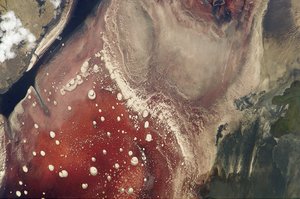
Psychrophiles: Grow best in cold temperatures.
Psychrotrophs: Tolerate cold.
Mesophiles: Grow best at moderate temperatures.
Thermophiles: Grow best at high temperatures.
Salt Tolerance
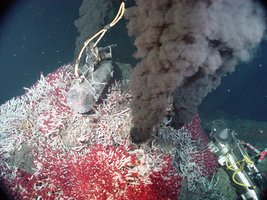
Halophiles: Grow best in high salt concentrations.
Halotolerant: Tolerate high salt but do not require it.
Non-halophiles: Grow best in low salt environments.
Summary Table: Environmental Preferences of Microbes
Factor | Type | Growth Preference |
|---|---|---|
Oxygen | Obligate aerobe | Requires oxygen |
Oxygen | Obligate anaerobe | Killed by oxygen |
Oxygen | Facultative anaerobe | Best with oxygen, can grow without |
Oxygen | Aerotolerant anaerobe | Does not need oxygen, not harmed |
Oxygen | Microaerophile | Requires low oxygen |
pH | Acidophile | Low pH (acidic) |
pH | Neutrophile | Neutral pH |
pH | Alkaliphile | High pH (alkaline) |
Temperature | Psychrophile | Cold |
Temperature | Psychrotroph | Tolerates cold |
Temperature | Mesophile | Moderate |
Temperature | Thermophile | Hot |
Salt | Halophile | High salt |
Salt | Halotolerant | Tolerates high salt |
Salt | Non-halophile | Low salt |
Key Terms and Concepts
Cell division: Process by which cells reproduce.
Binary fission: Asexual reproduction in prokaryotes.
Mitosis: Asexual division in eukaryotes.
Meiosis: Sexual division in eukaryotes.
Biofilm: Community of microorganisms attached to a surface.
Generation time: Time for population to double.
Telomere: Protective DNA at chromosome ends.
Telomerase: Enzyme that maintains telomeres.
Example Calculation: Generation Time
If a population grows from 2 cells to 16 cells in 3 hours, the number of generations is .
Generation time .
Additional info:
Biofilms are a major concern in medical settings due to their resistance to antimicrobial treatments.
Environmental factors such as pH, temperature, and salt concentration are critical for optimizing microbial growth in industrial and clinical applications.
