 Back
BackChpt 3 Cell Structure and Function: Prokaryotic and Eukaryotic Cells
Study Guide - Smart Notes
 Tailored notes based on your materials, expanded with key definitions, examples, and context.
Cell Structure and Function
Introduction
This chapter explores the fundamental structures and functions of cells, focusing on the differences and similarities between prokaryotic and eukaryotic cells. Understanding these basics is essential for studying microbiology, as cell structure underpins microbial physiology, classification, and interactions with the environment.
Processes of Life in Microbes
Essential Life Processes
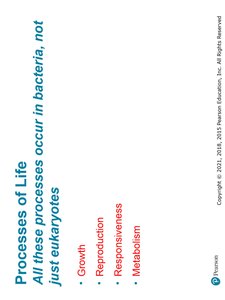
All living cells, including bacteria, archaea, and eukaryotes, perform four key processes:
Growth: Increase in size or number.
Reproduction: Production of new cells or organisms.
Responsiveness: Ability to respond to environmental stimuli.
Metabolism: Chemical reactions that provide energy and build cellular components.
Characteristics of Life and Their Distribution in Microbes
Comparing Bacteria, Archaea, Eukaryotes, and Viruses
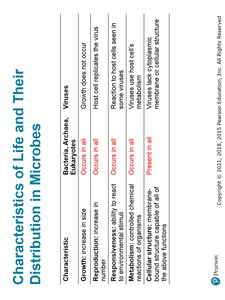
Microbes can be classified based on their ability to perform life processes. The table below summarizes these characteristics:
Characteristic | Bacteria, Archaea, Eukaryotes | Viruses |
|---|---|---|
Growth | Increase in size | Does not occur |
Reproduction | Increase in number | Host cell replicates the virus |
Responsiveness | Respond to environment | Some viruses react to host cells |
Metabolism | Metabolic processes | Viruses use host cell's metabolism |
Cellular Structure | Cellular structure present | Viruses lack cytoplasmic membrane or cellular structure |
Types of Cells: Prokaryotic vs. Eukaryotic
Examples of Cell Types
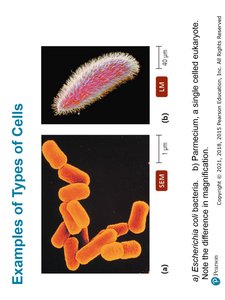
Cells can be broadly categorized as prokaryotic or eukaryotic. Escherichia coli is a typical prokaryote, while Paramecium is a single-celled eukaryote.
Prokaryotic Cells: Overview
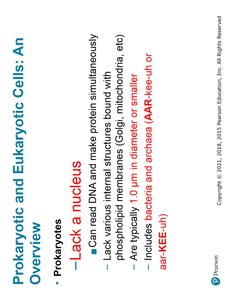
Lack a nucleus: DNA is not enclosed within a membrane.
Can read DNA and make protein simultaneously.
Lack internal membrane-bound organelles (e.g., mitochondria, Golgi apparatus).
Typically 1.0 μm or smaller in diameter.
Include bacteria and archaea.
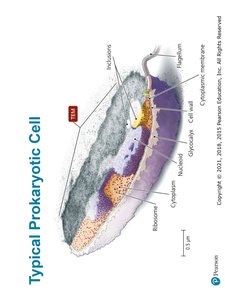
Typical Prokaryotic Cell Structure
Prokaryotic cells have a simple structure, including a plasma membrane, cytoplasm, ribosomes, and sometimes external structures like flagella and pili.
Eukaryotic Cells: Overview
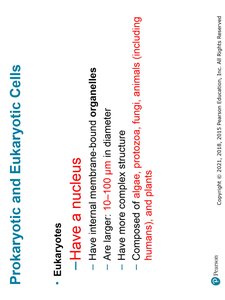
Have a nucleus: DNA is enclosed within a nuclear membrane.
Contain internal membrane-bound organelles.
Larger (10–100 μm in diameter).
More complex structure.
Include algae, protozoa, fungi, animals, and plants.
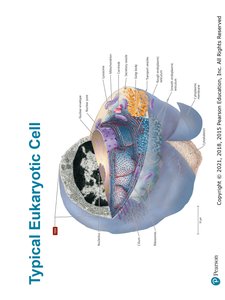
Typical Eukaryotic Cell Structure
Eukaryotic cells contain a variety of organelles, such as the nucleus, mitochondria, endoplasmic reticulum, and Golgi apparatus, each with specialized functions.
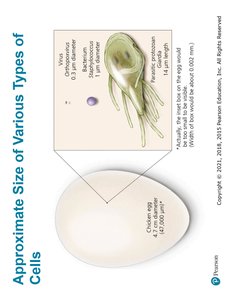
Approximate Size of Various Types of Cells
Cells vary greatly in size. Viruses are the smallest, followed by prokaryotes, and then eukaryotes, which can be much larger.
External Structures of Bacterial Cells
Glycocalyx
The glycocalyx is a gelatinous, sticky substance surrounding the outside of some bacterial cells. It is composed of polysaccharides, polypeptides, or both, and can exist as a capsule or a slime layer.
Capsule: Organized, firmly attached to the cell wall, protects bacteria from being recognized by the host.
Slime layer: Loosely attached, water-soluble, helps bacteria adhere to surfaces.

Flagella
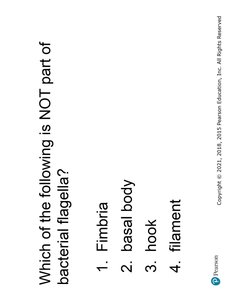
Flagella are long, whip-like structures responsible for bacterial motility. Not all bacteria have flagella. The structure consists of a filament, hook, and basal body, which anchors the flagellum to the cell wall and membrane.

Arrangements of Flagella
Bacteria can have different flagellar arrangements, such as monotrichous (single flagellum), lophotrichous (tuft at one end), amphitrichous (flagella at both ends), and peritrichous (flagella all over the surface).

Axial Filament
Some bacteria, such as spirochetes, have axial filaments (endoflagella) that allow them to move in a corkscrew motion through their environment.

Fimbriae and Pili
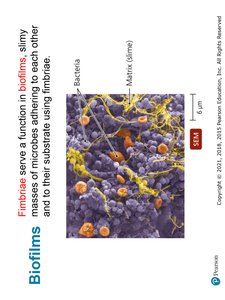
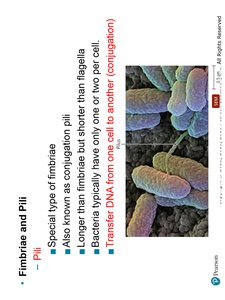
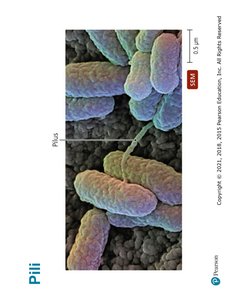
Fimbriae are sticky, bristle-like projections that help bacteria adhere to each other and to surfaces, playing a key role in biofilm formation. Pili are longer than fimbriae but shorter than flagella and are usually involved in the transfer of DNA between cells (conjugation).
Bacterial Cell Walls
Functions and Composition
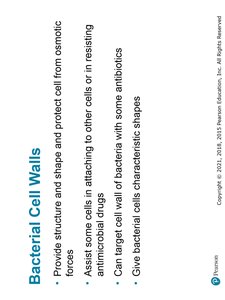
Bacterial cell walls provide structural support, protect against osmotic forces, assist in attachment, and can be targeted by antibiotics. The main component is peptidoglycan.
Bacterial Shapes and Arrangements
Bacteria exhibit various shapes, such as cocci (spherical) and bacilli (rod-shaped), and can form different arrangements (chains, clusters, etc.).
Gram-Positive vs. Gram-Negative Cell Walls
There are two main types of bacterial cell walls:
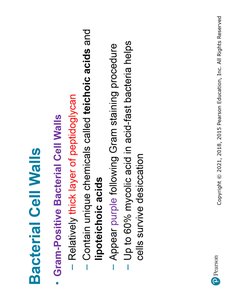
Gram-Positive: Thick peptidoglycan layer, contains teichoic acids, stains purple in Gram stain.
Gram-Negative: Thin peptidoglycan layer, outer membrane with lipopolysaccharide (LPS), stains pink in Gram stain.

Peptidoglycan Structure
Peptidoglycan is a mesh-like polymer of sugars and amino acids, providing rigidity to the bacterial cell wall.
Bacteria Without Cell Walls
Some bacteria lack cell walls and are often mistaken for viruses due to their small size. However, they retain other prokaryotic features such as ribosomes.
Motility and Chemotaxis in Bacteria
Flagellar Function and Movement
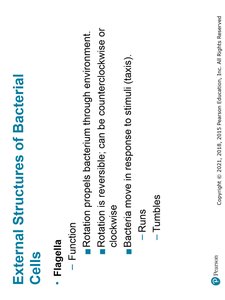
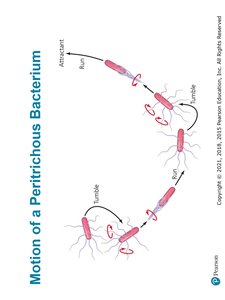
Bacterial flagella rotate to propel the cell through its environment. The direction of rotation (clockwise or counterclockwise) determines the type of movement: "runs" (straight movement) or "tumbles" (random changes in direction). Bacteria use chemotaxis to move toward or away from chemical stimuli.
Clinical Connection
Microbes and Human Health
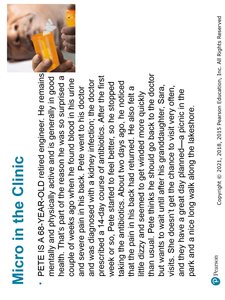
Understanding cell structure and function is crucial in clinical settings, such as diagnosing and treating bacterial infections. For example, the effectiveness of antibiotics often depends on the presence and type of bacterial cell wall.

Review Questions and Applications
What are the two types of prokaryotic organisms? (Answer: Bacteria and Archaea)
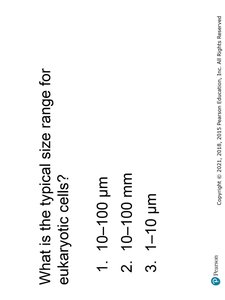
What is the typical size range for eukaryotic cells? (Answer: 10–100 μm)
What is the gelatinous, sticky substance surrounding some prokaryotic cells called? (Answer: Glycocalyx)
Which of the following is NOT part of bacterial flagella? (Answer: Fimbria)
