 Back
BackCell Structure and Microbial Metabolism: Study Notes
Study Guide - Smart Notes
 Tailored notes based on your materials, expanded with key definitions, examples, and context.
Cell Structure and Function
Mitochondria and Endosymbiotic Theory
The mitochondrion is a double-membraned organelle found in eukaryotic cells, essential for energy production. The endosymbiotic theory explains the origin of mitochondria, proposing that early eukaryotic cells engulfed aerobic prokaryotes, which then lived symbiotically inside the host cell. Over time, these prokaryotes evolved into mitochondria.
Structure: Outer membrane, inner membrane (with folds called cristae), internal matrix containing ribosomes and DNA.
Evidence for Endosymbiosis: Mitochondrial ribosomes are 70S (like prokaryotes), mitochondrial DNA is circular, and mitochondrial phospholipids resemble those of eukaryotes.
Symbiosis: A mutualistic relationship where both organisms benefit; the host cell gains energy, and the engulfed cell receives protection and nutrients.
Cytoskeleton: Eukaryotic cells have a complex cytoskeleton composed of microfilaments (shape), intermediate filaments (structural support), and microtubules (movement and transport).
Flagella: Extensions of the plasma membrane containing microtubules; move with a whipping motion.
Cilia: Shorter, numerous projections for movement or moving substances across the cell surface.
External Layers: Animal cells have a glycocalyx; plant cells have a cellulose cell wall; fungi have cell walls made of chitin, mannan, and glucan; protists have mixed compositions.
Bacterial Cell Structure
Gram-Positive and Gram-Negative Bacteria
Bacteria are classified based on their cell wall structure, which affects their staining properties and antibiotic susceptibility.
Gram-Positive: Thick peptidoglycan layer, teichoic acids for attachment and structural integrity, generally more susceptible to penicillin.
Gram-Negative: Thin peptidoglycan layer, outer membrane (not detailed in the notes but important for context), more resistant to certain antibiotics.
Mycoplasma: Lack a cell wall, contain sterols in the plasma membrane, resistant to penicillin.
Mycobacteria: Waxy mycolic acid layer, slow-growing, difficult to treat with antibiotics.
Microbial Metabolism
Overview of Metabolism
Metabolism encompasses all chemical reactions in an organism, divided into:
Catabolism: Breakdown of large molecules into smaller ones, releasing energy (exergonic).
Anabolism: Synthesis of complex molecules from simpler ones, requiring energy (endergonic).
Reactions are written as: Reactants → Products. The energy of activation is the energy required to initiate a reaction. Enzymes lower this energy barrier, allowing reactions to proceed efficiently.
Enzymes
Enzymes are biological catalysts, usually proteins, that speed up reactions without being consumed. They have a specific 3D structure with an active site where substrates bind and are converted to products.
Turnover Number: The rate at which an enzyme converts substrate to product, influenced by substrate concentration and temperature.
Denaturation: High temperatures or extreme pH can disrupt hydrogen bonds, unfolding the enzyme and inactivating it.
Optimal Conditions: Each enzyme has an optimal temperature and pH for activity.
Energy and Carbon Sources
Chemotrophs: Obtain energy from chemicals (e.g., humans).
Phototrophs: Obtain energy from light (e.g., plants).
Heterotrophs: Use organic carbon sources.
Autotrophs: Use inorganic carbon (CO2).
Chemoheterotrophs: Use organic compounds for both energy and carbon (most bacteria, animals).
ATP and Energy Production
ATP Structure and Function
Adenosine triphosphate (ATP) is the primary energy currency of the cell. It consists of a base, a sugar, and three phosphate groups. The bond between the second and third phosphate is a high-energy bond; breaking it releases energy for cellular processes.
ATP Hydrolysis:
ATP Synthesis: (requires energy input)
Glycolysis
Pathway and Key Steps
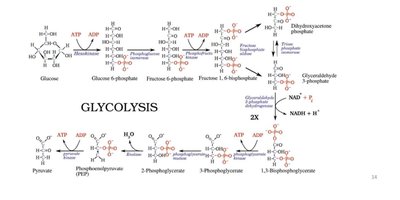
Glycolysis is the metabolic pathway that breaks down glucose into pyruvate, generating ATP and NADH. It occurs in the cytoplasm and does not require oxygen.
Investment Phase: 2 ATP are used to phosphorylate glucose and its intermediates.
Payoff Phase: 4 ATP and 2 NADH are produced per glucose molecule, resulting in a net gain of 2 ATP.
End Products: 2 pyruvate, 2 NADH, 2 ATP (net)
Formation of Acetyl-CoA
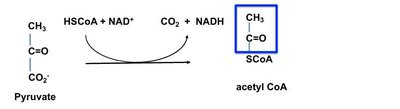
Pyruvate produced in glycolysis is converted to acetyl-CoA before entering the Krebs cycle. This process releases CO2 and generates NADH.
Reaction:
NAD+ and NADH in Metabolism
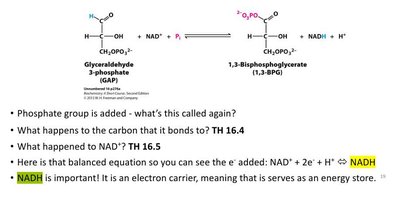
NAD+ (nicotinamide adenine dinucleotide) is an electron carrier. During glycolysis and other metabolic pathways, it is reduced to NADH, which stores energy and electrons for later use in the electron transport chain.
Reduction Reaction:
Role: NADH carries electrons to the electron transport chain, where they are used to generate ATP.
Fermentation
Purpose and Process
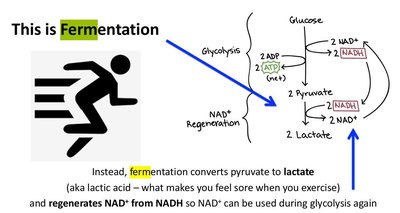
Fermentation is an anaerobic process that allows cells to regenerate NAD+ from NADH, enabling glycolysis to continue in the absence of oxygen. The end products can be acids, alcohols, or gases, depending on the organism and pathway.
Lactic Acid Fermentation: Pyruvate is reduced to lactate, regenerating NAD+.
Alcoholic Fermentation: Pyruvate is converted to ethanol and CO2, regenerating NAD+.
Importance: Fermentation is less efficient than aerobic respiration but is essential for energy production in anaerobic conditions.
Summary Table: Key Differences in Cell Structure and Metabolism
Feature | Eukaryotic Cells | Prokaryotic Cells |
|---|---|---|
Mitochondria | Present | Absent |
Cell Wall Composition | Cellulose (plants), chitin (fungi), glycocalyx (animals) | Peptidoglycan (bacteria), mycolic acid (mycobacteria), sterols (mycoplasma) |
Ribosome Size | 80S (cytoplasm), 70S (mitochondria) | 70S |
Metabolic Pathways | Glycolysis, Krebs cycle, electron transport chain | Glycolysis, fermentation, various respiration types |
Additional info: The notes above integrate and expand upon the provided material, ensuring coverage of cell structure, bacterial classification, and core metabolic pathways relevant to a college-level microbiology course.
