Back
BackCell Structure, Function, and Genetics in Microbiology
Study Guide - Smart Notes
 Tailored notes based on your materials, expanded with key definitions, examples, and context.
Cell Structure and Function
Cell Theory
The cell theory is a foundational concept in biology, stating that all living organisms are composed of cells, which are the smallest units of life, and that all cells arise from preexisting cells. This theory was formalized by Schleiden and Schwann, with Robert Hooke first naming cells.
Smallest form of life: Cells are the basic building blocks of all organisms.
All life forms are cellular: Organisms may be unicellular or multicellular.
Cellular continuity: New cells are produced from existing cells.
Prokaryotic vs. Eukaryotic Cells
Cells are classified as prokaryotic or eukaryotic based on structural and functional differences.
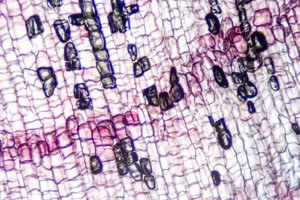
Prokaryotes: Simpler, smaller, lack membrane-bound organelles, no true nucleus, always unicellular (e.g., Archaea & Bacteria).
Eukaryotes: Larger, more complex, contain membrane-bound organelles, have a prominent nucleus, can be unicellular or multicellular (e.g., plants, animals, fungi, protists).
Both: Possess plasma membranes, nucleic acids (DNA & RNA), and carry out metabolism and response to stimuli.
Cell Membranes and Transport
Plasma Membrane Structure
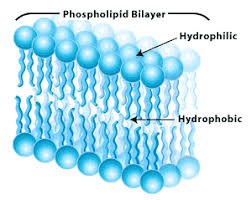
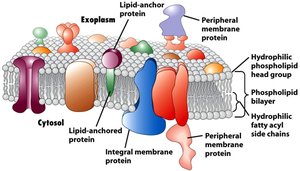
The plasma membrane is a selectively permeable barrier composed of a phospholipid bilayer with embedded proteins, glycolipids, and (in eukaryotes) cholesterol.
Phospholipid bilayer: Hydrophilic heads face outward, hydrophobic tails face inward.
Proteins: Peripheral (surface) and integral (span the membrane) proteins serve structural, transport, enzymatic, and receptor functions.
Glycolipids: Project into the extracellular space, involved in protection, insulation, and cell recognition.
Membrane Transport Mechanisms
Cells regulate the movement of substances across their membranes through passive and active transport mechanisms.
Passive Transport: Does not require energy; includes diffusion, facilitated diffusion, osmosis, and filtration.
Active Transport: Requires energy (usually ATP); moves substances against their concentration gradient (e.g., sodium-potassium pump).
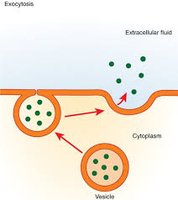
Bulk Transport: Endocytosis (phagocytosis, pinocytosis) and exocytosis use vesicles to move large particles or volumes.
Cell Walls and Surface Structures
Gram-Positive vs. Gram-Negative Cell Walls
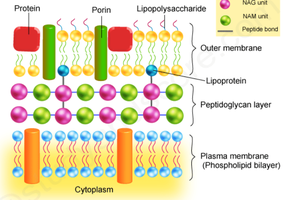
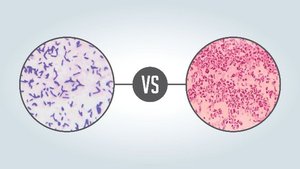
Bacterial cell walls provide structural support and protection, with significant differences between gram-positive and gram-negative bacteria.
Gram-Positive: Thick peptidoglycan layer, acidic cell surface, small periplasmic space.
Gram-Negative: Thin, complex peptidoglycan layer, outer membrane with lipopolysaccharides, large periplasmic space, porin proteins for selective permeability.
Glycocalyx and Biofilms
The glycocalyx is an extracellular matrix of polysaccharides that aids in cell-to-cell communication, protection, and biofilm formation. Biofilms are microbial communities encased in a matrix, often found on tissues and medical devices, and contribute to antibiotic resistance.
Capsules: A type of glycocalyx that protects bacteria from the immune system.
Biofilm importance: Increases resistance to disinfectants and antibiotics, facilitates genetic exchange.
Cellular Compartments and Fluids
Intracellular vs. Extracellular Fluid
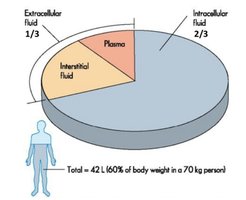
Body fluids are divided into intracellular (within cells) and extracellular (outside cells) compartments, each with distinct compositions and functions.
Intracellular fluid: Contains most of the body's water, high in potassium, phosphate, and magnesium.
Extracellular fluid: Includes plasma, lymph, interstitial, and transcellular fluids.
Enzymes and Metabolism
Enzyme Structure and Function
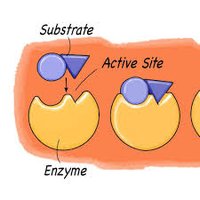
Enzymes are biological catalysts, usually proteins, that accelerate chemical reactions by lowering activation energy. They are highly specific for their substrates, following a 'lock and key' model.
Active site: Region where the substrate binds and the reaction occurs.
Factors affecting activity: Temperature, pH, substrate and enzyme concentrations, product concentrations, cofactors, and coenzymes.
Genetics and Cell Division
DNA Replication
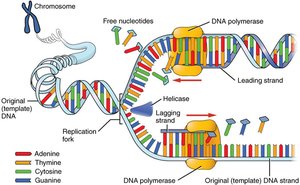
DNA replication is the process by which a cell duplicates its DNA before cell division. It involves unwinding the double helix, synthesizing new strands, and forming Okazaki fragments on the lagging strand.
Key enzymes: Helicase (unwinds DNA), DNA polymerase III (synthesizes new DNA), DNA polymerase I (replaces RNA primers).'7
Leading vs. lagging strand: Leading strand synthesized continuously; lagging strand synthesized in fragments.
Transcription and Translation
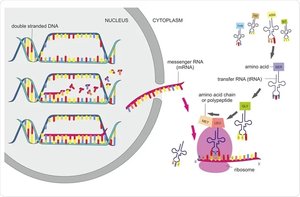
Gene expression involves transcription (DNA to mRNA) and translation (mRNA to protein). RNA plays a central role in carrying genetic information and assembling amino acids into proteins.
Transcription: Synthesis of mRNA from a DNA template.
Translation: Ribosomes read mRNA and assemble amino acids into polypeptides.
Binary Fission and Cell Cycle
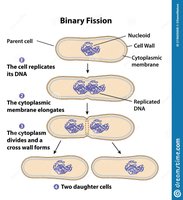
Bacteria reproduce by binary fission, a form of asexual reproduction resulting in two identical daughter cells. Eukaryotic cells undergo a cell cycle with distinct phases (G1, S, G2, M) culminating in mitosis.
Binary fission: DNA replication, elongation, division.
Cell cycle: G1 (growth), S (DNA synthesis), G2 (preparation), M (mitosis and cytokinesis).
Meiosis
Meiosis is a specialized form of cell division producing haploid gametes, introducing genetic diversity through crossing over and independent assortment.
Two divisions: Reduces chromosome number by half.
Genetic diversity: Essential for evolution and adaptation.
Bacterial Mutations and Genetic Transfer
Bacteria can acquire genetic variation through mutations and horizontal gene transfer mechanisms.
Mutations: Spontaneous or induced changes in DNA sequence (point mutations, frameshifts, inversions, transposons).
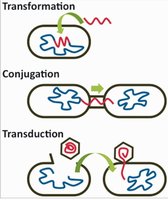
Genetic transfer: Transformation (uptake of free DNA), transduction (virus-mediated), conjugation (direct cell-to-cell transfer via sex pilus).