 Back
BackCell Structure, Membrane Function, and Molecular Transport in Microbiology
Study Guide - Smart Notes
 Tailored notes based on your materials, expanded with key definitions, examples, and context.
Origins and Principles of Cell Theory
Historical Foundations
The cell theory is a fundamental concept in biology and microbiology, describing the basic unit of life. Early scientists such as Thonius Philips van Leeuwenhoek and Robert Hooke contributed to the discovery of cells, while Matthias Schleiden, Theodor Schwann, and Rudolf Virchow formalized the cell theory in the 19th century.
All living things are made of cells.
The cell is the smallest living unit of structure and function in organisms.
All cells arise from preexisting cells.
Logical Reasoning Behind Cell Theory
Cell theory is based on the observation that all organisms, regardless of complexity, are composed of cells. This principle underpins the study of microbiology, as microorganisms are often single-celled entities.
Cell Structure and Composition
What is a Cell?
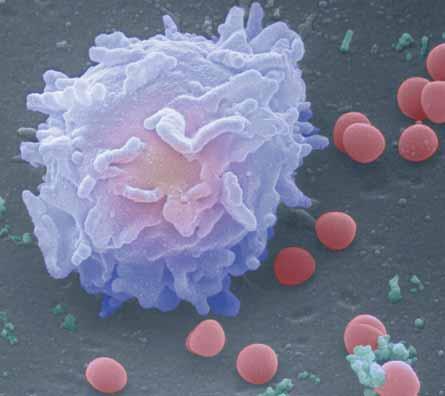
A cell is the basic structural and functional unit of all living organisms. Cells are self-contained systems surrounded by a plasma membrane and contain various organelles that perform specialized functions.
Self-contained: Surrounded by a plasma membrane.
Self-sustained: Contains organelles for multiple functions.

Cellular Components
Cytoplasm: The internal fluid containing organelles.
Organelles: Specialized structures such as the nucleus, ribosomes, endoplasmic reticulum, Golgi apparatus, lysosomes, vacuoles, mitochondria, chloroplasts, and cytoskeleton.
Plasma Membrane: Structure and Function
Composition and Assembly
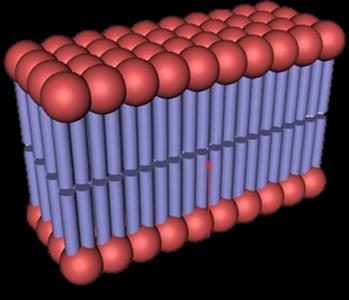
The plasma membrane surrounds the cell and most organelles, providing a barrier between the internal and external environments. It is primarily composed of phospholipids, which have bipolar properties: a hydrophilic (water-loving) head and hydrophobic (water-fearing) tails.
Phospholipids: Form a bilayer structure.
Fluid Mosaic Model: Includes phospholipids, cholesterol, integral and peripheral proteins, and carbohydrates attached to proteins.


Purpose and Properties
The plasma membrane separates the living part of the cell from the outside environment and regulates the transport of molecules. It is semi-permeable, allowing selective movement of substances.
Regulates transport: Building materials, nutrients, waste, signals.
Allows passage: Small, uncharged molecules (e.g., water, O2, CO2).
Molecular Transport Across the Plasma Membrane
Types of Molecular Transport
Molecular transport is essential for maintaining cellular homeostasis. The plasma membrane facilitates both passive and active transport mechanisms.
Passive Transport: Movement along a concentration gradient (high to low), no energy required.
Active Transport: Movement against a concentration gradient (low to high), requires energy (ATP or gradients).
Large Scale Transport: Endocytosis and exocytosis for bulk movement.
Passive Transport
Diffusion: Movement of solute from high to low concentration.
Osmosis: Diffusion of water across a semi-permeable membrane.
Facilitated Diffusion: Movement of large or charged molecules via protein carriers.
Dynamic equilibrium is achieved when molecules move in both directions but net movement is zero.
Osmosis and Tonicity
Isotonic: Equal solute concentration inside and outside the cell.
Hypotonic: Lower solute concentration outside; cell takes on water and may burst (cytolysis).
Hypertonic: Higher solute concentration outside; cell loses water and may shrink (crenation).
Active Transport
Direct (Primary): Uses ATP to move molecules against the gradient.
Indirect (Secondary): Uses gradients established by primary transport.
Large Scale Transport
Endocytosis: Cell engulfs material (phagocytosis, pinocytosis, receptor-mediated).
Exocytosis: Cell expels material.
Classification of Cells: Prokaryotes vs. Eukaryotes
Prokaryotic Cells
Prokaryotes include Bacteria and Archaea. They lack a nucleus and membrane-bound organelles, but contain ribosomes.
Unicellular
Limited organelles
No membrane-bound organelles
Types: Archaea (hostile environments), Bacteria (common environments, disease-causers)
Eukaryotic Cells
Eukaryotes possess a true nucleus and multiple membrane-bound organelles. They are classified into four kingdoms: Protista, Fungi, Plantae, and Animalia.
Multicellular or unicellular
Multiple membrane-bound organelles
Kingdoms: Animalia, Fungi, Plantae, Protista
Cell Morphology and Classification
Cell Morphology
Cells can be classified based on their shape, size, and internal structure. This classification is important in microbiology for identifying microorganisms.
Modern Classification
Modern classification uses three domains based on RNA content: Bacteria, Archaea, and Eukarya.
Summary Table: Prokaryotes vs. Eukaryotes
Feature | Prokaryotes | Eukaryotes |
|---|---|---|
Nucleus | No | Yes |
Membrane-bound Organelles | No | Yes |
Cell Wall Composition | Peptidoglycan (Bacteria), varied (Archaea) | Cellulose (Plants), Chitin (Fungi), None (Animals) |
Kingdoms/Domains | Bacteria, Archaea | Protista, Fungi, Plantae, Animalia |
Examples | Escherichia coli, Methanogens | Yeast, Rose, Human |
Key Organelles and Their Functions
Nucleus
Contains DNA (chromosomes)
Nucleolus: Site of RNA and ribosome manufacture
Ribosomes
Made of protein and RNA
Translate proteins by reading genetic code
Location: Free in cytosol or attached to ER
Endoplasmic Reticulum (ER)
Smooth ER: Steroid synthesis, detoxification, lipid degradation
Rough ER: Protein synthesis (due to ribosomes)
Golgi Apparatus
Modifies proteins and transports them within the cell
Lysosomes
Digestive enzymes for degrading and recycling components
Vacuoles
Store water, nutrients, waste
Collect water via osmosis
Mitochondria
Double-membrane
Site of cellular respiration and ATP production
Chloroplasts
Membrane-bound organelles in plants and algae
Site of photosynthesis
Cytoskeleton
Microfilaments: Actin, double-helix, flexible, cell movement
Microtubules: Tubulin, helical and hollow, rigid, cell division and transport
Cell Wall
Provides support
Composition: Carbohydrates, protein, or both
Present in: Plants (cellulose), fungi (chitin), prokaryotes (peptidoglycan), algae (glycoprotein)
Summary of Cellular Organization
Cells form tissues, organs, systems, and organisms.
Nucleic acids (DNA) are the basis for genetic information.
Conclusion
Understanding cell structure, membrane function, and molecular transport is foundational in microbiology. These concepts enable the classification of microorganisms and the study of their physiology, genetics, and interactions with their environment.
