 Back
Cell Structure, Membranes, and Molecular Transport in Microbiology
Study Guide - Smart Notes
 Tailored notes based on your materials, expanded with key definitions, examples, and context.
Cell Theory and the Microbial World
Historical Foundations of Cell Theory
The cell theory is a fundamental concept in biology and microbiology, establishing that all living organisms are composed of cells. This theory was developed through the work of several scientists:
Matthias Schleiden (1838): Proposed that all plants are made of cells.
Theodor Schwann (1839): Extended the idea to animals, stating all animals are made of cells.
Rudolf Virchow (1858): Asserted that all cells arise from preexisting cells (Omnis cellula e cellula).
Key Principles of Cell Theory:
All living things are made of cells.
The cell is the smallest living unit of structure and function in all organisms.
All cells arise from preexisting cells.
Example: Bacteria, plants, and animals all consist of cells, demonstrating the universality of cell theory.
Cell Structure and Composition
What is a Cell?
A cell is the basic structural and functional unit of all living organisms. Cells are self-contained systems, surrounded by a plasma membrane, and contain specialized structures called organelles that perform distinct functions necessary for life.
Self-contained: Enclosed by a plasma membrane.
Self-sustained: Contains organelles for multiple cellular functions.
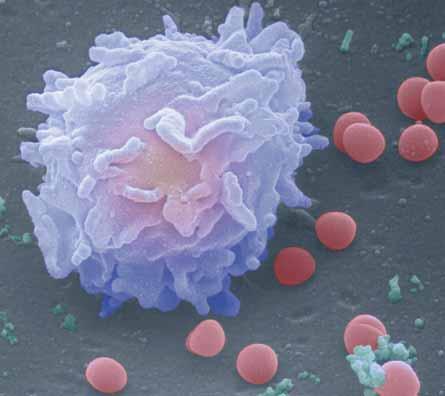
Levels of Biological Organization
Atom → Molecule → Organelle → Cell → Tissue → Organ → Organ System → Organism
Major Biomolecules in Cells
Lipids: Essential for membrane structure and energy storage.
Proteins: Serve as enzymes, structural components, and signaling molecules.
Carbohydrates: Provide energy and structural support.
Nucleic Acids: Store and transmit genetic information (DNA, RNA).
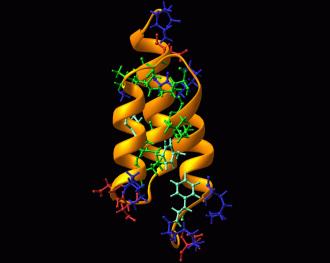
Plasma Membrane: Structure and Function
Composition and Organization
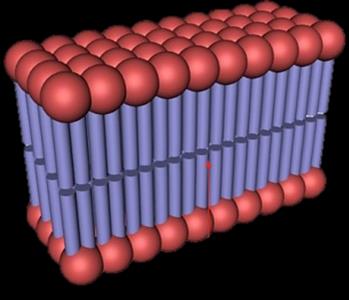
The plasma membrane (PM) surrounds the cell and most organelles, providing a selective barrier between the cell's interior and its environment. It is primarily composed of a phospholipid bilayer with embedded proteins and carbohydrates.
Phospholipids: Amphipathic molecules with hydrophilic (water-attracting) heads and hydrophobic (water-repelling) tails.
Proteins: Integral and peripheral proteins serve as channels, carriers, receptors, and enzymes.
Carbohydrates: Often attached to proteins or lipids on the extracellular surface for cell recognition.
Cholesterol: Modulates membrane fluidity (in eukaryotes).

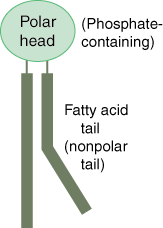
Fluid Mosaic Model
The plasma membrane is described by the fluid mosaic model, which emphasizes the dynamic and flexible nature of the lipid bilayer interspersed with proteins and carbohydrates.
Phospholipids and proteins can move laterally within the layer, allowing for membrane flexibility and the formation of specialized structures.
Functions of the Plasma Membrane
Selective Barrier: Separates the internal environment from the external environment.
Semi-permeable: Regulates the transport of molecules such as nutrients, waste products, and signals.
Communication: Contains receptors for signal transduction.
Example: Small, uncharged molecules like water, O2, and CO2 can diffuse through the phospholipid bilayer.
Molecular Transport Across Membranes
Types of Molecular Transport
Molecules move across the plasma membrane by several mechanisms, classified as passive or active transport.
Passive Transport: Movement along a concentration gradient (high to low), requiring no energy input.
Active Transport: Movement against a concentration gradient (low to high), requiring energy (usually ATP).
Passive Transport Mechanisms
Simple Diffusion: Movement of small, nonpolar molecules directly through the lipid bilayer.
Osmosis: Diffusion of water across a semi-permeable membrane from low to high solute concentration.
Facilitated Diffusion: Movement of larger or charged molecules via protein carriers or channels, still down the concentration gradient.
Example: Glucose enters cells via facilitated diffusion; water moves by osmosis.
Active Transport Mechanisms
Primary Active Transport: Direct use of ATP to move molecules (e.g., Na+/K+ pump).
Secondary Active Transport: Uses the energy from an existing gradient to move other substances.
Bulk Transport: Endocytosis (phagocytosis, pinocytosis) and exocytosis for large molecules or particles.
Example: White blood cells engulf bacteria by phagocytosis.
Osmosis and Tonicity
Osmosis is crucial for maintaining cell volume and function. The effect of different solutions on cells is described by tonicity:
Isotonic: Equal solute concentration inside and outside the cell; no net water movement.
Hypotonic: Lower solute concentration outside; water enters the cell, which may burst (cytolysis).
Hypertonic: Higher solute concentration outside; water leaves the cell, which may shrink (crenation/plasmolysis).
Cell Organelles and Their Functions
Major Organelles in Microbiology
Organelles are specialized structures within cells that perform distinct functions necessary for cell survival and function.
Nucleus: Contains DNA; site of genetic information storage and processing.
Ribosomes: Sites of protein synthesis; found free in cytosol or attached to the endoplasmic reticulum.
Endoplasmic Reticulum (ER): Rough ER synthesizes proteins; smooth ER synthesizes lipids and detoxifies chemicals.
Golgi Apparatus: Modifies, sorts, and packages proteins and lipids for transport.
Lysosomes: Contain digestive enzymes for breaking down waste and cellular debris.
Vacuoles: Store water, nutrients, or waste; more prominent in plant cells.
Mitochondria: Site of cellular respiration and ATP production.
Chloroplasts: Site of photosynthesis in plants and algae.
Cytoskeleton: Provides structural support and facilitates movement (microtubules, microfilaments).
Cell Wall: Provides support and protection; composition varies among plants, fungi, prokaryotes, and algae.
Comparison of Prokaryotic and Eukaryotic Cells
Feature | Prokaryotic Cells | Eukaryotic Cells |
|---|---|---|
Nucleus | Absent | Present |
Membrane-bound Organelles | Absent | Present |
Cell Wall | Peptidoglycan (Bacteria), Various (Archaea) | Cellulose (Plants), Chitin (Fungi), None (Animals) |
Size | Smaller (1-10 μm) | Larger (10-100 μm) |
Examples | Bacteria, Archaea | Protists, Fungi, Plants, Animals |
Classification of Cells and Organisms
Domains and Kingdoms
Modern classification divides life into three domains based on genetic and biochemical differences:
Bacteria: Prokaryotic, unicellular organisms with peptidoglycan cell walls.
Archaea: Prokaryotic, often found in extreme environments, with unique membrane lipids.
Eukarya: Eukaryotic organisms, including four kingdoms: Protista, Fungi, Plantae, Animalia.
Examples:
Animalia: Multicellular, no cell wall, heterotrophic (e.g., humans, insects).
Fungi: Multicellular or unicellular, chitin cell wall, saprophytic (e.g., yeast, mushrooms).
Plantae: Multicellular, cellulose cell wall, autotrophic (e.g., roses, pine trees).
Protista: Diverse group, "animal-like" (protozoa), "plant-like" (algae), "fungus-like" (molds).
Summary Table: Types of Molecular Transport
Transport Type | Direction | Energy Required? | Example |
|---|---|---|---|
Simple Diffusion | High → Low | No | O2, CO2 |
Osmosis | Water: Low → High [solute] | No | Water movement |
Facilitated Diffusion | High → Low | No | Glucose transport |
Active Transport | Low → High | Yes (ATP) | Na+/K+ pump |
Endocytosis/Exocytosis | Bulk movement | Yes | Phagocytosis, secretion |
Additional info: This guide expands on the provided slides by including definitions, examples, and summary tables for clarity and exam preparation.
