 Back
BackCentral Metabolism in Microorganisms: Catabolism, Anabolism, and Energy Conservation Unit 3
Study Guide - Smart Notes
 Tailored notes based on your materials, expanded with key definitions, examples, and context.
Central Metabolism in Microorganisms
Overview of Metabolism
Metabolism encompasses all biochemical reactions within a cell, divided into two main processes: catabolism (energy-releasing breakdown of molecules) and anabolism (energy-consuming synthesis of cellular components). These processes are fundamental for microbial growth, maintenance, and reproduction.
Catabolism: Degradation of nutrients to produce ATP, NADH, NADPH, and biosynthetic intermediates. These reactions are exergonic (release energy).
Anabolism: Synthesis of macromolecules such as peptidoglycan, DNA, RNA, and proteins. These reactions are endergonic (require energy input).
Macronutrients vs. Micronutrients
Microbial nutrition requires both macronutrients and micronutrients:
Macronutrients: Required in large amounts (e.g., carbon, nitrogen, phosphorus, sulfur, potassium, magnesium, calcium, iron).
Micronutrients: Required in trace amounts (e.g., manganese, zinc, cobalt, molybdenum, nickel, copper, vitamins).

Energy Classes of Microorganisms
Classification by Energy and Carbon Source
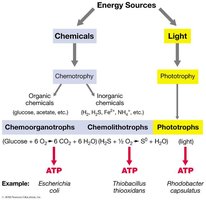
Microorganisms are classified based on their energy and carbon sources:
Chemoorganotrophs: Obtain energy from organic compounds; typically heterotrophs (e.g., Escherichia coli).
Chemolithotrophs: Obtain energy from inorganic compounds; mostly autotrophs (e.g., Thiobacillus thiooxidans).
Phototrophs: Use light as an energy source; mostly autotrophs (e.g., Rhodobacter capsulatus).
Autotrophs: Use CO2 as a carbon source.
Heterotrophs: Use organic molecules as a carbon source.
Principles of Bioenergetics
Free Energy and Reaction Spontaneity
Energy changes in biochemical reactions are measured as free energy (G). The change in free energy under standard conditions is denoted as ΔG0':
Exergonic reactions: ΔG0' < 0 (release energy; spontaneous)
Endergonic reactions: ΔG0' > 0 (require energy input; non-spontaneous)
Calculating Free Energy Yield
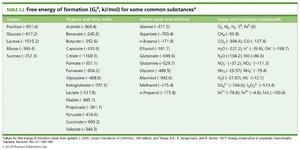
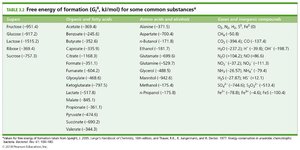
The free energy change for a reaction is calculated using the free energies of formation (Gf0) of reactants and products:
Actual free energy change (ΔG) under cellular conditions is given by:
Only exergonic reactions can be used by cells to conserve energy as ATP.
Enzymes and Catalysis
Structure and Function of Enzymes
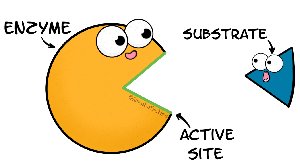
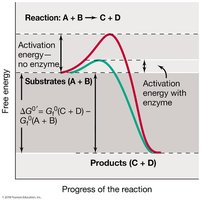
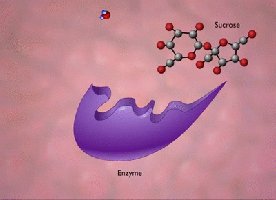
Enzymes are biological catalysts, usually proteins, that accelerate biochemical reactions by lowering activation energy. They are highly specific for their substrates and are not consumed in the reaction.
Enzymes bind substrates at their active site to form an enzyme-substrate complex.
Many enzymes require non-protein cofactors: prosthetic groups (tightly bound) or coenzymes (loosely bound, often vitamin derivatives).
Oxidation-Reduction (Redox) Reactions
Redox Basics
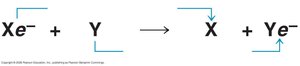
Redox reactions involve the transfer of electrons between molecules:
Oxidation: Loss of electrons
Reduction: Gain of electrons
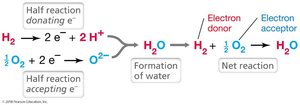
Redox reactions occur in pairs (one molecule is oxidized, another is reduced).
Electron donor: Substance that is oxidized
Electron acceptor: Substance that is reduced (e.g., O2 is a strong acceptor)

Redox Potentials and the Redox Tower
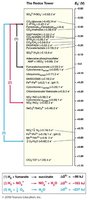
The reduction potential (E0') indicates a substance's tendency to accept or donate electrons. The redox tower arranges redox couples by their E0' values:
Top: Strong electron donors (more negative E0')
Bottom: Strong electron acceptors (more positive E0')
The greater the difference in E0' between donor and acceptor, the more energy is released (proportional to ΔG0').
Electron Carriers and Energy Conservation
Electron Carriers
Electron carriers such as NAD+/NADH, FAD/FADH2, and quinones shuttle electrons between metabolic pathways, linking oxidation and reduction reactions to ATP synthesis.
Glycolysis and Fermentation
Glycolysis (Embden–Meyerhof–Parnas Pathway)
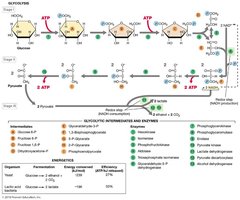
Glycolysis is a universal pathway for glucose catabolism, yielding ATP, NADH, and pyruvate:
Occurs in the cytoplasm of all cells
Net yield: 2 ATP (substrate-level phosphorylation), 2 NADH, 2 pyruvate per glucose
Stages: Energy investment, energy payoff, and fermentation (if no terminal electron acceptor is present)
Fermentation
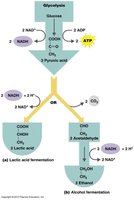
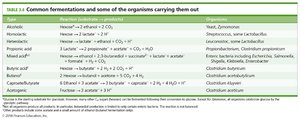
Fermentation is an anaerobic process where organic molecules serve as both electron donors and acceptors. It regenerates NAD+ for glycolysis and produces ATP solely by substrate-level phosphorylation.
Occurs when O2 or other terminal electron acceptors are absent
Fermentation products are waste for the microbe but useful for humans (e.g., ethanol, lactic acid)

The Citric Acid Cycle (CAC) and Electron Transport Chain (ETC)
The Citric Acid Cycle (Krebs Cycle)
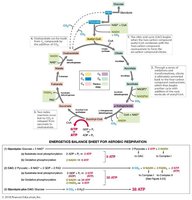
The CAC completely oxidizes pyruvate to CO2, generating NADH and FADH2 for the ETC:
Per glucose: 6 CO2, 8 NADH, 2 FADH2
Intermediates serve as precursors for biosynthesis (e.g., amino acids, tetrapyrroles, fatty acids)
Glyoxylate Cycle
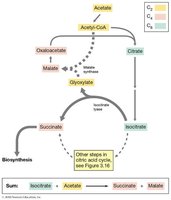
When cells grow on non-glucose substrates (e.g., acetate), the glyoxylate cycle replenishes oxaloacetate for biosynthesis, bypassing the decarboxylation steps of the CAC.
Electron Transport Chain (ETC) and Oxidative Phosphorylation
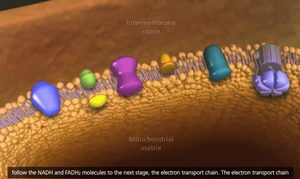
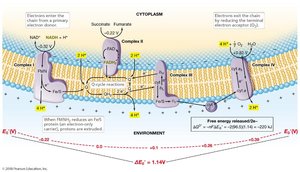
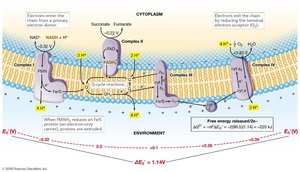
The ETC is a series of membrane-bound carriers that transfer electrons from NADH and FADH2 to a terminal electron acceptor (e.g., O2), generating a proton motive force (pmf) across the membrane. The pmf drives ATP synthesis via ATP synthase.
ETC components are arranged by increasing reduction potential
Protons are pumped across the membrane, creating an electrochemical gradient
ATP Synthase
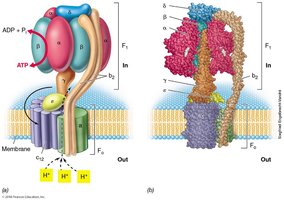
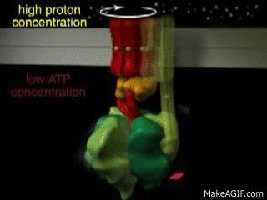
ATP synthase is a membrane-bound enzyme complex that synthesizes ATP from ADP and inorganic phosphate, powered by the flow of protons down their gradient (pmf). It is reversible and can also generate pmf in fermentative organisms.
Options for Energy Conservation
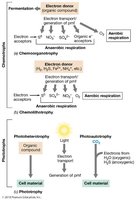
Anaerobic Respiration
Some microbes use electron acceptors other than O2 (e.g., nitrate, sulfate, ferric iron, CO2) in anaerobic respiration. This process yields less ATP than aerobic respiration but still involves an ETC and pmf.
Chemolithotrophy
Chemolithotrophs oxidize inorganic compounds (e.g., H2S, H2, Fe2+, NH4+) for energy, often using CO2 as a carbon source (autotrophy).
Phototrophy
Phototrophs use light energy to drive ATP synthesis (photophosphorylation). Photoautotrophs use CO2 for biosynthesis, while photoheterotrophs use organic carbon.
Biosynthesis Pathways
Overview of Biosynthesis
Biosynthetic pathways generate essential cellular components:
Gluconeogenesis: Synthesis of glucose from non-carbohydrate precursors when glucose is absent.
Pentose phosphate pathway: Produces 5-carbon sugars for nucleic acid synthesis.
Amino acids: Derived from intermediates of glycolysis or the CAC, or from the environment.
Fatty acids: Synthesized via acyl carrier proteins (ACP), adding two carbons at a time from malonyl-ACP.
Additional info: Students should focus on the general principles of biosynthesis rather than memorizing specific pathways.
