 Back
BackChapter 1: A Brief History of Microbiology – Structured Study Notes
Study Guide - Smart Notes
 Tailored notes based on your materials, expanded with key definitions, examples, and context.
Chapter 1: A Brief History of Microbiology
The Early Years of Microbiology
Microbiology began as a scientific discipline with the discovery and observation of microorganisms. Early pioneers laid the foundation for understanding the diversity and classification of microbial life.
Antoni van Leeuwenhoek: Developed simple microscopes and was the first to observe and describe microorganisms, which he called "animalcules." He examined water and visualized tiny animals, fungi, algae, and protozoa.
Microorganisms: By the end of the 19th century, these organisms were collectively referred to as microorganisms.
Taxonomic System: Carolus Linnaeus established a system for naming and grouping organisms, which is still used in modern taxonomy.


Classification of Microbes
Microorganisms are classified into several major groups based on their cellular structure, mode of nutrition, and reproductive strategies.
Bacteria and Archaea: Unicellular, lack nuclei, reproduce asexually, and are found in diverse environments. Bacterial cell walls contain peptidoglycan, while archaeal cell walls are composed of other polymers.
Fungi: Eukaryotic, obtain food from other organisms, possess cell walls. Includes molds (multicellular, reproduce by spores) and yeasts (unicellular, reproduce by budding or spores).
Protozoa: Single-celled eukaryotes, similar to animals in nutrient needs and structure, capable of locomotion via pseudopods, cilia, or flagella.
Algae: Unicellular or multicellular, photosynthetic, categorized by pigmentation and cell wall composition.
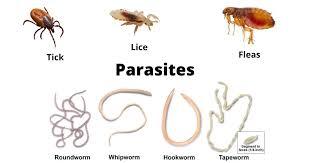
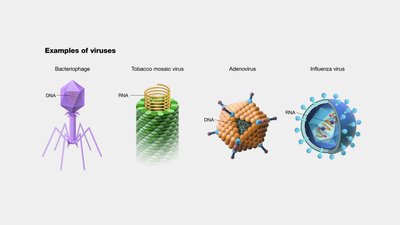
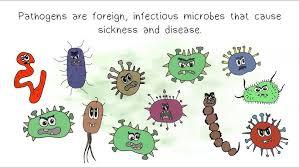
Other Important Organisms: Parasites (multicellular animals) and viruses (acellular entities).






The Golden Age of Microbiology
This period was marked by major discoveries that shaped the field, including the refutation of spontaneous generation, the understanding of fermentation, and the identification of pathogens.
Spontaneous Generation: The idea that life could arise from nonliving matter was tested by Redi, Needham, Spallanzani, and Pasteur. Pasteur's swan-neck flask experiments definitively disproved spontaneous generation for microbes.
Scientific Method: The debate over spontaneous generation led to the development of the scientific method, which involves observation, hypothesis, experimentation, and conclusion.



Fermentation and Industrial Microbiology
Understanding fermentation was crucial for food and beverage industries. Pasteur and Buchner's experiments revealed the role of microbes and enzymes in fermentation.
Pasteurization: Heating liquids to kill most bacteria, preventing spoilage.
Industrial Microbiology: Intentional use of microbes for manufacturing products.
Biochemistry: Buchner showed that enzymes, not living cells, promote chemical reactions, founding biochemistry.

Product or Process | Contribution of Microorganism |
|---|---|
Cheese | Flavoring and ripening by bacteria and fungi |
Alcoholic beverages | Alcohol produced by bacteria or yeast fermentation |
Soy sauce | Fungal fermentation of soybeans |
Vinegar | Bacterial fermentation of sugar |
Yogurt | Bacteria growing in milk |
Sour cream | Bacteria growing in cream |
Bread | Yeast action causes dough rising; sourdough from bacteria-produced acids |
The Germ Theory of Disease
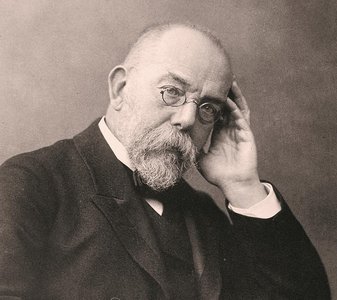
Pasteur and Koch established that specific microbes cause specific diseases, leading to the germ theory of disease. Koch developed methods for identifying pathogens and formulated Koch's postulates.
Koch’s Postulates: Criteria for proving a microbe causes a disease.
Staining Techniques: Gram’s stain is widely used to identify bacteria.
Scientist | Year | Disease | Agent |
|---|---|---|---|
Edwin Klebs | 1883 | Diphtheria | Corynebacterium diphtheriae |
Theodor Escherich | 1884 | Traveler’s diarrhea; bladder infection | Escherichia coli |
Albert Fraenkel | 1884 | Pneumonia | Streptococcus pneumoniae |
David Bruce | 1887 | Undulant fever (brucellosis) | Brucella melitensis |
Anton Weichselbaum | 1887 | Meningococcal meningitis | Neisseria meningitidis |
A. A. Gartner | 1888 | Salmonellosis | Salmonella species |
Shibasaburo Kitasato | 1889 | Tetanus | Clostridium tetani |
Dmitri Ivanovsky & Martinus Beijerinck | 1892/1898 | Tobacco mosaic disease | Tobamovirus tobacco mosaic virus |
William Welch & George Nuttall | 1892 | Gas gangrene | Clostridium perfringens |
Alexandre Yersin & Shibasaburo Kitasato | 1894 | Bubonic plague | Yersinia pestis |
Kiyoshi Shiga | 1898 | Shigellosis | Shigella dysenteriae |
Walter Reed | 1900 | Yellow fever | Flavivirus yellow fever virus |
Robert Forde & Joseph Dutton | 1902 | African sleeping sickness | Trypanosoma brucei gambiense |
Prevention of Infection and Disease
Advances in hygiene, antiseptic techniques, and nursing practices contributed to the control and prevention of infectious diseases.
Semmelweis: Promoted handwashing to reduce infection.
Lister: Developed antiseptic techniques.
Nightingale: Improved nursing and hospital sanitation.
Fields and Disciplines of Microbiology
Microbiology encompasses a wide range of research and applied fields, each focusing on different aspects of microbial life and processes.
Discipline | Subject(s) of Study |
|---|---|
Bacteriology | Bacteria and archaea |
Phycology | Algae |
Mycology | Fungi |
Protozoology | Protozoa |
Parasitology | Parasitic protozoa and animals |
Virology | Viruses |
Microbial metabolism | Biochemistry: chemical reactions within cells |
Microbial genetics | Functions of DNA and RNA |
Environmental microbiology | Microbe relationships and environmental interactions |
Serology | Antibodies in blood serum |
Immunology | Body’s defenses against disease |
Epidemiology | Frequency, distribution, and spread of disease |
Etiology | Causes of disease |
Infection control | Hygiene and control of healthcare-associated infections |
Chemotherapy | Drugs to treat infectious diseases |
Bioremediation | Use of microbes to remove pollutants |
Public health microbiology | Sewage treatment, water purification, insect control |
Agricultural microbiology | Microbes to control insect pests |
The Modern Age of Microbiology
Modern microbiology explores the chemical reactions of life, genetic mechanisms, environmental roles, and methods of disease defense.
Biochemistry: Study of chemical reactions within cells, with applications in drug design, diagnosis, and treatment.
Microbial Genetics: Genes are contained in DNA; gene activity relates to protein function; genetic mutations and expression are studied.
Molecular Biology: Explains cell function at the molecular level; gene sequences help understand evolutionary relationships and taxonomy.
Recombinant DNA Technology: Manipulation of genes for practical applications, such as producing human blood-clotting factors.
Gene Therapy: Inserting or repairing genes in humans for treatment.
Bioremediation: Use of microbes to detoxify polluted environments and recycle chemicals.
Serology and Immunology: Study of blood serum and body defenses against pathogens.
Chemotherapy: Discovery and use of drugs like penicillin and sulfa drugs to treat infections.
Summary
Microbiology is a dynamic field built on the scientific method, with ongoing research into genetics, biochemistry, environmental roles, and disease prevention. The discipline continues to evolve, raising new questions and offering practical applications in medicine, industry, and environmental science.
