 Back
Chapter 1: A Brief History of Microbiology – Study Notes
Study Guide - Smart Notes
 Tailored notes based on your materials, expanded with key definitions, examples, and context.
Chapter 1: A Brief History of Microbiology
Introduction to Microbiology
Microbiology is the study of organisms too small to be seen with the naked eye, including bacteria, archaea, fungi, protozoa, algae, viruses, and some multicellular parasites. This field explores their structure, function, roles in the environment, and impact on human health and industry.
Key Vocabulary and Definitions
Prokaryote: Microorganisms lacking a nucleus and membrane-bound organelles; includes Bacteria and Archaea.
Eukaryote: Organisms with cells containing a nucleus and membrane-bound organelles; includes Fungi, Protozoa, Algae, and all multicellular life.
Pathogen: Any microorganism capable of causing disease.
Pasteurization: The process of heating liquids to kill harmful microbes without affecting the quality of the liquid.
Bioterrorism: The deliberate use of microorganisms or their toxins to cause harm.
Microbiome: The collection of all microorganisms living in association with the human body or a particular environment.
Taxonomy: The science of classifying organisms.
Protozoa, Algae (Protists): Single-celled eukaryotes; protozoa are animal-like, algae are photosynthetic.
Viruses: Acellular infectious agents requiring a host cell for replication.
Human Microbiome: The community of microbes living on and in the human body.
Fungi (Yeasts, Molds): Eukaryotic organisms; yeasts are unicellular, molds are multicellular.
Helminths: Parasitic worms, some of which are studied in microbiology due to their life cycles involving microscopic stages.
Germ Theory of Disease: The concept that specific diseases are caused by specific microorganisms.
Archaea: Prokaryotes distinct from bacteria, often found in extreme environments.
Bioremediation: The use of microbes to clean up environmental pollutants.
Vaccination: The administration of a substance to stimulate immunity against a specific disease.
Biogenesis: The principle that living organisms arise from pre-existing life.
Spontaneous Generation: The disproven idea that life can arise from non-living matter.
Importance of Microorganisms
Microorganisms are essential to life on Earth. They play critical roles in:
Human Health: The human microbiome aids in digestion, immunity, and protection against pathogens.
Environment: Microbes drive nutrient cycles (carbon, nitrogen, sulfur), decompose organic matter, and participate in bioremediation.
Industry: Used in food production (e.g., cheese, yogurt), pharmaceuticals (antibiotics, insulin), and biotechnology (gene cloning, biopharmaceuticals).
Agriculture: Soil fertility, pest control, and plant health are influenced by microbial activity.
Major Scientists and Their Contributions
Antoni van Leeuwenhoek: First to observe and describe microorganisms using simple microscopes.
Louis Pasteur: Disproved spontaneous generation, developed pasteurization, contributed to the germ theory of disease, and pioneered vaccination.
Robert Koch: Established Koch’s Postulates, linking specific microbes to specific diseases.
Ignaz Semmelweis: Advocated handwashing to prevent puerperal fever.
Joseph Lister: Introduced antiseptic techniques in surgery.
John Snow: Traced the source of a cholera outbreak, founding epidemiology.
Edward Jenner: Developed the first successful smallpox vaccine.
Koch’s Postulates
Koch’s Postulates are a set of criteria to establish a causative relationship between a microbe and a disease:
The suspected pathogen must be present in every case of the disease and absent from healthy hosts.
The pathogen must be isolated and grown in pure culture.
The cultured pathogen must cause the disease when introduced into a healthy, susceptible host.
The same pathogen must be re-isolated from the experimentally infected host.
Modern Application: Some pathogens cannot be cultured or have no suitable animal model, so molecular and genetic evidence is now used to establish causation.
Classification of Microbes
Bacteria: Unicellular prokaryotes with peptidoglycan cell walls; found in diverse environments.
Archaea: Unicellular prokaryotes with unique cell wall polymers; often inhabit extreme environments.
Fungi: Eukaryotes; yeasts (unicellular), molds (multicellular); obtain nutrients from other organisms.
Protozoa: Unicellular eukaryotes; motile via pseudopods, cilia, or flagella; live in water or as parasites.
Algae: Unicellular or multicellular photosynthetic eukaryotes; important in aquatic ecosystems.
Viruses: Acellular, obligate intracellular parasites; infect all forms of life.
Helminths: Multicellular parasitic worms; some stages are microscopic.
The Human Microbiome
The human microbiome consists of all the microorganisms living on and within the human body. It is crucial for:
Digestive health and nutrient absorption
Immune system development and function
Protection against pathogenic microbes
Potential influence on mood and chronic diseases
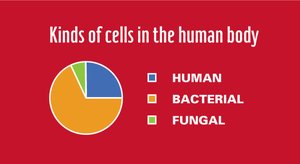
Applications: Forensics (microbial fingerprints), personalized medicine, and understanding disease susceptibility.
Microbiology in Society
Bioterrorism: Microbiology is essential for detecting, preventing, and responding to the use of microbes as weapons.
Bioremediation: Microbes are used to clean up oil spills, toxic waste, and other environmental contaminants.
Industrial Microbiology: Production of antibiotics, enzymes, and other valuable products.
Major Fields of Microbiology
Field | Main Focus |
|---|---|
Environmental Microbiology | Nutrient cycles, bioremediation |
Medical Microbiology | Pathogens, disease, immunity |
Industrial Microbiology | Production of food, drugs, and chemicals |
Genetics & Biotechnology | Gene cloning, sequencing, genetic engineering |
Immunology | Immune responses to infection |
Summary
Microbiology is foundational to understanding health, disease, and the environment.
Major discoveries and technological advances have shaped the field.
The human microbiome is a frontier for research with implications for health and disease.
Additional info: The study of microbiology continues to expand, integrating genomics, bioinformatics, and systems biology to address emerging challenges in health, industry, and the environment.
