 Back
Chapter 1: A Brief History of Microbiology – Structured Study Notes
Study Guide - Smart Notes
 Tailored notes based on your materials, expanded with key definitions, examples, and context.
Introduction to Microbiology
Definition and Scope
Microbiology is the scientific study of microorganisms, which are minute living entities often invisible to the naked eye. This field encompasses a wide range of organisms, including bacteria, archaea, fungi, protozoa, algae, viruses, and multicellular animal parasites such as helminths. - Microorganisms: Organisms too small to be seen without magnification. - Microbes: Synonymous with microorganisms; includes both prokaryotic and eukaryotic forms. - Microscope: Essential tool for observing microbes. 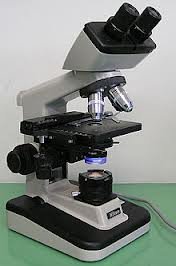
Why Study Microbiology?
Microbiology is fundamental due to the ubiquity of microbes and their impact on health, industry, and the environment. - Microbes are found everywhere, from extreme environments to everyday settings. - They play roles in disease, food production, environmental processes, and biotechnology.
Classification of Microorganisms
Domains of Life
Microorganisms are classified into three domains: Bacteria, Archaea, and Eukarya. Each domain has unique characteristics. 


Bacteria: Single-celled prokaryotes lacking a membrane-bound nucleus. Found nearly everywhere.
Archaea: Single-celled prokaryotes, often inhabiting extreme environments. Cell walls differ from bacteria.
Eukarya: Organisms with membrane-bound nuclei, divided into four kingdoms: Protista, Fungi, Plantae, and Animalia.
Scale of Microbes
Microbes vary greatly in size, from tiny viruses to large bacteria and eukaryotic cells. 
Historical Foundations of Microbiology
Ancient Recognition of Disease
Even before the advent of modern science, ancient civilizations recognized communicable diseases and implemented hygiene practices. - The Romans built underground sewage systems to prevent disease spread. 

Major Contributors to Microbiology
Robert Hooke (1665): Used a primitive compound microscope to observe cells, initiating cell theory.
Antoni van Leeuwenhoek (1673-1723): Developed simple microscopes, observed "animalcules" (bacteria, protozoa), considered the father of bacteriology.
Development of Cell Theory
- Early observations by Hooke and Schwann led to the understanding that all living things are composed of cells.
Theories of Microbial Life
Spontaneous Generation vs. Biogenesis
Spontaneous Generation: The belief that life arises from nonliving matter (Aristotle).
Biogenesis: The concept that life arises only from pre-existing life (Virchow).
Redi’s Experiment
Francesco Redi disproved spontaneous generation by showing that maggots only appeared on meat when flies could lay eggs.
Jar | Condition | Result |
|---|---|---|
1 | Open | Maggots developed |
2 | Covered with netting | Maggots appeared on netting |
3 | Sealed | No maggots developed |
Needham and Spallanzani
- John Needham: Supported spontaneous generation with broth experiments. - Lazzaro Spallanzani: Disproved Needham’s findings, showing microbes come from the air.
Pasteur’s Swan-Neck Flask Experiment
Louis Pasteur definitively disproved spontaneous generation by showing that boiled broth in swan-necked flasks remained sterile unless exposed to contaminated air. 
The Scientific Method
The debate over spontaneous generation led to the development of the scientific method:
The Germ Theory of Disease
Establishment and Key Experiments
The germ theory states that specific microscopic organisms cause specific diseases. - Pasteur: Demonstrated microbes cause fermentation and spoilage; developed vaccines for rabies and anthrax. - Koch: Developed Koch’s postulates to prove causative agents of disease.
Koch’s Postulates
Pathogen must be present in all cases of disease.
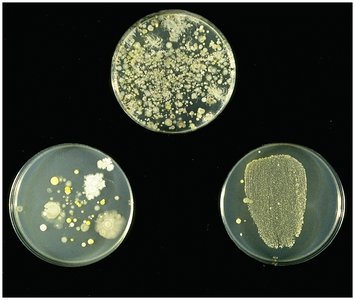
Pathogen must be isolated and grown in pure culture.
Pathogen from pure culture must cause disease in healthy animals.
Same pathogen must be re-isolated from diseased animal.
Discovery of Antibiotics
Alexander Fleming (1928): Discovered penicillin, the first antibiotic.
Classification and Types of Microbes
Major Groups
Bacteria: Prokaryotic, diverse, found everywhere.
Archaea: Prokaryotic, often extremophiles.
Fungi: Eukaryotic, includes molds and yeasts.
Protozoa: Eukaryotic, motile, single-celled.
Algae: Eukaryotic, photosynthetic.
Viruses: Acellular, require host for replication.
Helminths: Multicellular animal parasites.

Industrial and Applied Microbiology
Uses of Microbes
Microorganisms are used in food production, biotechnology, and environmental applications.
Product/Process | Microbial Contribution |
|---|---|
Cheese | Flavoring and ripening by bacteria and fungi |
Alcoholic beverages | Fermentation by bacteria or yeast |
Antibiotics | Produced by bacteria and fungi |
Human insulin | Produced by genetically engineered bacteria |
Bioremediation | Use of microbes to detoxify environments |
Special Fields of Microbiology
Disciplines
Bacteriology: Study of bacteria and archaea
Virology: Study of viruses
Mycology: Study of fungi
Immunology: Study of immune responses
Serology: Study of blood serum and antibodies
Environmental Microbiology: Microbes in the environment
Industrial Microbiology: Microbes in industry and biotechnology
Modern Microbiology
Genetics and Molecular Biology
Advances in genetics and molecular biology have revolutionized microbiology. - Recombinant DNA technology: Manipulation of genes for practical applications. - Gene therapy: Insertion or repair of genes in humans. - Genomics: Deciphering genomes and gene expression. - Proteomics: Deciphering protein structure and function.
Microbes in the Environment
Microbes play essential roles in recycling elements and bioremediation.
Defending Against Disease
- Immunology: Study of body’s defenses against pathogens. - Chemotherapy: Use of drugs to treat infectious diseases.
Summary Table: Microbial Groups and Their Characteristics
Group | Cell Type | Key Features |
|---|---|---|
Bacteria | Prokaryote | Peptidoglycan cell wall, ubiquitous |
Archaea | Prokaryote | Extreme environments, unique cell wall |
Fungi | Eukaryote | Cell wall, decomposers |
Protozoa | Eukaryote | Motile, aquatic/host environments |
Algae | Eukaryote | Photosynthetic, aquatic |
Viruses | Acellular | Obligate intracellular parasites |
Helminths | Eukaryote | Multicellular parasites |
Conclusion
Microbiology is a dynamic and foundational science, essential for understanding disease, environmental processes, and biotechnological applications. Its history is marked by key discoveries and the development of scientific methods that continue to shape modern research and medicine.
