 Back
BackChapter 1: Foundations and Classification in Microbiology
Study Guide - Smart Notes
 Tailored notes based on your materials, expanded with key definitions, examples, and context.
Introduction to Microbiology
Definition and Scope
Microbiology is the study of microorganisms, or microbes, which are life forms too small to be seen with the naked eye. This field encompasses a wide range of organisms, including bacteria, archaea, protists, fungi, helminths, viruses, and prions.
Microorganism: Any organism too small to be seen without magnification.
Pathogen: A microbe that causes disease.
Opportunistic Pathogen: Causes disease only in a weakened host.
Examples: Escherichia coli (bacteria), Candida albicans (fungi), influenza virus.
Cell Types
Microbes are classified based on their cellular structure:
Prokaryotic Cells: Lack a nucleus; include bacteria and archaea.
Eukaryotic Cells: Have a true nucleus; include protists, fungi, plants, and animals.
Living and Nonliving Agents Studied in Microbiology
Microbe | Cell Type | Notes |
|---|---|---|
Bacteria | Prokaryotic | Unicellular; pathogenic and nonpathogenic |
Archaea | Prokaryotic | Unicellular; nonpathogenic; extremophiles |
Protists | Eukaryotic | Unicellular/multicellular; pathogenic/nonpathogenic |
Fungi | Eukaryotic | Unicellular/multicellular; pathogenic/nonpathogenic |
Helminths | Eukaryotic | Multicellular; parasitic worms |
Viruses | Nonliving | DNA or RNA genome; infect cells |
Prions | Nonliving | Infectious proteins; cause neurodegenerative diseases |
History of Microbiology
Key Historical Figures and Events
The development of microbiology was shaped by several key discoveries and individuals.
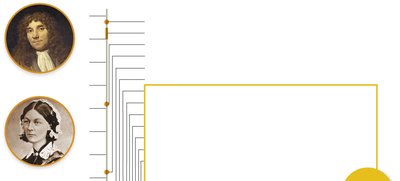
Robert Hooke: First to observe eukaryotic cells; coined the term "cell".
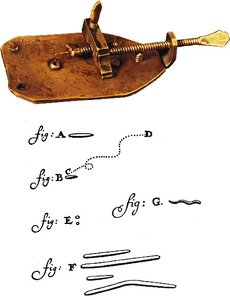
Antonie van Leeuwenhoek: Improved microscopes; first to observe bacteria.
Carl Linnaeus: Developed taxonomic naming system.
Edward Jenner: Developed the first vaccine (smallpox).
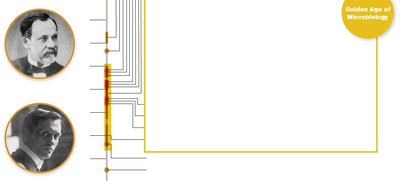
Louis Pasteur: Disproved spontaneous generation; developed vaccines; invented pasteurization.
Robert Koch: Proved that microbes cause disease; formulated Koch's postulates.
Ignaz Semmelweis, Joseph Lister, Florence Nightingale: Pioneered aseptic techniques in healthcare.
Microscopy and Early Observations
The invention and refinement of the microscope enabled the discovery of microorganisms.
Microscope: Instrument for viewing small organisms.
Leeuwenhoek's Observations: Described "animalcules" in water and plaque.
Biogenesis vs. Spontaneous Generation
Spontaneous Generation: Theory that life arises from nonliving matter.
Biogenesis: Life arises from existing life.
Francesco Redi: Demonstrated that maggots come from flies, not spontaneously.
Louis Pasteur: Used S-necked flask experiment to show that microbes come from the air, not spontaneous generation.
Pasteur's Experiment
Broth in S-necked flask remained sterile unless exposed to airborne microbes.
Demonstrated biogenesis and the role of microbes in contamination.
Germ Theory of Disease
Robert Koch and Koch's Postulates
Robert Koch established a systematic method for identifying the causative agent of infectious diseases.
Koch's Postulates:
The same organism must be present in every case of the disease.
The organism must be isolated and grown in pure culture.
The cultured organism should cause disease when introduced into a healthy host.
The organism must be re-isolated from the newly diseased host.
These postulates are foundational for modern infectious disease research.
Hygiene and Aseptic Techniques
Contributions to Healthcare
Aseptic techniques are essential for preventing healthcare-associated infections (HAIs).
Ignaz Semmelweis: Introduced hand-washing in hospitals.
Joseph Lister: Developed aseptic surgery; used phenol as a disinfectant.
Florence Nightingale: Established aseptic practices in nursing.
Aseptic Techniques: Hand-washing, wearing gloves, sterilizing instruments, decontaminating surfaces.
The Scientific Method
Steps and Principles
The scientific method is a systematic approach to investigation.
Observation and question
Hypothesis formation
Prediction
Testing (experiments with controls)
Data analysis
Conclusion
Law: Predicts what happens; often mathematical.
Theory: Explains how and why; supported by extensive evidence.
Classifying Microbes and Their Interactions
Binomial Nomenclature and Taxonomy
Microbes are classified using a hierarchical system and scientific names.
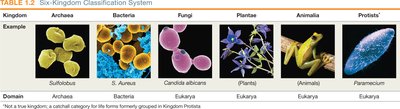
Binomial Nomenclature: Two-part scientific name: Genus (capitalized) and species (lowercase), both italicized (e.g., Escherichia coli).
Taxonomic Hierarchy: Domain, Kingdom, Phylum, Class, Order, Family, Genus, Species.
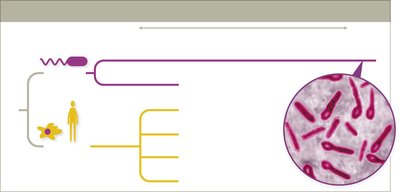
Category | Humans | E. coli |
|---|---|---|
Domain | Eukarya | Bacteria |
Kingdom | Animalia | Eubacteria |
Phylum | Chordata | Proteobacteria |
Class | Mammalia | Gamma proteobacteria |
Order | Primates | Enterobacteriales |
Family | Hominoidea | Enterobacteriaceae |
Genus | Homo | Escherichia |
Species | sapiens | coli |
Strain: Genetic variant of a species, often denoted by numbers/letters (e.g., E. coli K-12).
Symbiotic Relationships
Microbes interact with hosts in various ways:
Parasitism: Microbe harms the host.
Mutualism: Both host and microbe benefit.
Commensalism: Microbe benefits; host unaffected.
Pathogens: Typically have parasitic relationships.
Biofilms
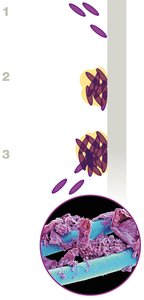
Biofilms are structured microbial communities attached to surfaces.
Formed by single or multiple species.
Encased in a sticky matrix, making them resistant to treatment.
Responsible for 60–80% of human infectious diseases.
Stages: Attachment, Growth, Detachment.
Normal Microbiota and the Human Microbiome
Normal microbiota are the collection of microbes that reside in and on the human body.
Includes bacteria, archaea, and eukaryotic microbes.
Functions: Train immune system, produce vitamins, aid digestion, influence mood and brain function.
Established before, during, and after birth.
Disruption increases infection risk.
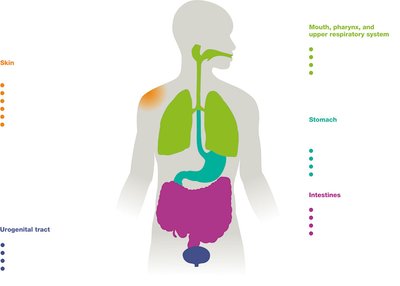
Transient Microbiota: Temporary microbes acquired from the environment; removed by hygiene.
Additional info:
Some content was expanded for clarity and completeness, such as definitions and examples of cell types, and the scientific method.
Tables and images were recreated and described to match the original educational intent.
