 Back
BackChapter 1: The Main Themes of Microbiology – Foundations, Scope, and Impact
Study Guide - Smart Notes
 Tailored notes based on your materials, expanded with key definitions, examples, and context.
Introduction to Microbiology
Definition and Scope
Microbiology is the specialized branch of biology that studies organisms too small to be seen with the naked eye, known as microorganisms or microbes. These include bacteria, archaea, fungi, protozoa, helminths, viruses, and prions. While only a small fraction of microbes cause harm, their study is essential for understanding life processes, disease, and environmental balance.
Microorganisms are also referred to as germs, viruses, agents, or “bugs.”
Most microbes are harmless or beneficial; only a minority are pathogenic.
Major Groups of Microorganisms
Classification by Cellular Structure
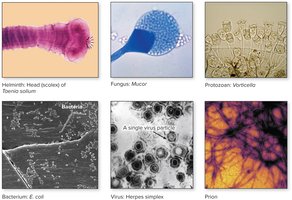
Cellular microorganisms: Bacteria, Archaea, Fungi, Protozoa, Helminths (parasitic worms)
Noncellular agents: Viruses, Prions
Prokaryotes: Bacteria and Archaea (lack a true nucleus)
Eukaryotes: Fungi, Protozoa, Helminths (have a true nucleus)
Microbes: Ease and Challenges of Study
Microbes reproduce rapidly, allowing large populations to be grown in the laboratory. However, because they cannot be seen directly, indirect methods and microscopes are essential for their study.
Branches of Microbiology
Medical Microbiology and Public Health
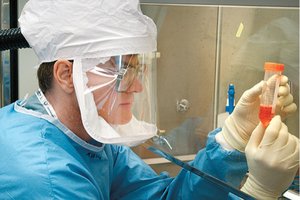
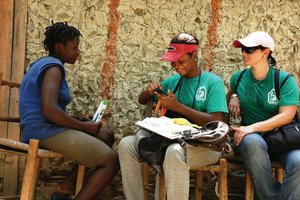
Medical microbiology focuses on microbes that cause diseases in humans and animals. Public health microbiology and epidemiology monitor and control the spread of diseases in communities, with organizations such as the USPHS, CDC, and WHO playing key roles.
Immunology and Industrial Microbiology
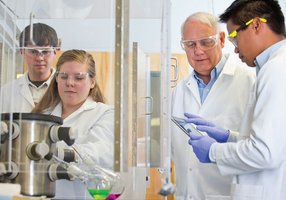
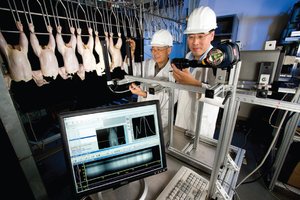
Immunology studies the immune system’s response to infection, including vaccination and allergy testing. Industrial microbiology safeguards food and water and uses microbes to produce products such as amino acids, beer, drugs, enzymes, and vitamins.
Agricultural and Environmental Microbiology
Agricultural microbiology examines the relationships between microbes and farm animals or crops. Environmental microbiology studies the effects of microbes on earth’s habitats, including aquatic, soil, geomicrobiology, and astrobiology.

The Impact of Microbes on Earth
Microbial Evolution and Ubiquity
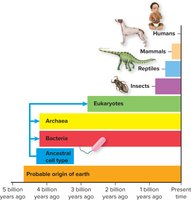
Microbes have shaped the development of earth’s habitats and the evolution of life for billions of years. The first cells were ancient, from which bacteria and archaea developed, followed by eukaryotes more than a billion years later.
Bacteria are ubiquitous: Found in the earth’s crust, polar ice caps, oceans, and inside plants and animals.
Photosynthetic Microorganisms and Decomposition
Photosynthetic microbes, such as bacteria and algae, contribute over 70% of the earth’s oxygen through photosynthesis. Bacteria and fungi are essential for decomposition, breaking down dead matter and recycling nutrients.


Microbes and Environmental Processes
Microbes drive the structure and content of soil, water, and atmosphere through gas production and complex associations with plants and animals.
Human Use of Microorganisms
Biotechnology and Recombinant DNA Technology
Humans have used microbes for thousands of years in food production (bread, wine, cheese) and medicine. Modern biotechnology manipulates microbes to produce industrial products, while recombinant DNA technology creates genetically modified organisms (GMOs).


Bioremediation
Bioremediation involves introducing microbes into the environment to restore stability or clean up toxic pollutants.

Infectious Diseases and the Human Condition
Pathogens and Disease
A pathogen is any agent (virus, bacterium, fungus, protozoan, or helminth) that causes disease. Nearly 2,000 different microbes are known to cause disease in humans.
Emerging and Reemerging Diseases
New diseases: SARS-CoV-2, Ebola, AIDS, hepatitis C, viral encephalitis
Reemerging diseases: Polio, leprosy, parasitic worm diseases (largely eradicated but can reappear)
Microbes and Noninfectious Diseases
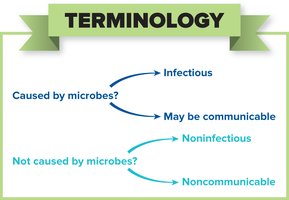
Some diseases once considered noninfectious are now linked to microbes (e.g., gastric ulcers by Helicobacter pylori, certain cancers, diabetes, schizophrenia).
Chronic microbial infections are associated with conditions like multiple sclerosis, OCD, coronary artery disease, and obesity.
General Characteristics of Microorganisms
Cellular Organization and Size
Three basic cell lines: Archaea, Bacteria, Eukarya
Most microorganisms are single-celled (all bacteria and archaea, some eukaryotes); some are multicellular (helminths, some fungi).
Bacterial and archaeal cells are about 10× smaller than eukaryotic cells and lack organelles.
Eukaryotic cells contain organelles such as the nucleus, mitochondria, and chloroplasts.
Acellular Microorganisms
Viruses: Composed of DNA or RNA (never both) in a protein coat, sometimes with a lipid envelope.
Prions: Infectious proteins that can cause disease by altering normal proteins.
Types of Microorganisms
There are six main types of microorganisms: bacteria, archaea, fungi, protozoa, helminths, and viruses. Prions are also considered due to their infectious nature.
Historical Foundations of Microbiology
Disproving Spontaneous Generation
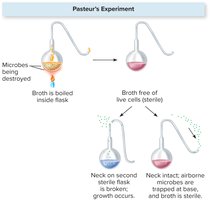
Early beliefs held that life could arise spontaneously from nonliving matter. Louis Pasteur disproved this with experiments showing that microbes come from other microbes, not from spontaneous generation.
Development of the Microscope
Robert Hooke: First observations of microbes in the 1600s.
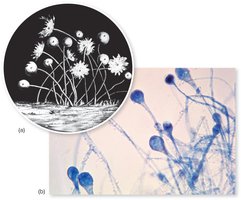
Antonie van Leeuwenhoek: Developed a crude microscope and described “animalcules.”
Modern Advances
1980s: PCR technique invented
2000s: Discovery of small RNAs
2010s: Human microbiome genetic identification
2013: CRISPR technology
Discovery of Spores and Sterilization
John Tyndall: Found that some microbes are highly heat-resistant.
Discovery of bacterial endospores clarified the need for sterilization (complete removal of all life forms, including spores and viruses).
Development of Aseptic Techniques
Robert Koch: Linked specific microbes to specific diseases (etiology).
Dr. Oliver Wendell Holmes & Dr. Ignaz Semmelweis: Demonstrated the importance of handwashing to prevent infection.
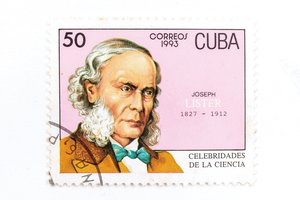
Joseph Lister: Introduced antiseptic techniques in surgery, foundational for modern microbial control.
Koch’s Postulates
Koch’s postulates are four criteria used to establish a causative relationship between a microbe and a disease:
The microorganism must be found in diseased but not healthy individuals.
The microorganism must be cultured from the diseased individual.
Inoculation of a healthy individual with the cultured microorganism must recapitulate the disease.
The microorganism must be re-isolated from the inoculated, diseased individual and matched to the original microorganism.
Limitations: Some microbes are difficult to culture (e.g., Mycobacterium leprae), and viruses require host cells for growth.
Discovery of Pathogens and Germ Theory
Pasteur: Invented pasteurization and showed that diseases could arise from infection.
Koch: Provided proofs for the germ theory of disease.
Naming, Classifying, and Identifying Microorganisms
Nomenclature, Classification, and Identification
Nomenclature: Assigning scientific names to organisms.
Classification: Arranging organisms into a hierarchy of taxa.
Identification: Discovering and recording traits to recognize and name organisms.
Binomial System of Nomenclature
Each organism is given a two-part name: Genus (capitalized) and species (lowercase), both italicized (e.g., Staphylococcus aureus).
Genus can be abbreviated after first use (e.g., S. aureus).
Example: Salmonella typhi (abbreviated as S. typhi).
Universal Tree of Life
Five Kingdoms: Plants, Animals, Protista, Monera, Fungi
Three Domains (based on molecular genetics and ribosomal RNA): Bacteria, Archaea, Eukarya
