 Back
BackChapter 1: The Microbial World and You – Mini-Textbook Study Notes
Study Guide - Smart Notes
 Tailored notes based on your materials, expanded with key definitions, examples, and context.
The Microbial World and You
Introduction to Microbiology
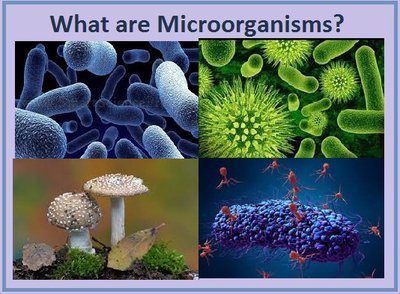
Microbiology is the study of microorganisms, which are organisms too small to be seen with the naked eye. These include bacteria, archaea, fungi, protozoa, algae, viruses, and some multicellular parasites. Microorganisms play essential roles in ecosystems, human health, and industry.
Microorganisms (microbes) are found everywhere: in soil, water, air, and as part of the human body.
They can be both beneficial (e.g., decomposers, nitrogen fixers) and harmful (e.g., pathogens causing disease).
Microbes in Our Lives
Microorganisms have a profound impact on human life and the environment. They are involved in nutrient cycling, food production, biotechnology, and can also cause diseases.
Beneficial effects: Nitrogen fixation, decomposition, oxygen production, fermentation, biotechnology, and bioremediation.
Harmful effects: Pathogenic microbes cause diseases and food spoilage.
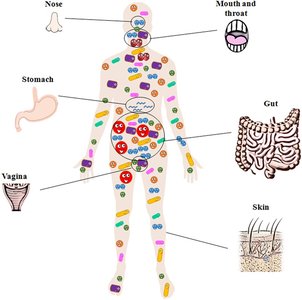
Human microbiome: The collection of microbes living in and on the human body, contributing to health and disease resistance.
Naming and Classifying Microorganisms
Nomenclature
Microorganisms are named using the binomial system established by Carl Linnaeus. Each organism has a two-part name: the genus and the specific epithet (species).
Example: Escherichia coli (E. coli), Staphylococcus aureus (S. aureus)
Names are italicized or underlined.
Types and Classification of Microorganisms
Microorganisms are classified based on cell type, structure, and genetic relationships.
Prokaryotes: Bacteria and Archaea (unicellular, no nucleus)
Eukaryotes: Fungi, Protists (protozoa, algae), and multicellular animal parasites (helminths)
Viruses: Acellular, non-living, require host cells to reproduce
Prokaryotic Cells
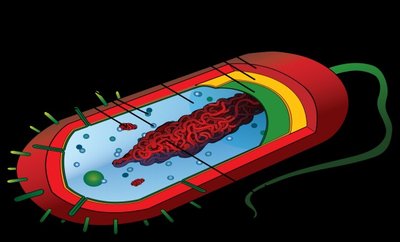
Bacteria: Unicellular, cell wall with peptidoglycan, reproduce by binary fission, various shapes (coccus, bacillus, spiral), can be motile or non-motile.
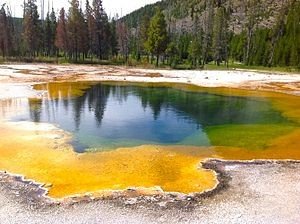
Archaea: Unicellular, cell wall without peptidoglycan, often found in extreme environments (extremophiles).
Eukaryotic Cells
Fungi: Unicellular (yeasts) or multicellular (molds), cell wall of chitin, non-photosynthetic, reproduce sexually and asexually.
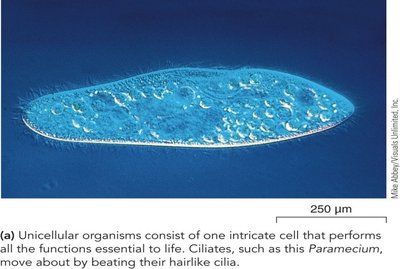
Protists: Unicellular, may be photosynthetic, move by flagella, cilia, or pseudopods, can be free-living or parasitic.
Helminths: Multicellular animal parasites with microscopic stages in their life cycle.
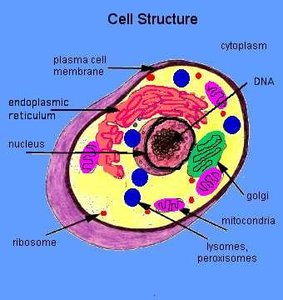
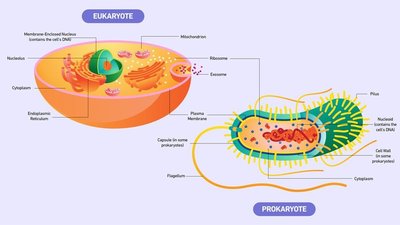
Comparison of Prokaryotes and Eukaryotes
Prokaryotes: No nucleus, no membrane-bound organelles, smaller size, single circular chromosome.
Eukaryotes: Nucleus present, membrane-bound organelles, larger size, multiple linear chromosomes.
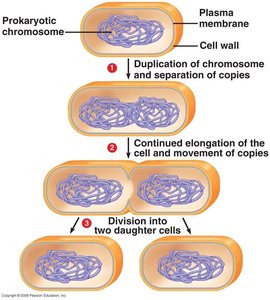
Reproduction in Bacteria
Bacteria commonly reproduce by binary fission, a process where a single cell divides into two identical daughter cells.
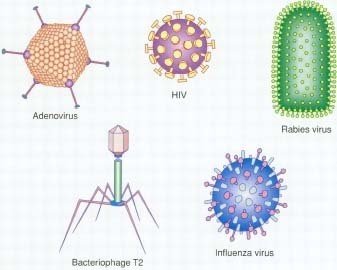
Viruses
Acellular, non-living biological agents.
Obligate intracellular parasites: require a host cell to reproduce.
Too small to be seen with a light microscope; require electron microscopy.
A Brief History of Microbiology
Early Observations and Cell Theory
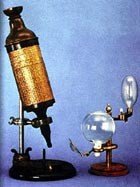
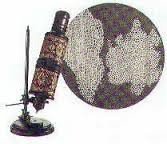
Robert Hooke (1665): First observations of cells in cork, beginning of cell theory (all living things are composed of cells).
Anton van Leeuwenhoek (1675): First to observe living microorganisms (bacteria, protozoa) using a simple microscope.
Advances in Microscopy
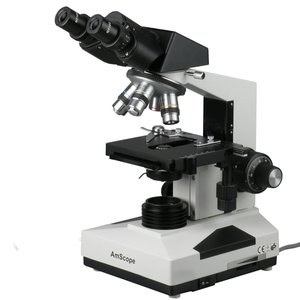
Development of compound light microscopes (up to 1000x magnification).
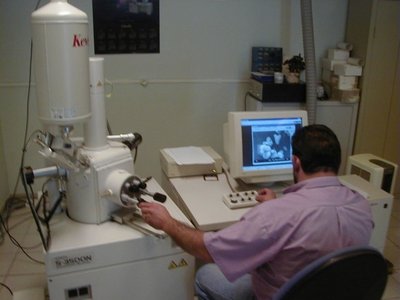
Electron microscopes allow visualization of viruses and subcellular structures (up to 10,000,000x magnification).
Spontaneous Generation and Its Disproof
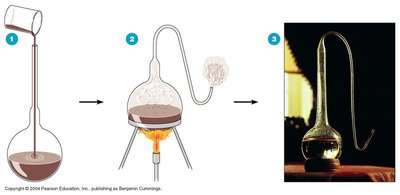
Spontaneous generation was the belief that living organisms could arise from nonliving matter. This idea was disproved through experiments by scientists such as Francesco Redi, Lazzaro Spallanzani, and finally Louis Pasteur.
Louis Pasteur (1861): Demonstrated that microorganisms are present in the air and can be destroyed by heat (sterilization). Developed methods to prevent contamination (aseptic technique).
The Golden Ages of Microbiology
First Golden Age (1857–1914): Discovery of disease agents, development of vaccines, advances in microscopy and aseptic techniques.
Key contributors: Pasteur (fermentation, pasteurization), Koch (Koch's postulates for disease causation), Semmelweis (antisepsis), Lister (aseptic surgery).
Second and Third Golden Ages (1940s onward): Discovery of antibiotics, development of new branches (bacteriology, virology, immunology, molecular genetics).
Microbes and Human Welfare
Beneficial Roles of Microorganisms
Recycling: Decomposition and nutrient cycling in ecosystems.
Sewage treatment: Use of microbes to break down waste.
Bioremediation: Removal of pollutants using microbes.
Biotechnology: Production of chemicals, antibiotics, and recombinant DNA products.
Insect control: Use of Bacillus thuringiensis as a biological pesticide.
Microbes and Human Disease
Normal microbiota: Microbes that live on and in the human body, usually harmless and may provide benefits such as aiding digestion and protecting against pathogens.
Pathogens: Microbes that cause disease when they invade a susceptible host.
Emerging Infectious Diseases (EIDs): New or increasing infectious diseases due to evolutionary changes, ecological shifts, or increased human contact.
Key Terms and Concepts
Microorganisms (Microbes, Germs): Tiny living organisms, usually microscopic.
Pathogenic: Capable of causing disease.
Nomenclature: System of naming organisms.
Genus: First part of the scientific name.
Specific epithet: Second part of the scientific name.
Prokaryotes: Organisms without a nucleus (Bacteria, Archaea).
Eukaryotes: Organisms with a nucleus (Fungi, Protists, Animals, Plants).
Comparison Table: Prokaryotic vs. Eukaryotic Cells
Feature | Prokaryotic Cells | Eukaryotic Cells |
|---|---|---|
Nucleus | No | Yes |
Membrane-bound organelles | No | Yes |
Cell wall composition | Peptidoglycan (Bacteria), None or other (Archaea) | Chitin (Fungi), Cellulose (Plants), None (Animals) |
Size | Smaller (0.2–2 µm) | Larger (10–100 µm) |
Reproduction | Binary fission | Mitosis/meiosis |
